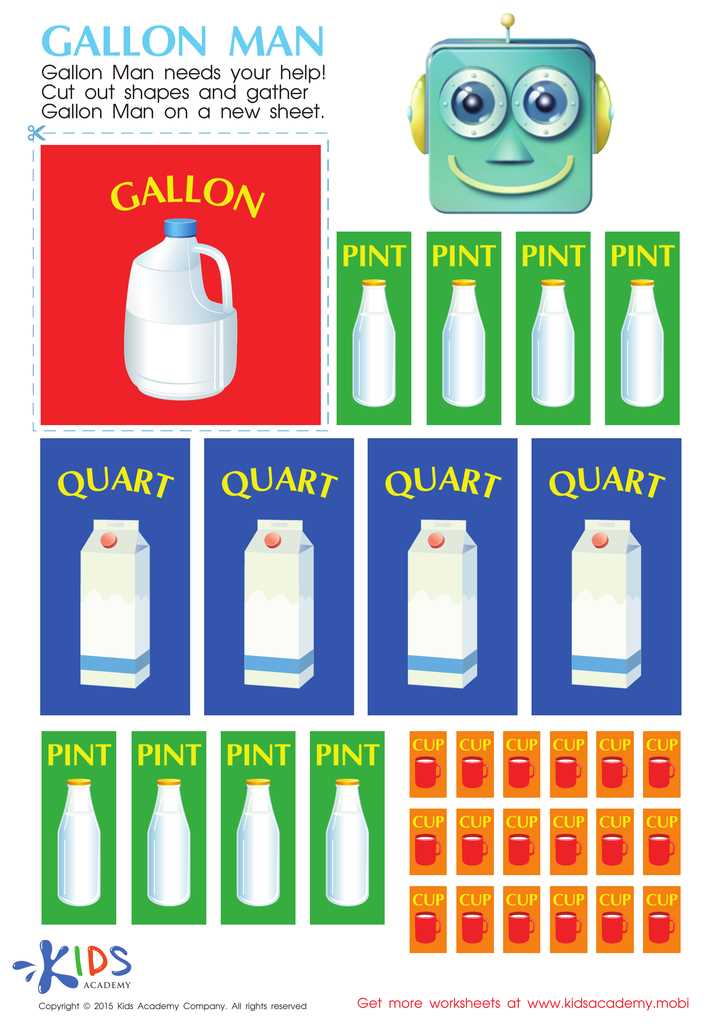
One of the best ways to help students understand liquid measurements is by using a visual tool that clearly represents different quantities. The template for liquid measurement units allows learners to connect volume concepts with familiar objects, making abstract units more accessible.
Step-by-Step Guide to Using a Measurement Template in Class
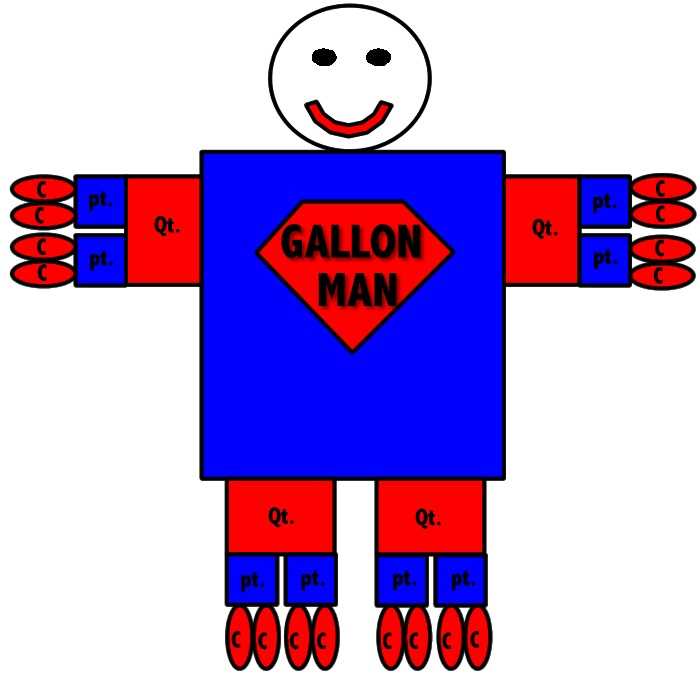
To begin, print out a template featuring different liquid capacities, such as gallons, quarts, pints, and cups. Each unit should be clearly marked with its respective measurement. Begin by introducing each unit of measurement, explaining how they relate to each other. Show how, for example, one gallon is equal to four quarts, and then go down to pints and cups, emphasizing the hierarchical structure of liquid measurements.
Next, involve the students by having them fill in the units on the template. You can make it interactive by using colored markers to represent each unit of measurement. For example, mark one gallon in blue, quarts in red, and pints in green. This adds a fun, visual element that helps reinforce the concepts in their minds.
Interactive Activities for Hands-On Learning
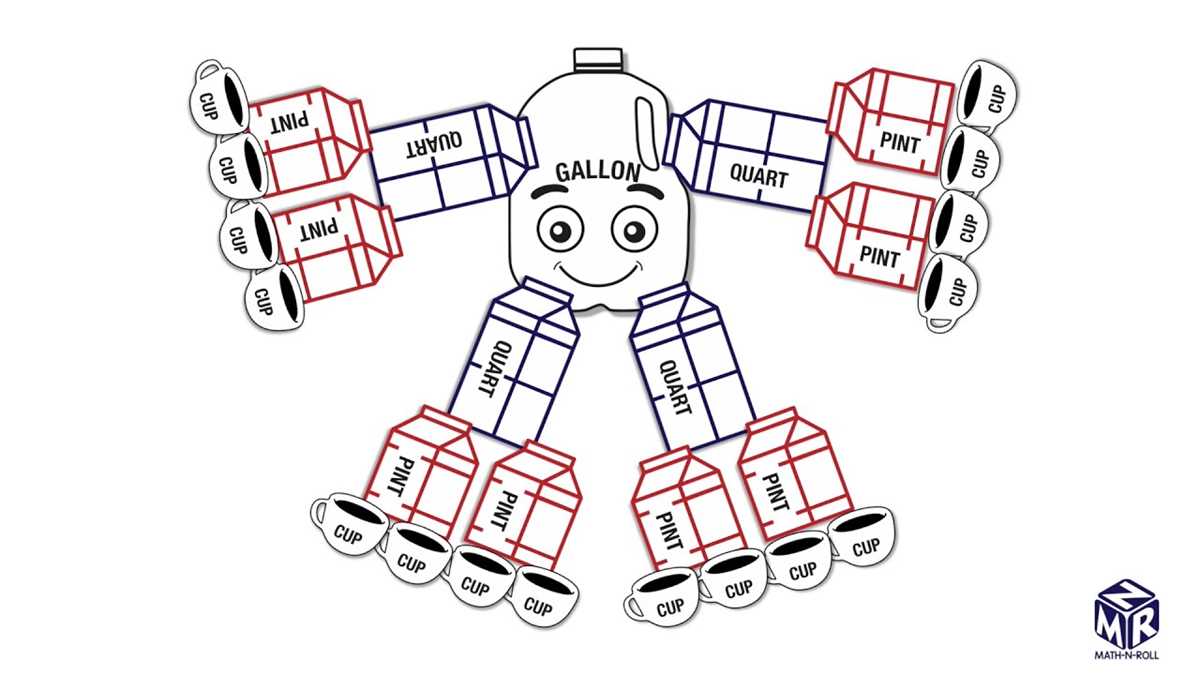
After introducing the template and explaining the relationships between the units, encourage students to practice solving real-life problems. For example, you can ask them to estimate how many cups are in a gallon, using the template to count and compare. This allows them to see the conversion process in action and reinforces their understanding of volume conversion.
You can also challenge students to measure liquids using actual containers and compare those measurements with the ones shown on the template. This hands-on approach solidifies the connections between theoretical knowledge and real-world application.
Additionally, consider using this template for group work. Assign each group a different measurement unit and have them collaborate to solve a larger problem, such as figuring out how much liquid is needed for a recipe or a scientific experiment. Working together encourages communication and teamwork while reinforcing their understanding of the measurement system.
Guide to Using the Gallon Man Template for Learning Volumes
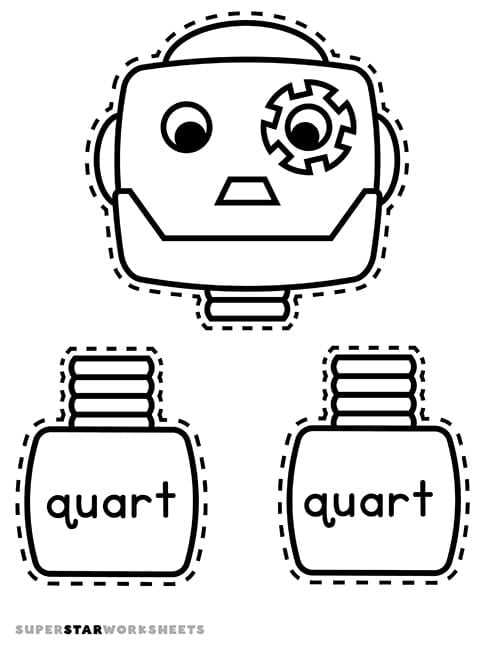
Start by printing the visual template that illustrates the different units of liquid measurements, such as gallons, quarts, pints, and cups. This visual tool helps to make the abstract concept of volume much easier to understand by visually displaying how each unit relates to the others. Use the template as a reference while explaining the conversion process between the units. For instance, one gallon equals four quarts, and each quart is made up of two pints.
Next, engage students by providing them with hands-on activities using the visual aid. For example, ask them to color in each unit of measurement with different colors, and then have them answer questions based on these visual relationships. This approach helps reinforce the concept of how different measurements fit into each other, creating a more memorable learning experience. Once they are comfortable with the conversions, challenge them to estimate the number of cups in a gallon using the template, helping them visualize the measurements better.
Finally, encourage students to practice the conversions using real-world examples. Provide different scenarios where they need to convert liquid measurements, such as how many quarts are needed for a recipe or how much liquid would be used in an experiment. By applying the concepts in practical ways, students can better grasp the relationships between the various units and feel confident when working with volumes in everyday situations.