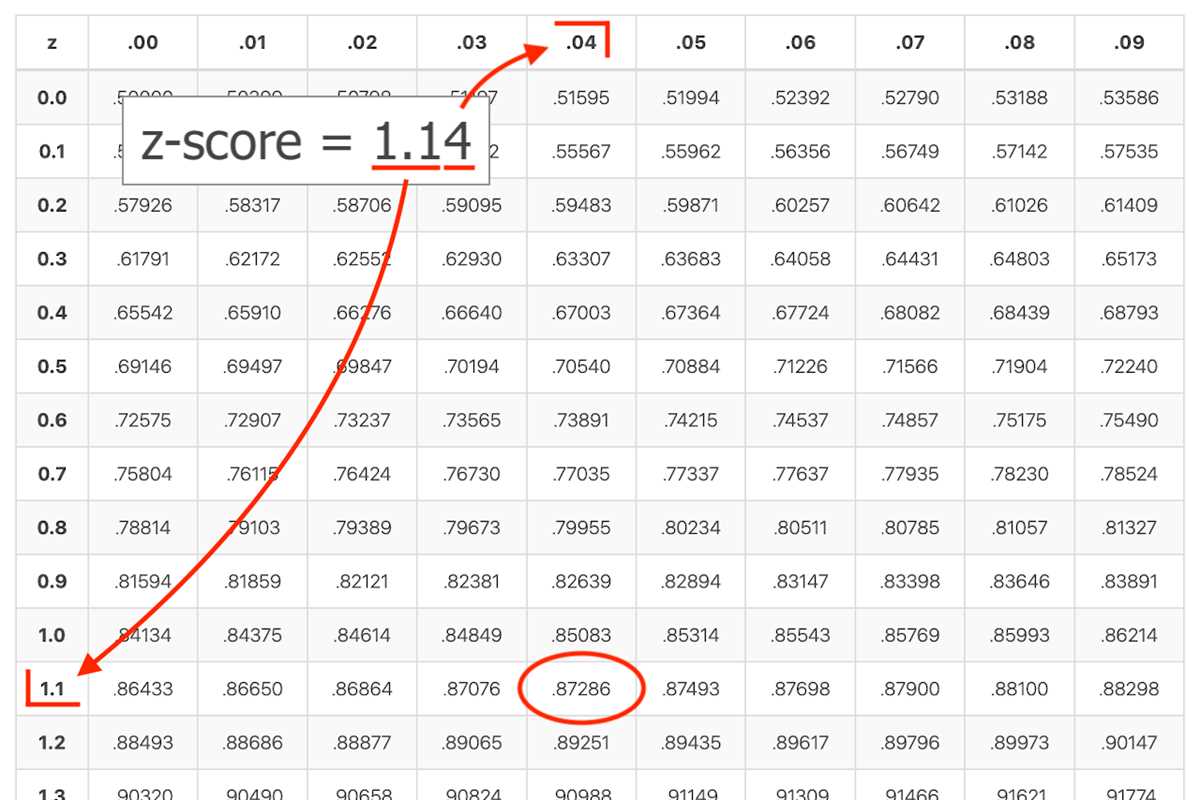
If you’re working with statistical data and need to quickly determine the Z-score or find corresponding values, keeping a Z-score chart on hand is the best solution. A Z-score represents how many standard deviations a data point is from the mean, and it’s essential for hypothesis testing, confidence intervals, and many other statistical tasks.
How to Download a Z-Score Chart
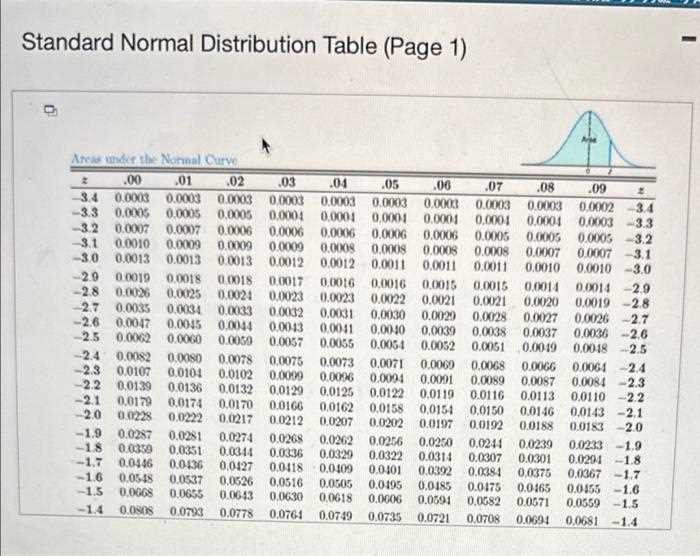
To ensure fast access, download a PDF or image of a Z-score chart that includes the most commonly used values. Most charts cover Z-scores from -3.9 to 3.9, which is sufficient for most standard normal distributions. This chart should show the Z-scores along with their corresponding cumulative probabilities, making it easy to determine the area under the curve for any given Z-value.
Ensure the file you download is high quality for clarity, especially if you’ll be using it for detailed analysis. You can print it out for easy reference, or simply keep it open on your screen for quick access while working on statistical problems.
How to Use a Z-Score Chart in Practice
When you’re conducting a statistical test, the Z-score tells you how far your sample mean is from the population mean in terms of standard deviations. For example, a Z-score of 2.0 means the sample is two standard deviations above the mean. To use the chart:
- Find the Z-value along the leftmost column of the chart. This will typically represent the first two digits (the whole number and the first decimal point).
- Follow the row to the right to find the second decimal place. This will give you the cumulative probability, or the area under the curve.
- If you’re looking for the probability that a Z-value is above or below a certain threshold, use the cumulative probability. For values above, subtract from 1. For values below, the chart gives you the probability directly.
By understanding how to use this chart, you can quickly find the probabilities associated with different Z-scores without needing to rely on complex calculations.
Practical Example: Using the Chart for Confidence Intervals

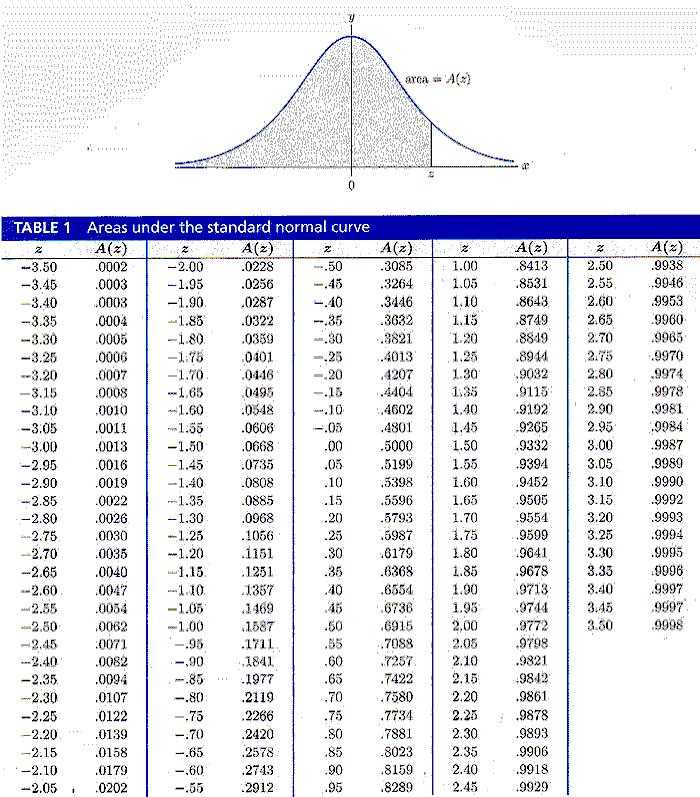
In hypothesis testing or constructing confidence intervals, you’ll often refer to the Z-score corresponding to the confidence level. For instance, a 95% confidence interval typically corresponds to a Z-value of 1.96. This means that 95% of the data lies within 1.96 standard deviations from the mean. Simply find 1.96 on the chart, and you’ll see that the cumulative probability is 0.9750, meaning that 97.5% of values are less than this Z-score in a standard normal distribution.
Conclusion
Using a Z-score chart allows you to quickly find statistical values that are essential for various analyses, saving you time and reducing the chances of error. By downloading a high-quality chart and understanding how to use it, you can simplify many tasks in data analysis, hypothesis testing, and other statistical calculations.
Z Score Reference Guide
For quick statistical calculations, having a Z-score reference sheet at hand is highly beneficial. With it, you can immediately determine the cumulative probability for any given Z-value without performing complex calculations manually. This reference provides a quick lookup for Z-scores commonly used in statistical analyses, including hypothesis testing and confidence interval calculations.
When you need to calculate the Z-score for a given data point, simply find the corresponding Z-value using a standard normal distribution chart. This chart typically spans Z-scores from -3.9 to 3.9. Each row represents the first two digits of the Z-score, and the columns show the corresponding cumulative probability based on that Z-score.
If you often find yourself working with confidence intervals or hypothesis testing, the Z-value corresponding to 95% confidence, which is 1.96, should be especially handy. For a 99% confidence level, the value is approximately 2.58. Knowing these values offhand or having a printed reference can save valuable time in your analyses.
Another key benefit of having this resource is for finding probabilities associated with specific Z-scores. For instance, a Z-score of -1.0 corresponds to a cumulative probability of approximately 0.1587, meaning the data point is below 1 standard deviation from the mean. You can use these values to determine the probability of outcomes in a normal distribution, which is particularly useful in quality control and research.
Besides using the chart for finding probabilities, it can also help you determine critical values for statistical tests. For example, in a one-tailed test at the 0.05 significance level, you would use the Z-value of 1.645. For a two-tailed test, you would use 1.96 for the same significance level. Having a printed reference makes these lookups quicker and reduces the chances of error during critical analysis.
Finally, many online resources offer downloadable PDFs or images of Z-score charts. Ensure you download one from a reliable source, and print it out at a legible size for convenience. This way, you can have a physical copy on hand during exams or in your study materials for easy access when working through problems.