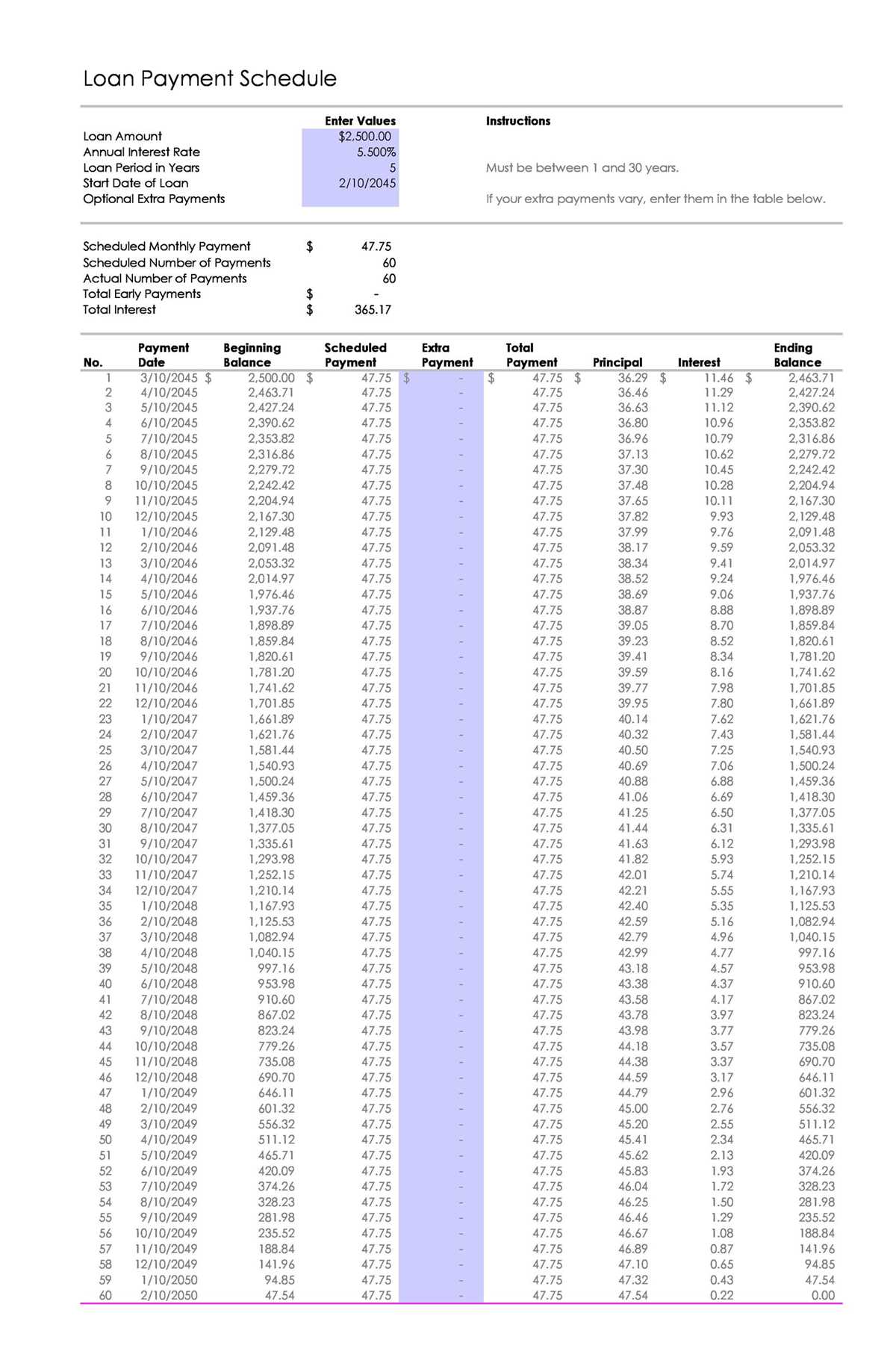
To efficiently manage your monthly repayments, you can use a structured schedule that clearly outlines the amount of principal and interest paid each month. This can be done using a well-organized chart that breaks down each installment until the full amount is cleared. It helps to track progress, predict future payments, and avoid confusion.
Creating Your Own Repayment Schedule
Start by listing the loan amount, the interest rate, and the length of the repayment period. Use an online calculator to determine the monthly payment amount. Once you have this, create a grid where each row represents one payment period. The columns should include the payment date, total payment amount, portion applied to interest, portion applied to principal, and remaining balance.
The first row should include your initial loan amount, followed by the next row, which shows the first payment. The schedule should reduce the balance gradually as payments are made, with the interest portion decreasing over time while the principal portion increases. By organizing this information in a simple format, it becomes easier to understand how each payment impacts the debt balance.
Common Mistakes to Avoid When Tracking Your Payments
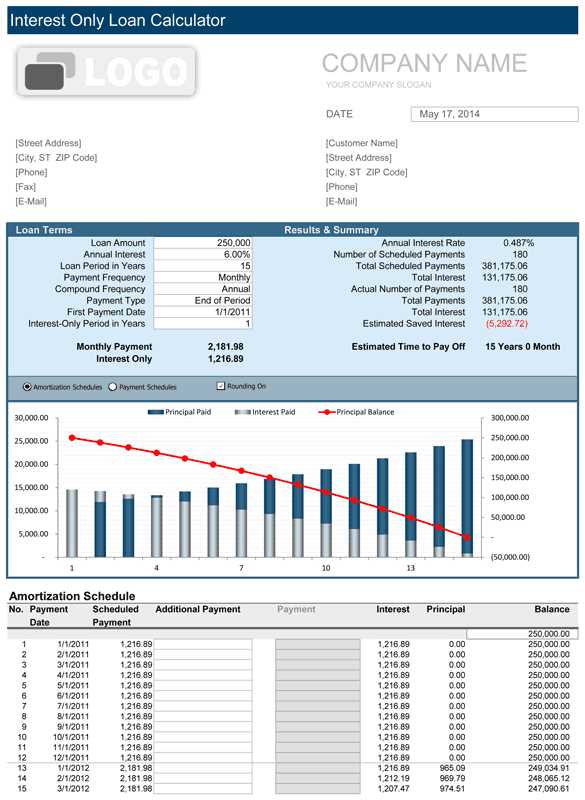
One common mistake is not accounting for early payments or additional contributions. When making extra payments, it is important to update your schedule to reflect the new balance. If you fail to adjust, you may end up tracking the repayment as if it’s not reducing as quickly as it should.
Another mistake is failing to account for changes in interest rates. If you have a variable rate loan, ensure your schedule is updated whenever there’s an adjustment. Not doing so could result in an inaccurate projection of your remaining balance and the time left until the debt is paid off.
By staying organized and regularly updating your schedule, you can have full control over your financial planning. Tracking each payment and understanding how they impact your balance will help you make informed decisions about refinancing, additional payments, or adjusting your budget. A clear schedule allows you to visualize your progress and stay motivated throughout the repayment process.
How Payment Schedules Help in Managing Debt Repayments
Using a structured schedule to manage your payments is one of the best ways to track the reduction in your outstanding balance. It shows you exactly how much of each payment goes toward interest and how much goes toward the principal. This level of detail is crucial when you want to see how long it will take to pay off a debt or if you’re considering making extra payments to reduce the term of your agreement.
The breakdown of payments over time helps to understand the impact of paying early or making larger monthly contributions. By reviewing this schedule, you can better plan for extra payments and avoid surprises with the interest accrued over time. Adjustments such as early payoffs or refinancing can be easily understood when looking at this detailed breakdown of how each payment affects the balance.
Additionally, this type of schedule is not just a tracking tool but also a motivational one. As you see the principal portion increasing and the interest decreasing with each payment, it can inspire you to stick with your repayment plan. It’s a simple yet effective way to stay on top of your finances and make informed decisions that can lead to quicker debt freedom.