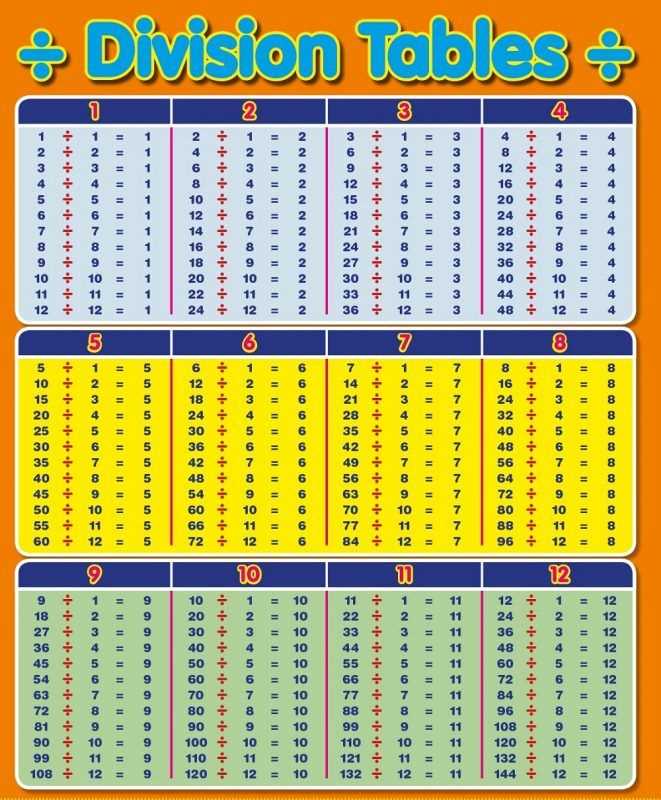
If you want to boost your math skills, using a structured chart for quick reference is a simple yet powerful approach. These visual aids help break down the process and make it easier to grasp multiplication and its inverse operations.
How to Use Multiplication and Division Charts for Homework
To effectively use a multiplication and division reference sheet, focus on the following steps:
- Identify the numbers: Select the numbers you’re working with. Look for the factors or multiples you need to find. A visual guide will allow you to quickly spot the result without unnecessary calculations.
- Check for patterns: Most charts are organized in a way that allows you to see patterns, such as multiples of 5 or 10. Recognizing these will help you speed up your work and develop intuition.
- Use it as a backup: When you’re unsure of an answer, refer to the chart instead of guessing. This ensures accuracy and reinforces the connection between division and multiplication.
- Practice with real examples: Use actual math problems from homework or practice sets. For example, instead of just memorizing, try solving 24 ÷ 6 using the tool to understand how division corresponds to multiplication.
Improving Your Skills with Visual Tools in Classroom or at Home
To make the most out of visual aids, follow these strategies:
- Use in combination with drills: Pair the visual aid with repetition. Complete a set of problems each day while referring to the chart when needed.
- Teach others: One of the best ways to reinforce knowledge is to explain it to someone else. If you have a younger sibling or friend learning the basics, use the chart to help them understand the relationship between division and multiplication.
- Incorporate it into games: Create math games or quizzes using the chart. For instance, challenge a peer to find the quotient of random numbers within a set time frame.
Why This Method Works
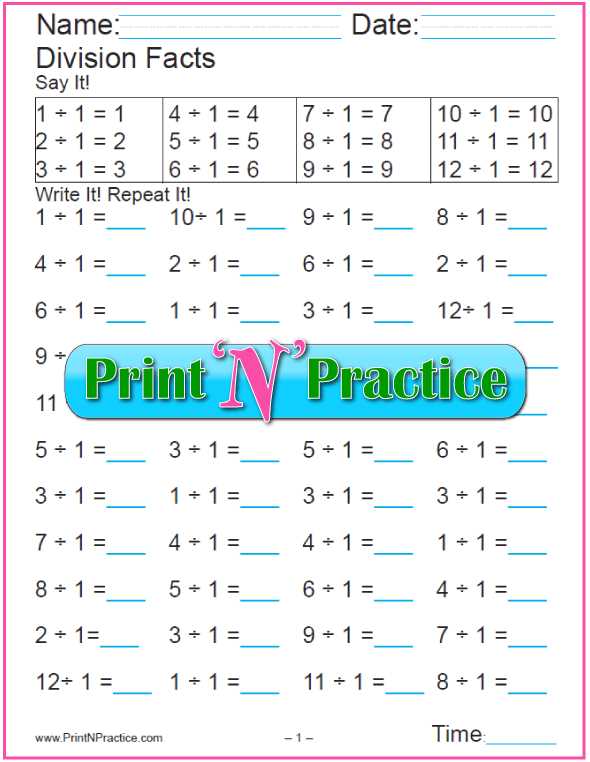
By focusing on both visual recognition and understanding the relationship between numbers, you will begin to internalize math concepts more quickly. This approach minimizes confusion and strengthens your ability to perform calculations both manually and mentally.
Where to Find Reliable Charts
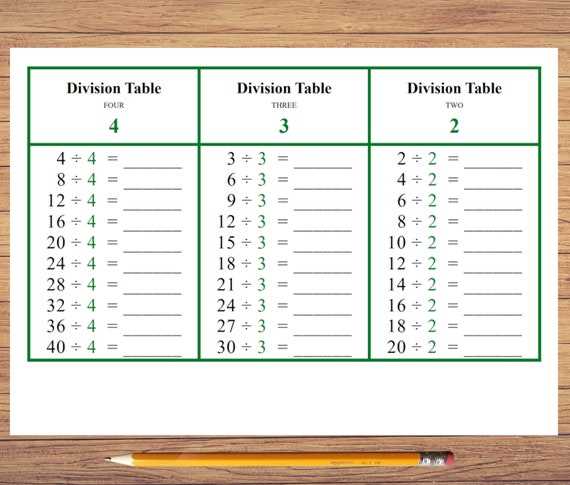
Reliable reference sheets are available in numerous formats, from digital downloads to physical copies. Many educational websites and math-related platforms offer free access to high-quality charts that are easy to use and designed for different age groups.
Maximizing Math Practice with a Multiplication and Division Chart
Start using a structured chart for quick calculations to reinforce your learning. A well-organized reference sheet for multiplication and its reverse operation allows you to instantly check results and spot patterns, making math more manageable.
To get the most out of it, match each question with the correct numbers on the sheet. This will help you grasp the relationship between multiplication and division more clearly. For example, instead of manually calculating each division problem, look for the corresponding entry on the sheet. This reduces time spent on each problem and helps solidify your mental math skills.
Keep a chart nearby when practicing at home or school. The visual aid can act as a reminder of what numbers divide evenly and how they correlate with multiplication tables. Over time, you will rely less on the chart as your mental math abilities improve, but it serves as an excellent tool for building confidence in your skills.