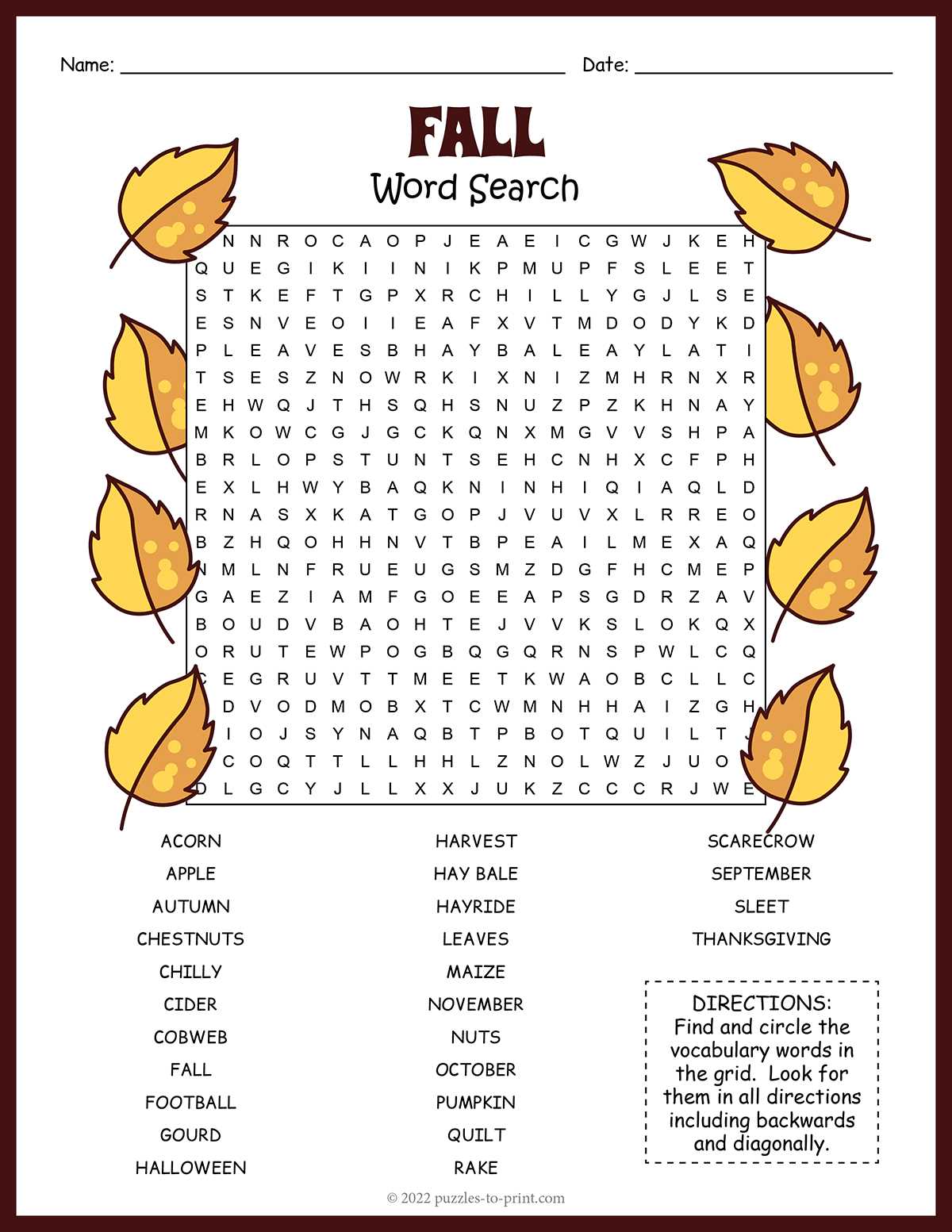
Download a seasonal letter grid in PDF format at 300 DPI and print it at 100% scale to keep characters aligned and readable.
Choosing the Right Difficulty Level
Select a 10×10 letter grid with horizontal and vertical terms for grades K–2. For grades 3–5, use 12×12 or 15×15 layouts that include diagonal and backward terms.
- Easy level with 8–10 short terms such as leaf, apple, corn.
- Medium level with 12–15 vocabulary items up to 8 letters.
- Advanced level with 18–20 mixed-direction entries.
Keep font size between 18–22 pt for younger students and 14–16 pt for older learners to balance challenge and readability.
Printing and Classroom Use Tips
Paper and Layout Settings

Use standard US Letter or A4 format with 0.5 inch margins. Choose black ink for clear contrast and disable scaling options in printer settings.
Time Based Activities
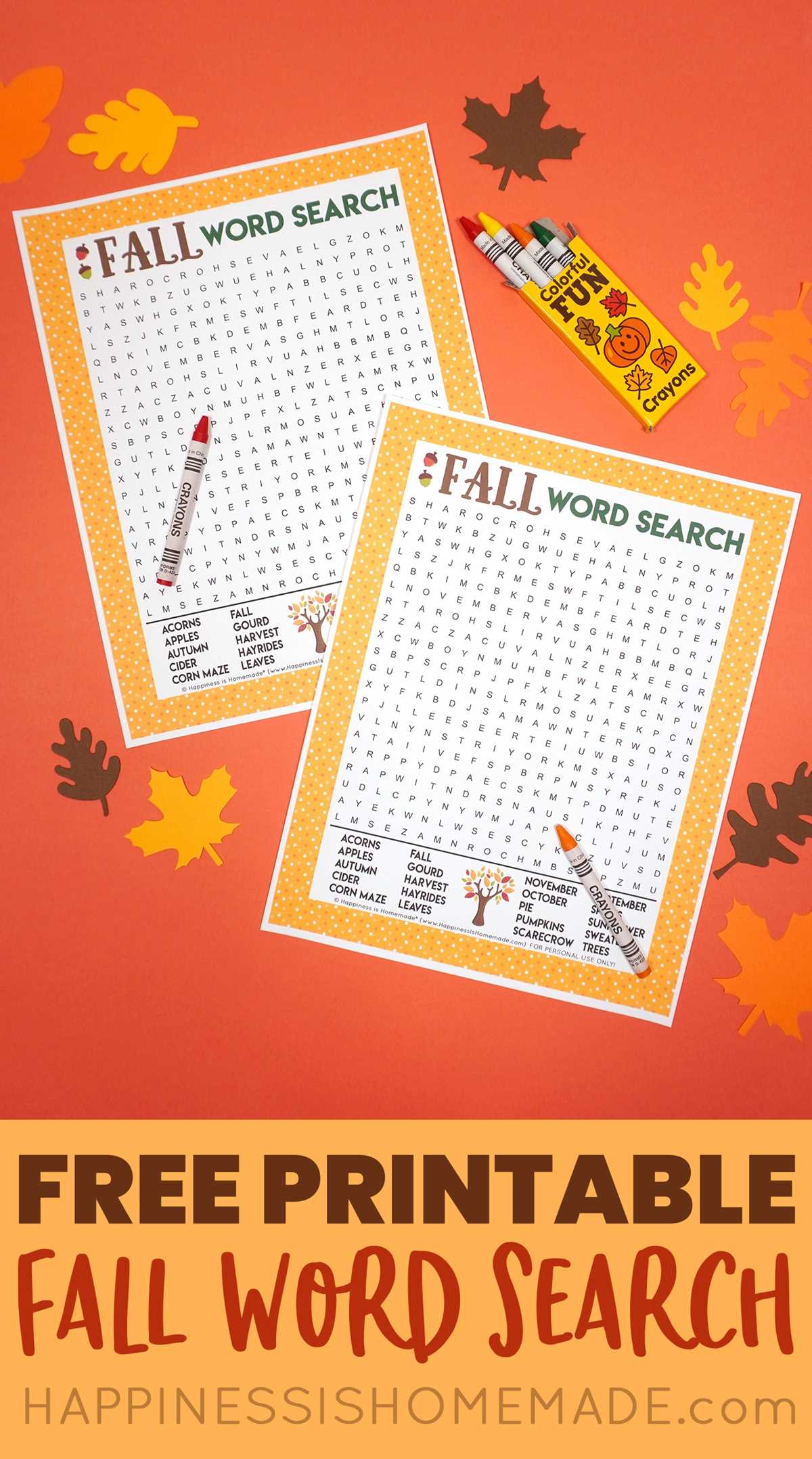
Set a 5-minute timer for simple grids and 10–15 minutes for complex versions. Encourage students to circle terms with colored pencils and list any remaining letters to reveal a hidden message.
Skill Reinforcement
Pair each puzzle with a short writing task where learners use three discovered terms in complete sentences. This links vocabulary recognition with spelling practice.
- Store master files in PDF for repeated use.
- Keep answer keys on a separate sheet.
- Organize puzzles by grid size and difficulty.
Structured preparation and clear formatting create engaging seasonal literacy activities for home and classroom settings.
Fall Word Search Printable
Download an autumn-themed letter grid in PDF format at 300 DPI and print it at actual size to keep rows aligned and characters sharp.
Choose a 10×10 layout for grades K–2 with horizontal and vertical terms only; this keeps the task manageable and reduces frustration.
For grades 3–5, select a 12×12 or 15×15 puzzle that includes diagonal and backward vocabulary. Limit the list to 12–18 seasonal terms such as pumpkin, harvest, acorn, sweater, orchard, and cinnamon to balance challenge and completion time.
Set font size between 18–22 pt for younger learners and 14–16 pt for older students. Maintain at least 0.5 inch margins to prevent trimming during printing.
Use standard 80 gsm paper for single-use activities. For repeated classroom sessions, print on 120–160 gsm stock and laminate for dry-erase markers.
Allocate 5 minutes for simple grids and up to 15 minutes for larger formats. Provide an answer key on a separate sheet to speed up review.
Store master files in clearly labeled folders by grid size and difficulty level to streamline lesson planning and ensure consistent results.