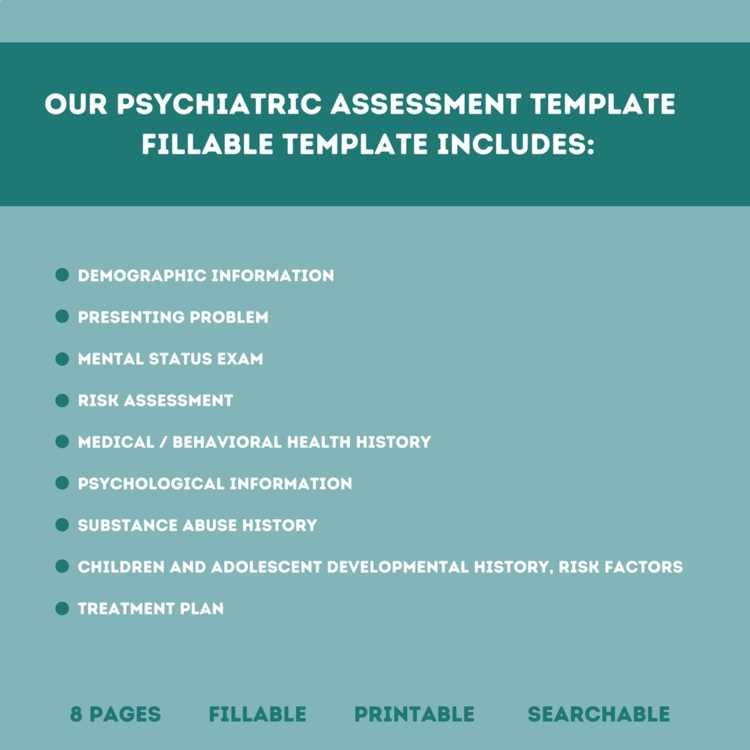
Structuring an Effective Form for Patient Assessment
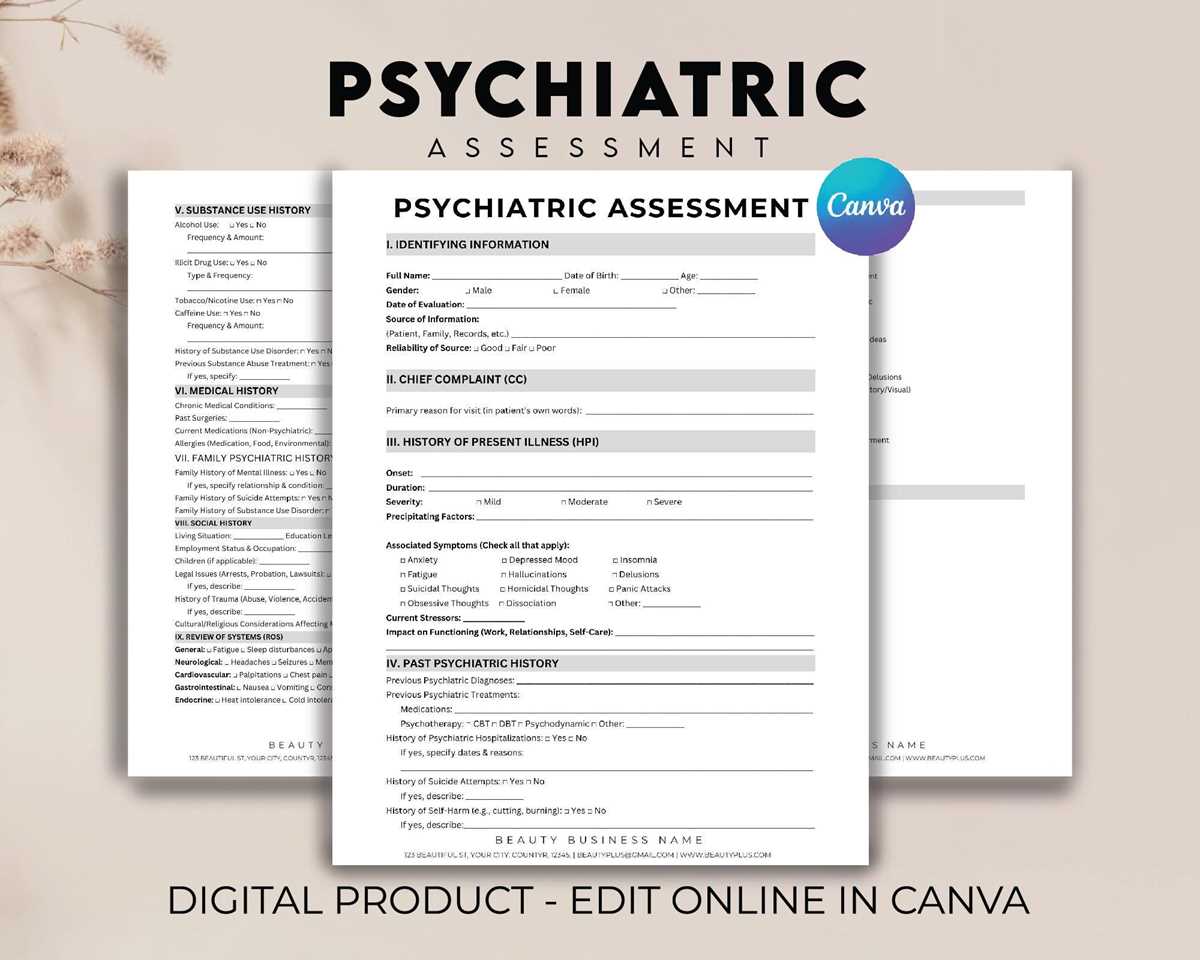
To ensure that your mental health assessment form is both practical and detailed, begin with key sections that reflect a thorough understanding of the patient’s current state. Include personal identification details at the top, followed by medical history, current symptoms, and a section dedicated to mental and emotional well-being. Organize it in a clear, easy-to-follow manner to enhance its utility during consultations.
1. Basic Information and History
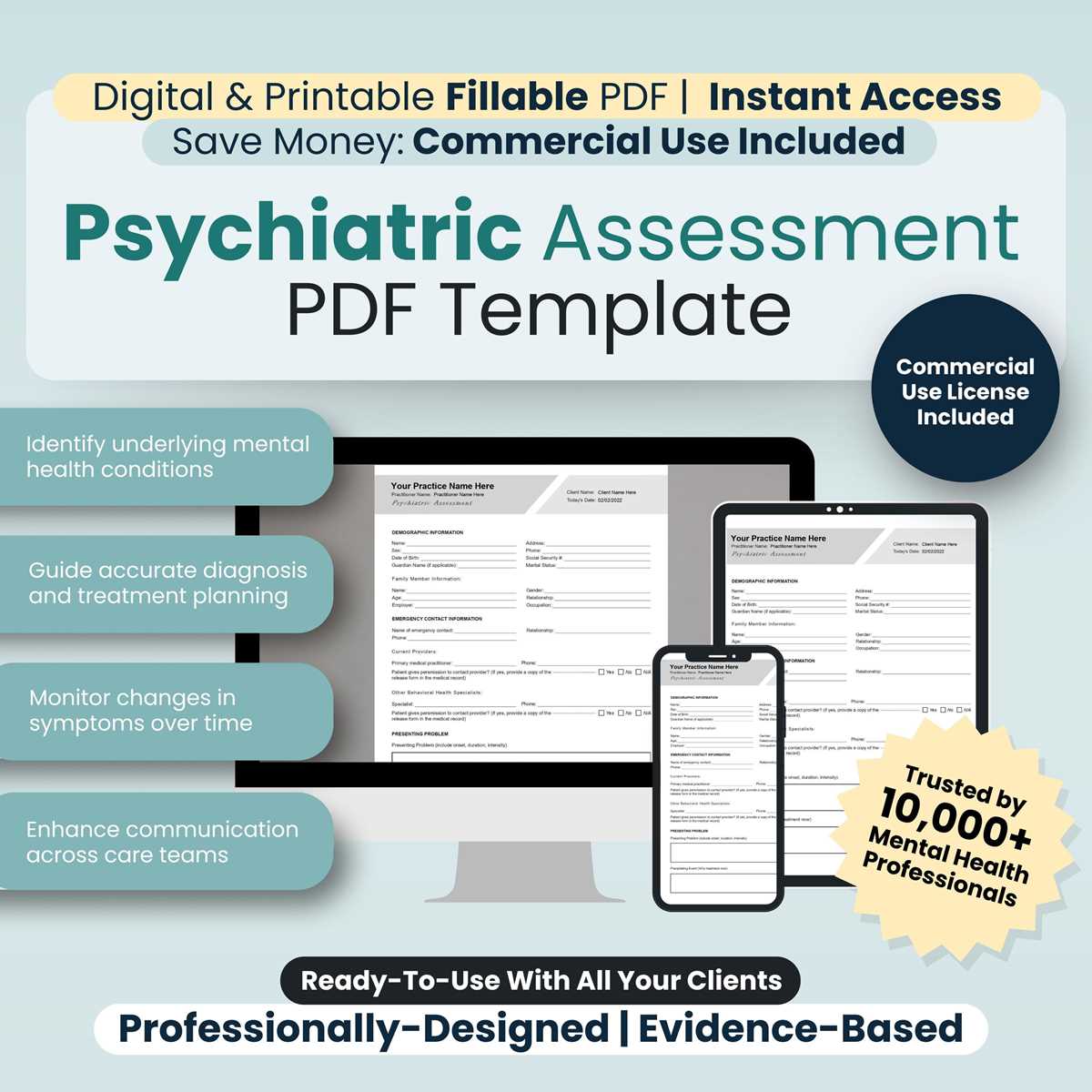
- Full Name
- Date of Birth
- Contact Information
- Medical History
- Current Medications
- Previous Therapies and Outcomes
2. Psychological Symptoms
- Describe current emotional and behavioral concerns
- List any recent stressors or triggers
- Document sleep patterns, appetite, and energy levels
Key Sections to Improve Assessment Accuracy
Ensure that each part of the form is designed to extract specific, actionable insights from the patient’s responses. Make the sections straightforward but flexible enough to account for varying symptoms and conditions. This structure helps create a clear picture of the individual’s mental health for better decision-making.
1. Risk Assessment
- Evaluate any thoughts of self-harm or harm to others
- Document any previous history of risky behaviors
2. Coping Mechanisms and Support Systems
- Assess current coping strategies the patient uses
- Note available social support and external resources
3. Treatment and Progress
- Outline any ongoing treatment plans
- Document progress or setbacks
By maintaining a detailed and structured assessment, mental health professionals can provide more personalized care and better track patient progress over time. This approach not only supports diagnosis but also helps in formulating effective treatment strategies.
Designing a Structured Mental Health Assessment Form
To streamline patient assessments, ensure your form includes structured sections that allow for both clarity and flexibility. A clear section for personal information should be at the top, followed by key health history details, current issues, and behavioral concerns. This organization provides a comprehensive overview without being overwhelming.
One of the first sections should collect identifying details such as full name, age, contact information, and medical history. This sets a foundation for personalized care and ensures accurate tracking of patient progress. Include space for past diagnoses, treatments, and the impact they’ve had on the patient’s well-being.
The next section should focus on current psychological and emotional challenges. Document symptoms such as mood swings, anxiety levels, depression, or feelings of hopelessness. Leave room for the patient to express their concerns, making it easier to assess their needs and develop a targeted treatment plan.
A section dedicated to risk factors can help clinicians assess the urgency of the situation. Document thoughts of self-harm or harm to others, as well as any recent behaviors indicating severe distress. This allows immediate intervention if necessary and ensures that the form serves as both a diagnostic and protective tool.
Another important section is dedicated to coping strategies and support systems. Ask about social connections, family support, and any available resources like therapists or support groups. This data helps gauge the patient’s resilience and highlights areas where they may need additional assistance.
Including a section for ongoing treatments and progress monitoring will allow for continuous tracking of the patient’s mental health. Note prescribed medications, therapeutic practices, and how the patient has responded to these treatments. This keeps the assessment dynamic and helps with adjusting care plans as needed.
Finally, design your form to be user-friendly while maintaining depth. Use a combination of checkboxes for specific symptoms, short answer spaces for patient input, and a few open-ended questions to encourage reflection. This balance makes the form both practical and thorough, improving patient interactions and outcomes.