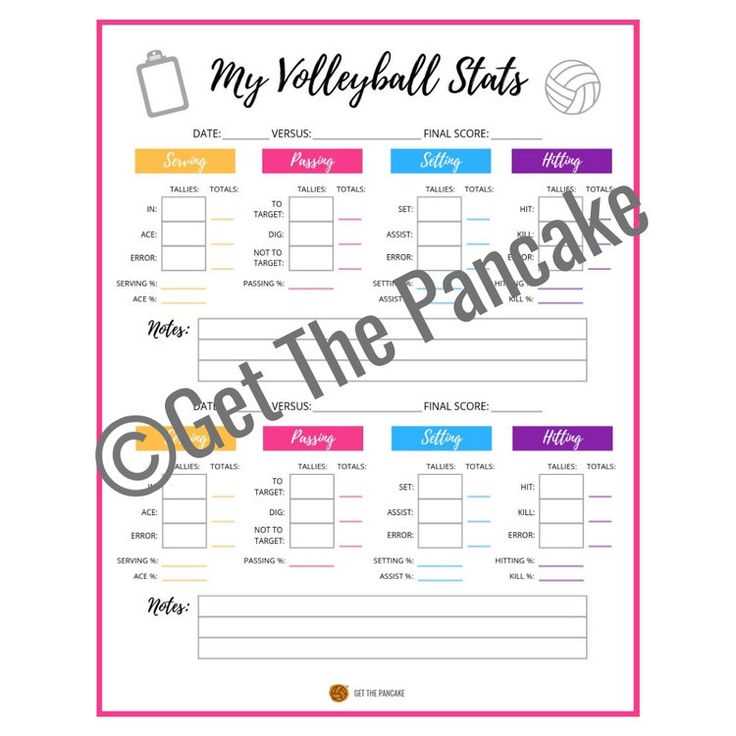
When coaching or playing in a team sport, keeping track of player performance is key. Utilize performance tracking tools to record metrics during each match. By having a structured format to track statistics, you can identify strengths, weaknesses, and overall team dynamics. This allows you to make informed decisions and improve performance over time.
Organizing Key Metrics for Player Analysis
Begin by noting basic metrics such as points scored, errors made, and successful attempts in each game. A common practice is tracking how many times each player is involved in plays, whether they’re serving, blocking, or scoring points. This data helps determine which players are most involved in the game’s success and where attention needs to be focused for improvement.
Other important metrics might include reception accuracy, passing efficiency, and defensive success. By focusing on these key areas, you can easily gauge the effectiveness of each player during both offensive and defensive phases. Regularly tracking these numbers enables more precise coaching and tailored training programs for individual players.
How to Track Individual Player Stats and Team Performance
Incorporating specific player actions into your tracking sheet will improve your ability to assess their overall contributions. For example, track the number of successful passes made, the percentage of attacks converted to points, and defensive plays such as blocks or digs. By measuring these actions, you gain insights into a player’s skill development and how they’re adapting to the match’s pace.
Alongside individual stats, it’s also critical to measure team-wide performance. Metrics such as team attack efficiency, block percentage, and overall success rate in crucial moments (e.g., during set-point situations) can highlight areas that need focus. This also aids in understanding how players are working together to achieve team goals.
To track these efficiently, create a system that categorizes each action on a given sheet. The categories can range from “serves received” to “successful spikes” and beyond. This level of detailed tracking allows for a thorough post-game review and strategic planning for future matches.
By analyzing player and team stats consistently, you can quickly identify trends, monitor progress, and make more informed decisions for game strategies. Whether you’re a coach or player, using these tools maximizes your understanding of the game and helps develop a well-rounded approach to both individual and team performance.
Tracking Performance with Key Metrics
To track team performance accurately, break down metrics like serves, successful passes, and defensive actions. Focus on individual player contributions such as kills, blocks, and successful receives. Record these actions in a clear format that allows quick access to each player’s data, helping identify strengths and weaknesses during practice or matches. This system provides a clear picture of team dynamics and highlights areas requiring attention.
For actionable results, integrate this data into ongoing team strategies. Use it to assess how well each player is contributing in different situations, such as high-pressure moments or during the opponent’s scoring streaks. This approach helps develop better game plans, improve coordination, and offer personalized feedback to players, ultimately enhancing team synergy and performance across games.