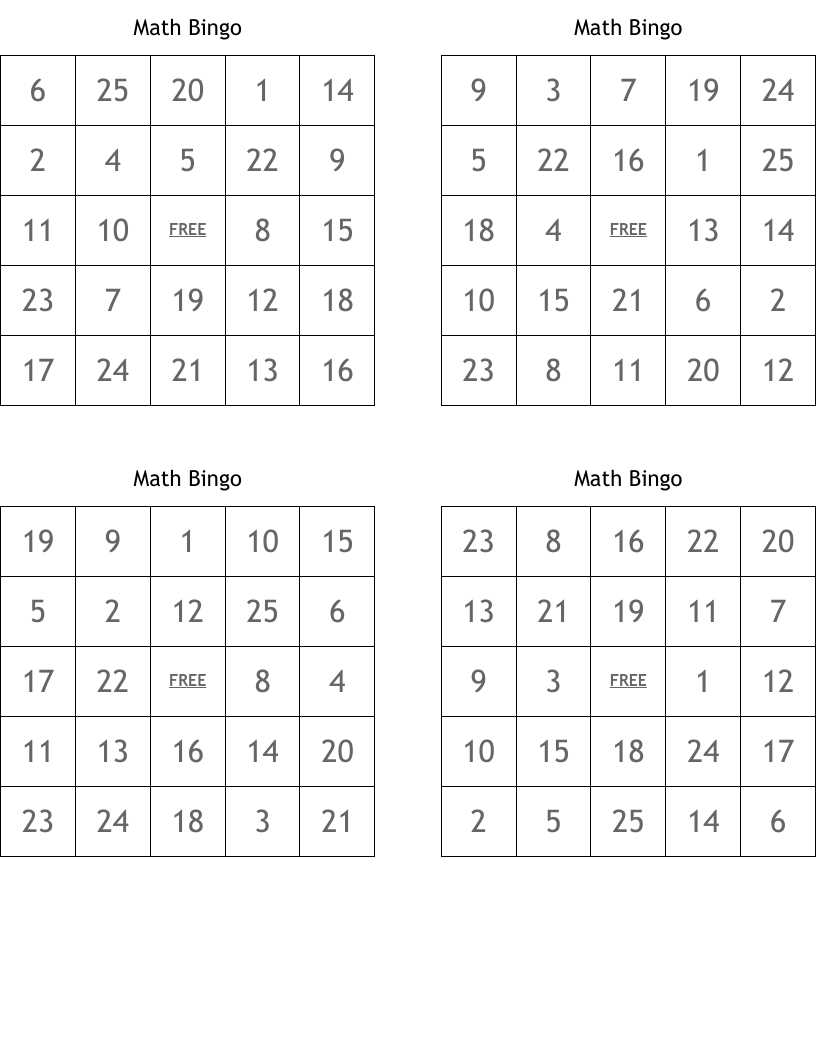
Create fun and interactive learning experiences by designing cards with arithmetic problems and their corresponding answers. These simple games can be printed for use in classrooms or at home, offering students a hands-on method to reinforce their skills. Whether you want to focus on addition, subtraction, multiplication, or division, these cards can be customized for different age groups and difficulty levels.
Incorporate various themes and designs into the cards to keep learners engaged. For example, you can include colorful graphics or create themed challenges that make the activity more exciting. You can also vary the format to include multiple-choice questions or picture-based exercises to match different learning preferences.
By turning exercises into a competitive game, students are more likely to stay motivated while practicing essential number skills. You can easily organize these activities in group settings, making learning a fun and interactive experience. Whether for review sessions or regular practice, this approach enhances both focus and enjoyment.
Creating Custom Number Games for Classroom Fun
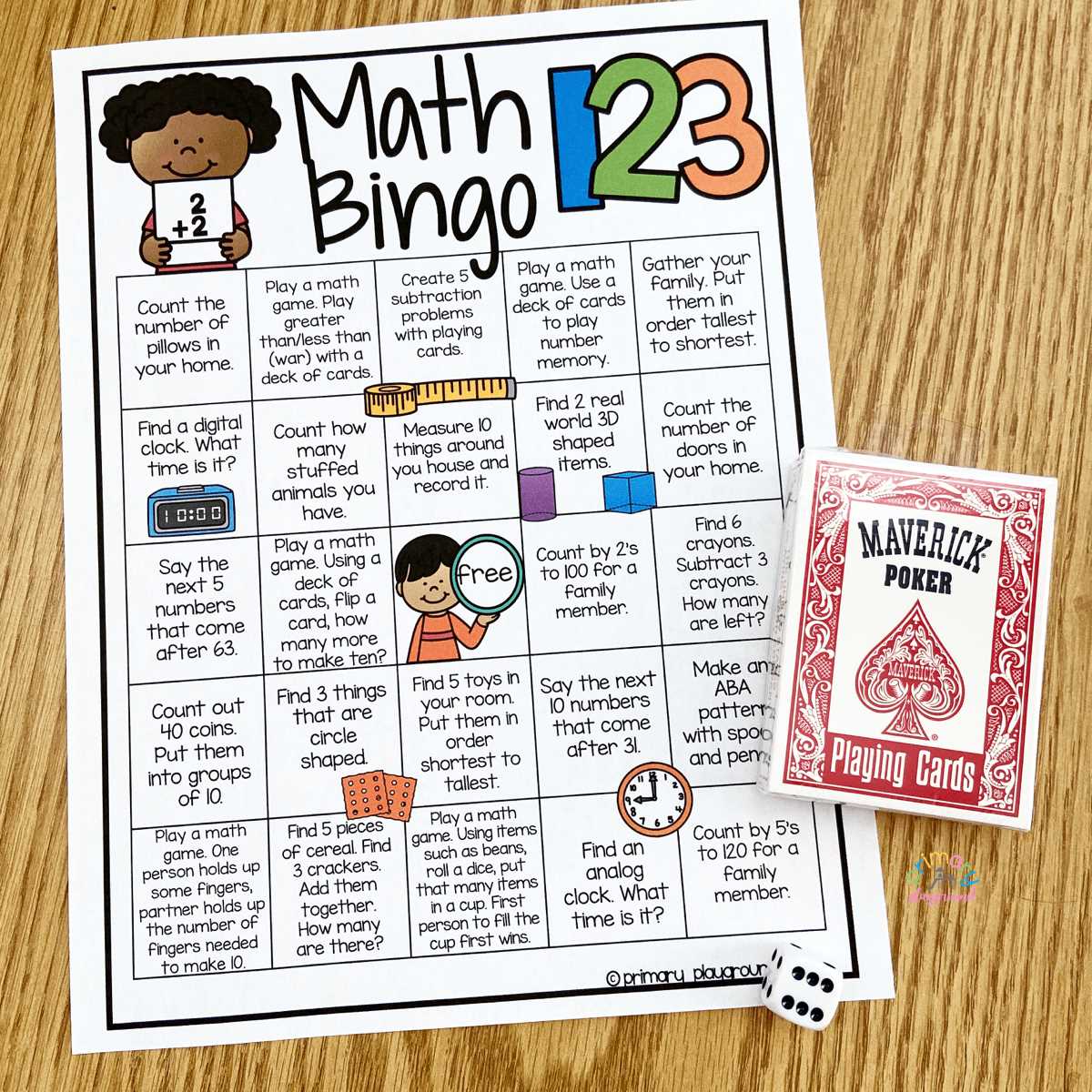
Begin by designing cards with a grid of number problems and their answers. Each grid square can contain either an arithmetic question or a result, depending on the level of difficulty you wish to set. This format encourages quick thinking while students try to match answers with the numbers on their cards.
Use a variety of problem types, such as addition, subtraction, or multiplication, depending on what you’re teaching. This variety keeps the game exciting and ensures that students practice different skills during the same activity. For older students, you could include division problems or even more complex equations.
Incorporate colorful images or different themes in the background of the grids. Visual engagement helps students stay focused and makes the game more enjoyable. You can also tailor the themes to the interests of your class, such as animals, sports, or nature, making the experience more personalized and fun.
For a more interactive experience, print cards with blank grids where students fill in their own answers. This allows them to participate actively in preparing the game while reinforcing their problem-solving skills. They can then exchange cards with classmates for a fresh challenge.
To add an element of excitement, consider using a random number generator or calling out problems from a set of cards. This unpredictability keeps the students on their toes, making the activity feel like a real-time challenge. You can even keep score to encourage a healthy competition in the classroom.
These activities work well in groups, allowing students to help each other out and discuss strategies for solving problems. You can also rotate groups or create team challenges, where each team works together to complete their card. This encourages collaboration while also making learning feel like a shared experience.
- For younger children: Focus on simple addition and subtraction, ensuring the difficulty level matches their abilities.
- For older students: Add more advanced operations like multiplication, division, or even fractions.
- Interactive Ideas: Include tasks that require students to write out problems or use objects for counting in addition to solving them mentally.
Incorporating rewards, such as small prizes or recognition, can help motivate students. Whether it’s for completing a card correctly or for showing improvement, these incentives keep students engaged and give them a sense of accomplishment. With the right approach, this activity can become a regular and highly anticipated part of the learning routine.