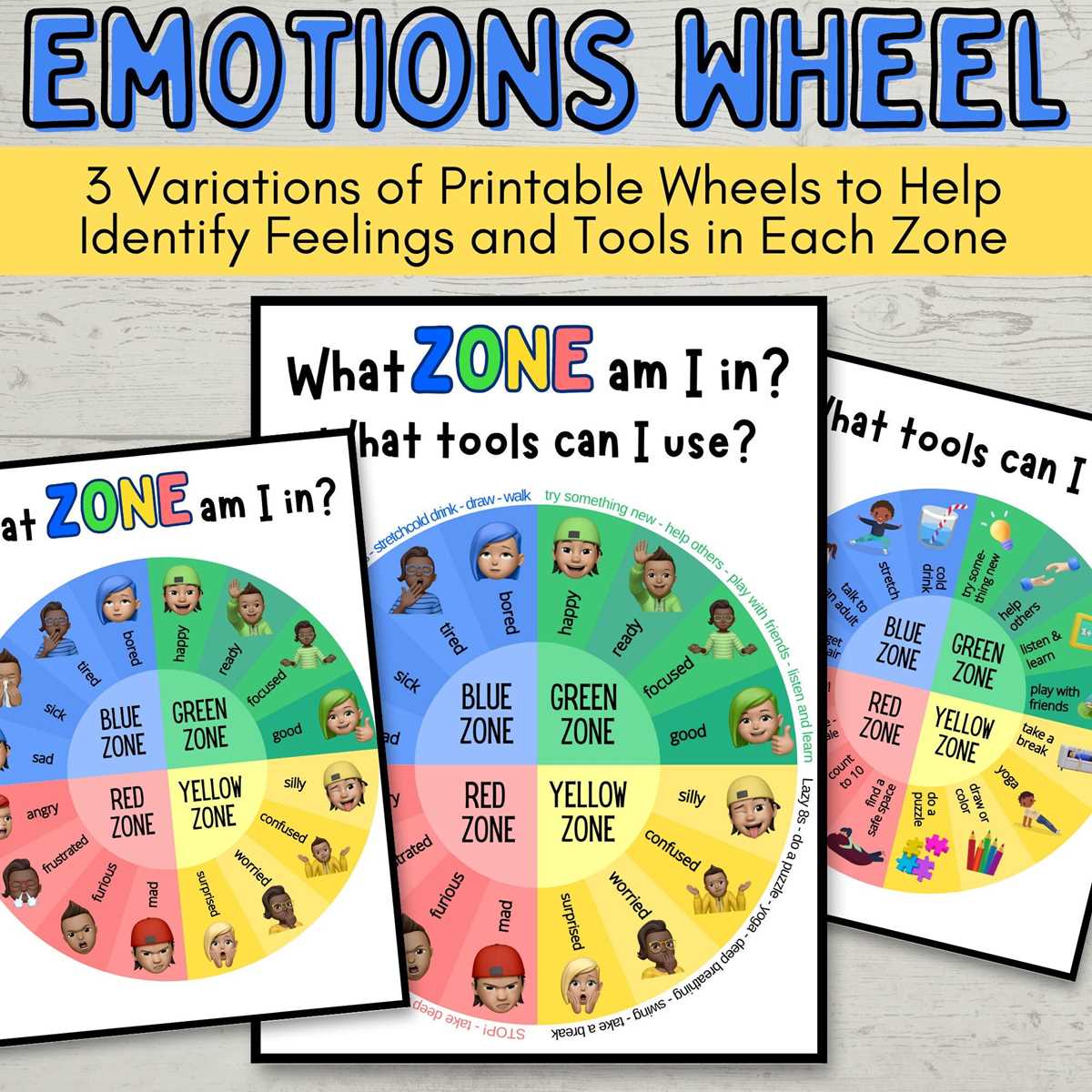
To support emotional awareness and self-regulation, start by creating charts or visual guides that categorize different emotional states. These tools can be particularly helpful for young children, as they simplify the identification and understanding of their feelings. Each chart can represent various moods or emotional states in a clear, color-coded manner, which encourages children to recognize their emotional state and choose appropriate coping strategies.
How to Implement Visual Charts in Daily Routines
Begin by integrating these visual tools into daily routines. For instance, before a child begins a new activity, ask them to identify their current emotional state using a visual chart. This not only helps children practice emotional recognition but also allows educators or parents to gauge how a child is feeling before engaging in tasks. It’s particularly useful during transitions, such as moving between activities or after a challenging event, where a child may need extra support in regulating their emotions.
Additionally, these tools are effective in calming situations. When a child becomes frustrated, the visual chart can prompt them to see which emotion they are feeling and identify a strategy to manage it. This may include taking deep breaths, counting, or stepping away from the situation. Encouraging children to actively use these charts can help build self-awareness, which is crucial in emotional development.
Customizing Emotional Charts for Different Needs
Not all children respond to visual cues in the same way. Customize the charts based on the child’s age, preferences, and developmental level. For younger children, simple, colorful images representing different feelings, such as happy, sad, or angry, are sufficient. Older children or those with more advanced emotional understanding may benefit from more detailed charts, which include a wider range of emotions like frustrated, excited, or embarrassed.
In some cases, you can even involve children in creating their own charts. By allowing them to choose symbols or words that resonate with them, children are more likely to connect with the tool and use it effectively. For example, they could draw their own facial expressions or select favorite colors to represent their emotions. This personalized approach can increase engagement and help children feel more in control of their emotional growth.
By consistently using these visual tools, children can develop a stronger vocabulary for emotions and learn how to express themselves in healthy ways. As they become familiar with the charts, they will begin to internalize the connection between their feelings and actions, leading to improved emotional management over time.
Tools for Developing Emotional Awareness with Visual Aids
To promote emotional awareness, create visual charts that categorize various feelings using color coding. Assign each emotion a distinct color, such as red for anger or blue for sadness, and ensure the design is simple to allow for easy recognition. Use these charts daily to help individuals identify their emotional state. Children, in particular, benefit from these tools as they build a foundation for self-regulation. Having a visual representation allows them to clearly see how they feel and prompts them to manage their emotions more effectively.
For practical use, place these charts in visible areas where children can easily refer to them during stressful or high-energy situations. This helps reinforce their ability to identify emotions in real time. When a child exhibits frustration or sadness, the chart can guide them to acknowledge their feelings and choose an appropriate coping strategy, such as deep breathing or taking a short break. This system encourages independent emotional processing and reduces reliance on external cues.
Customizing visual tools to fit individual needs can increase their effectiveness. For example, some children may require a more detailed chart with a broader range of emotional states, while others might benefit from a more straightforward representation. Use images, symbols, or even faces to represent different emotions, allowing the chart to resonate with the individual. Including activities or suggestions on the chart, like “take a walk” for frustration or “talk to someone” for sadness, can further enhance the process of managing emotions.
Consistent practice with these visual tools strengthens emotional literacy over time. As children familiarize themselves with recognizing their emotions, they learn to articulate how they feel and practice self-soothing techniques. Encourage them to update their charts regularly and reflect on their progress. The more children engage with these visual prompts, the more skilled they become at understanding and controlling their emotional responses in various situations.