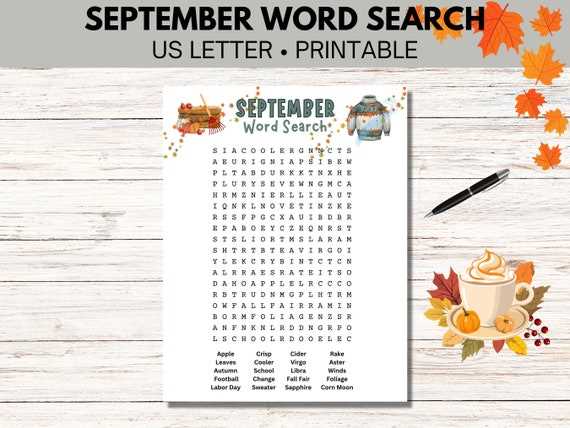
To keep kids engaged during the fall, try offering themed puzzles related to the month’s activities and events. These can provide both fun and a good mental workout. By incorporating common terms such as seasonal words or autumn activities, these puzzles can help children improve spelling, vocabulary, and cognitive skills.
Start by selecting a variety of words that tie into the time of year–think about terms like “harvest,” “leaves,” and “pumpkin.” Not only will this make the activity more enjoyable, but it will also educate children about what they’re encountering in their everyday lives. You can easily design a puzzle with a few quick steps using online tools that generate grids and printables.
Another way to enhance the experience is by adding a bit of a challenge. Depending on the age group, you can adjust the difficulty level by increasing or decreasing the number of hidden words or their complexity. For younger kids, focus on easy, recognizable terms, while for older children, opt for more intricate words or even a time challenge.
Seasonal Puzzle Challenges for Kids
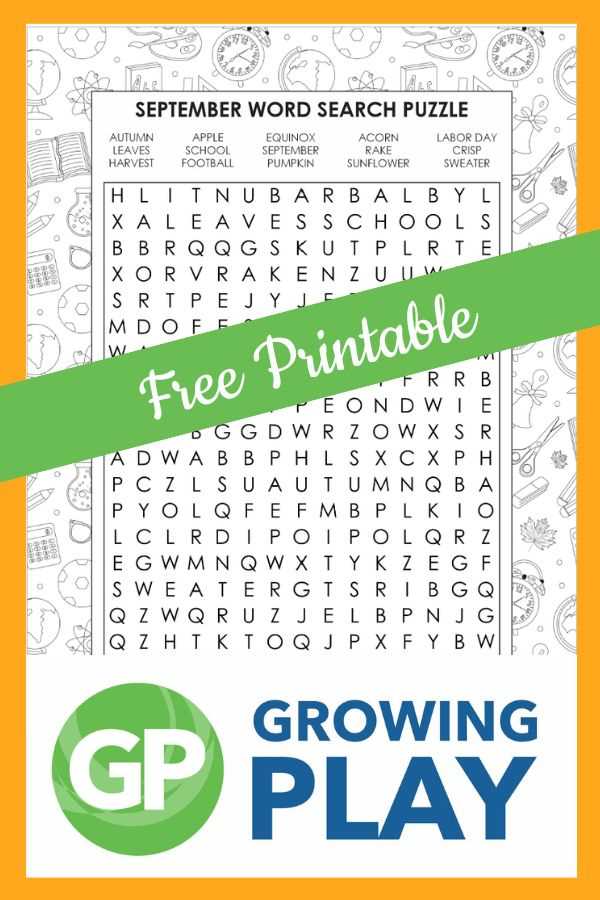
To begin creating a fun and engaging activity, focus on using seasonal terms like “autumn,” “harvest,” and “leaves” as hidden words. These words can help introduce younger children to the concept of fall and its characteristics, making the activity both educational and enjoyable.
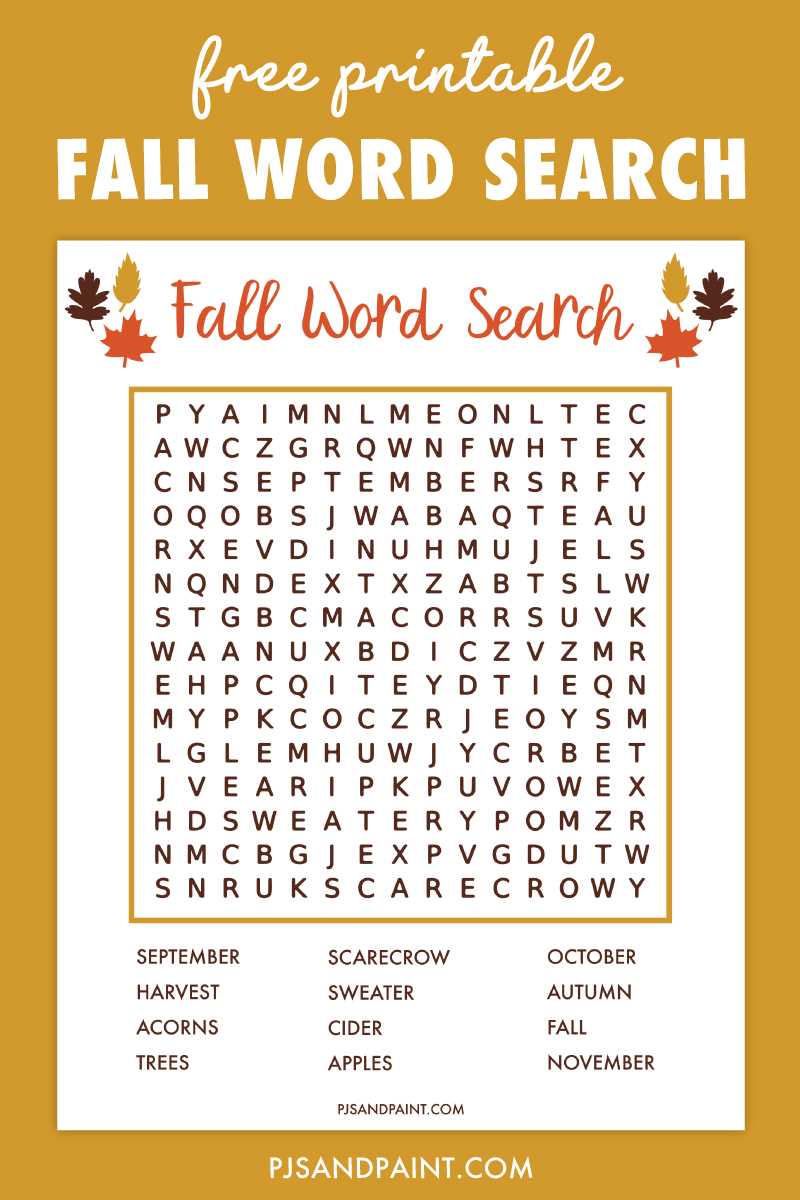
Adjust the difficulty to suit the age group. For younger children, you can use shorter words and fewer terms in the grid. For older kids, challenge them with more complex words or phrases, making the grid larger and increasing the difficulty level.
Incorporate a visual element by using themed grids. You could create a grid in the shape of a tree, pumpkin, or apple to add an extra level of creativity. These fun shapes can capture kids’ attention and make the activity more exciting.
Turn the puzzle into a timed challenge for added excitement. By setting a timer, kids can compete to finish the puzzle as quickly as possible. This can be a great classroom activity to boost participation and make the task more dynamic.
Provide printable solutions that can be handed out after the puzzle is completed. This allows children to check their answers and learn from any mistakes they made. It’s a simple way to help with self-correction and reinforce new vocabulary.
Introduce variety by mixing puzzle formats. Instead of always using a traditional grid, create word lists where the words are hidden diagonally or vertically, or even backward. These changes make the activity more interesting and challenge kids to approach it in new ways.
Finally, create a set of printable puzzles with varying difficulty levels, so children can move on to more complex ones once they’ve mastered the basics. This ensures that the puzzles remain fresh and challenging as kids progress.