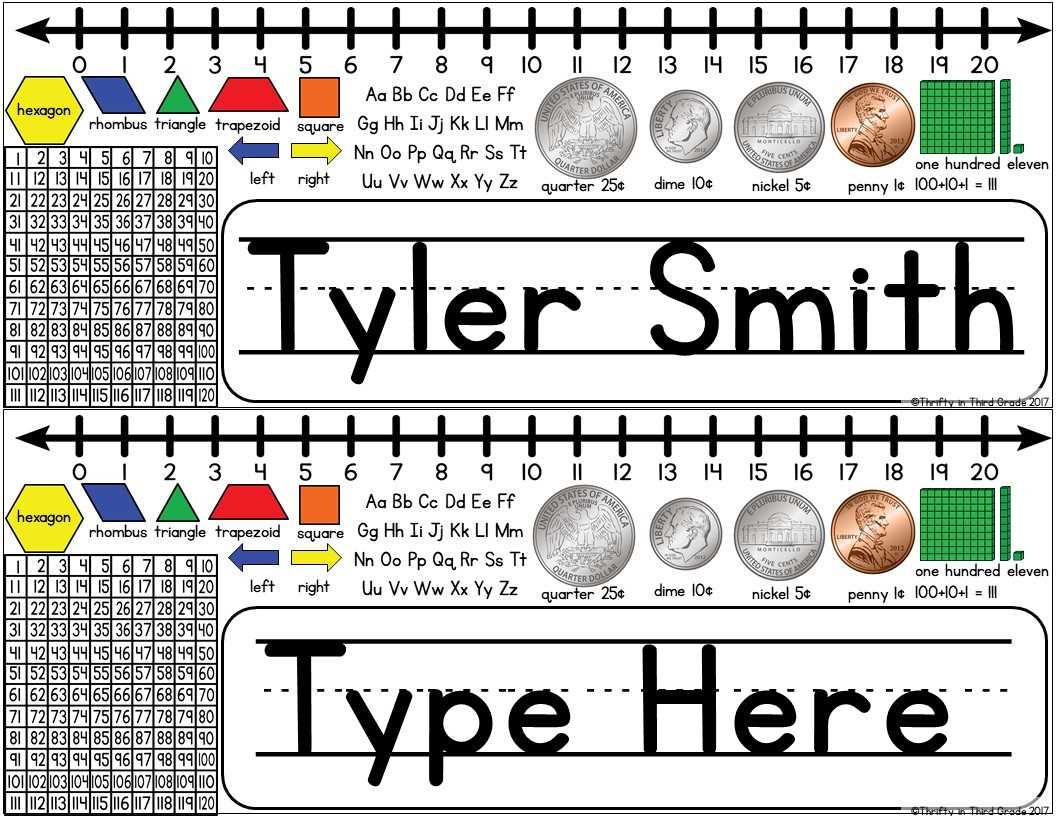
Use 200–250 gsm cardstock with a 12–14 pt sans serif font at 28–36 pt size to create clear desk label cards that remain readable from 1.5–2 meters away.
Design and Layout Settings That Improve Readability
Choose fonts such as Arial, Helvetica, or Calibri. Avoid decorative typefaces that reduce clarity. Keep text in bold weight and use dark ink on a light background. Maintain at least 0.5 inch margins to prevent trimming issues.
- Card size: 2 x 8 inches fits most classroom tables
- Landscape orientation works better on rectangular surfaces
- Line spacing: 1.15–1.3 to avoid crowding
- Capitalize first letter only to improve recognition speed
Include optional elements such as alphabet strips (A–Z), number lines (0–20), or subject icons. Keep graphics under 30% of total space so text remains dominant.
Color Coding by Group
Assign background colors to reading or math groups. Use pastel tones to maintain contrast with black lettering. Avoid saturated red or neon shades that reduce legibility.
Printing, Finishing, and Attachment Methods
Set printer scaling to 100% and disable “fit to page.” Use high quality mode with standard ink density. Allow sheets to dry 2–3 minutes before handling to prevent smearing.
- Trim with a guillotine cutter for straight edges
- Laminate using 3–5 mil pouches to extend lifespan
- Round corners to reduce peeling
Attach using removable adhesive strips, double sided tape rated for painted wood, or clear contact film. Avoid permanent glue on shared furniture. Replace cards each term to reflect seating changes.
Maintenance Tips
Wipe laminated surfaces weekly with a damp microfiber cloth. Store spare copies in labeled envelopes sorted by class period. Keep a digital template saved in PDF format to allow quick reprints.
Desk Identification Cards You Can Edit and Print
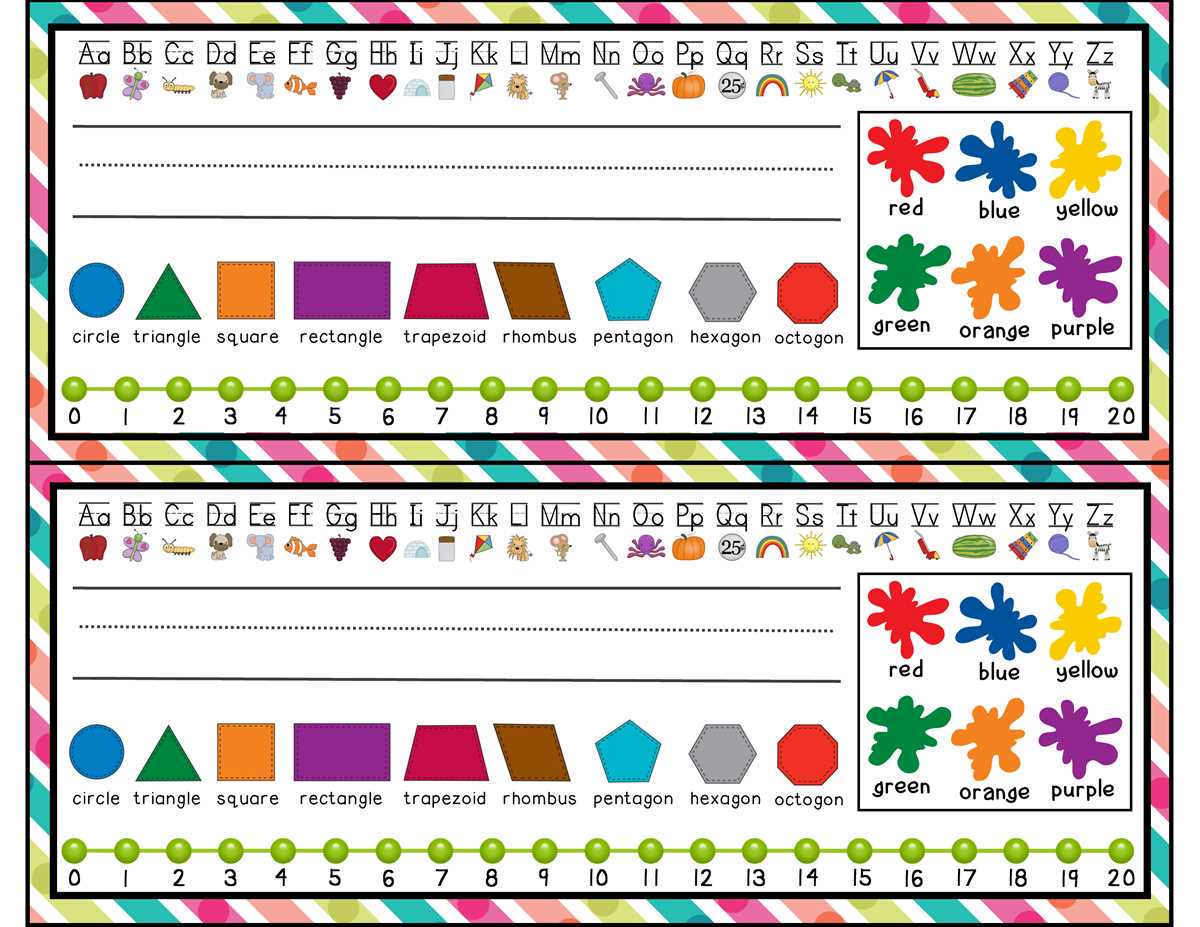
Use 250 gsm matte cardstock and a bold sans serif typeface at 32 pt to create clear student identification cards that stay readable across the classroom.
Set document size to 2 x 8 inches or 3 x 10 inches depending on table width. Keep text centered with at least 0.4 inch padding on each side. Black lettering on a white or pale pastel background provides strong contrast. Avoid script fonts and thin strokes that blur after lamination.
Add learning aids directly below the student’s first name: a 0–20 number line in 10 pt size, alphabet strip in uppercase letters, or a small multiplication chart limited to 1–5 facts. Keep supplementary graphics under one third of total space to prevent clutter.
Print at 100% scale with high quality settings and disable automatic resizing. Allow ink to dry two minutes before trimming with a straight edge cutter. Laminate using 3 mil pouches to extend durability through an entire semester. Rounded corners reduce peeling and scratching.
Attach each card using removable adhesive strips rated for painted wood or plastic surfaces. Replace adhesive every 6–8 weeks to prevent residue buildup. Store digital templates as PDF files with editable text fields so class updates require only retyping and a single reprint.