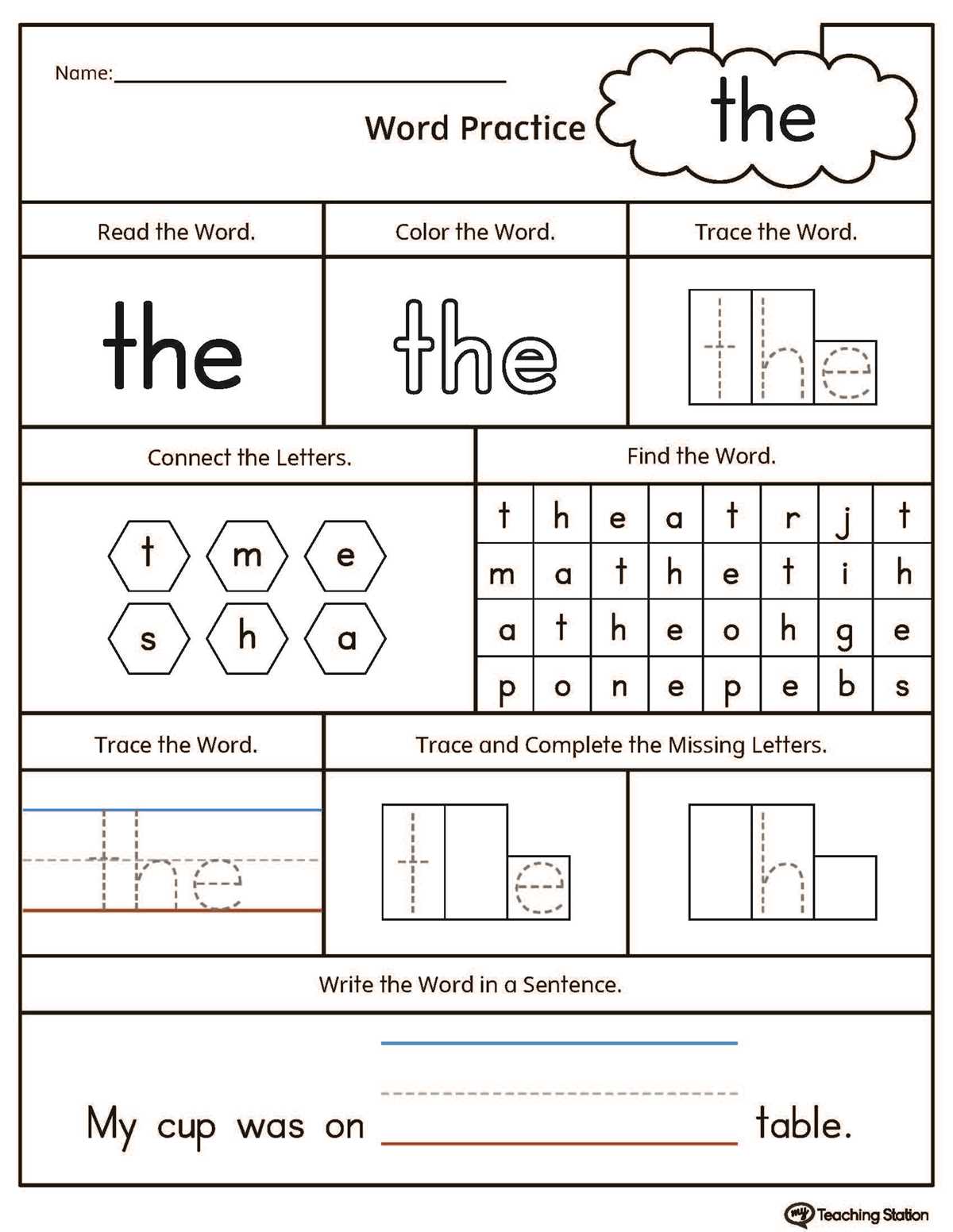
Use short daily drills of 10–12 high frequency terms with tracing, reading, and sentence tasks to build automatic recognition within four weeks.
Choosing and Structuring High Frequency Term Sheets
Select lists based on grade level benchmarks such as Dolch or Fry sequences. Kindergarten learners typically practice 40–50 common terms, while first grade expands to 100 or more. Limit each sheet to 6–8 items to avoid overload.
- Font size: 28–32 pt for early readers
- Wide line spacing for tracing activities
- Black text on white background for clarity
- Include one simple sentence using each term
Arrange tasks in this order: trace three times, read aloud twice, write from memory once, then use in a short sentence. This sequence supports recognition and recall without excessive repetition.
Adding Visual and Context Practice
Pair each target term with a small black and white illustration that reflects its meaning or usage. Keep images under 25% of page space. Add fill in the blank sentences where children choose the correct option from two similar terms.
Printing and Classroom Implementation
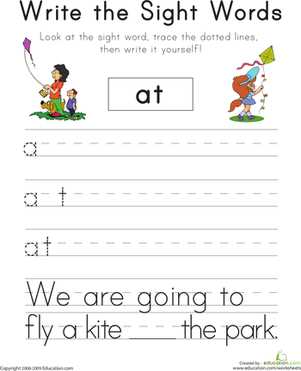
Set printer scale to 100% and use 90–120 gsm paper for daily worksheets. Store completed pages in a dated folder to track progress. Conduct weekly five minute reading checks using flashcards created from the same list to confirm retention rates above 85% before introducing new vocabulary.
Progress Monitoring
Create a tracking chart with columns for date, list number, reading accuracy, and spelling accuracy. Move to the next group only after two consecutive sessions with fewer than two errors.
Printable Sight Word Worksheets and Activities
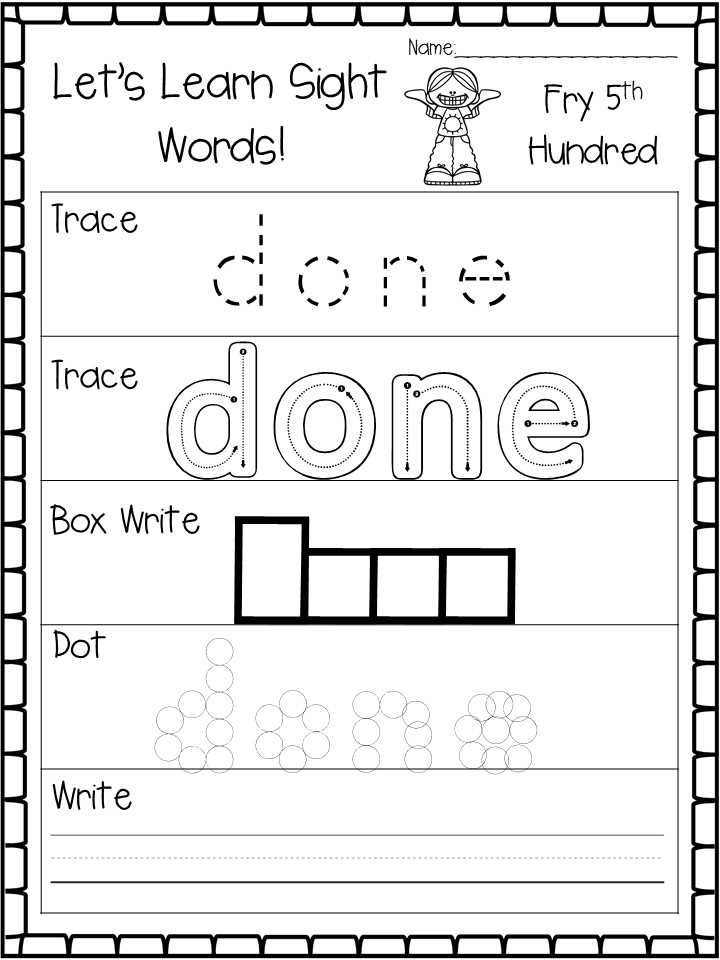
Use weekly sets of 8–10 high frequency terms with tracing, reading aloud, and sentence completion tasks to build automatic recognition within one month.
Design each worksheet with large 30 pt sans serif text and wide primary writing lines. Place each target term in isolation at the top, followed by three trace lines and one blank line for independent writing. Add a short five word sentence that includes the same term to connect recognition with context.
Include matching exercises where learners connect target vocabulary to simple pictures. Limit visual elements to black outline drawings to avoid distraction. Keep each page to one skill focus such as tracing, fill in the blank, or cut and paste sorting.
Print on 90–100 gsm paper for daily practice and use 160–200 gsm cardstock for reusable flashcards. Laminate cards with 3 mil pouches to extend durability through a semester of small group drills.
Schedule four short sessions per week lasting 7–10 minutes. During each session, review previous vocabulary using rapid recognition drills with a three second response limit per item. Record accuracy percentages and repeat the same set until learners reach at least 90 percent correct across two consecutive checks.
Store completed sheets in dated folders and analyze error patterns every two weeks. Focus reteaching on commonly confused pairs such as “was” and “saw” or “there” and “here” using side by side comparison exercises and dictated sentence practice.