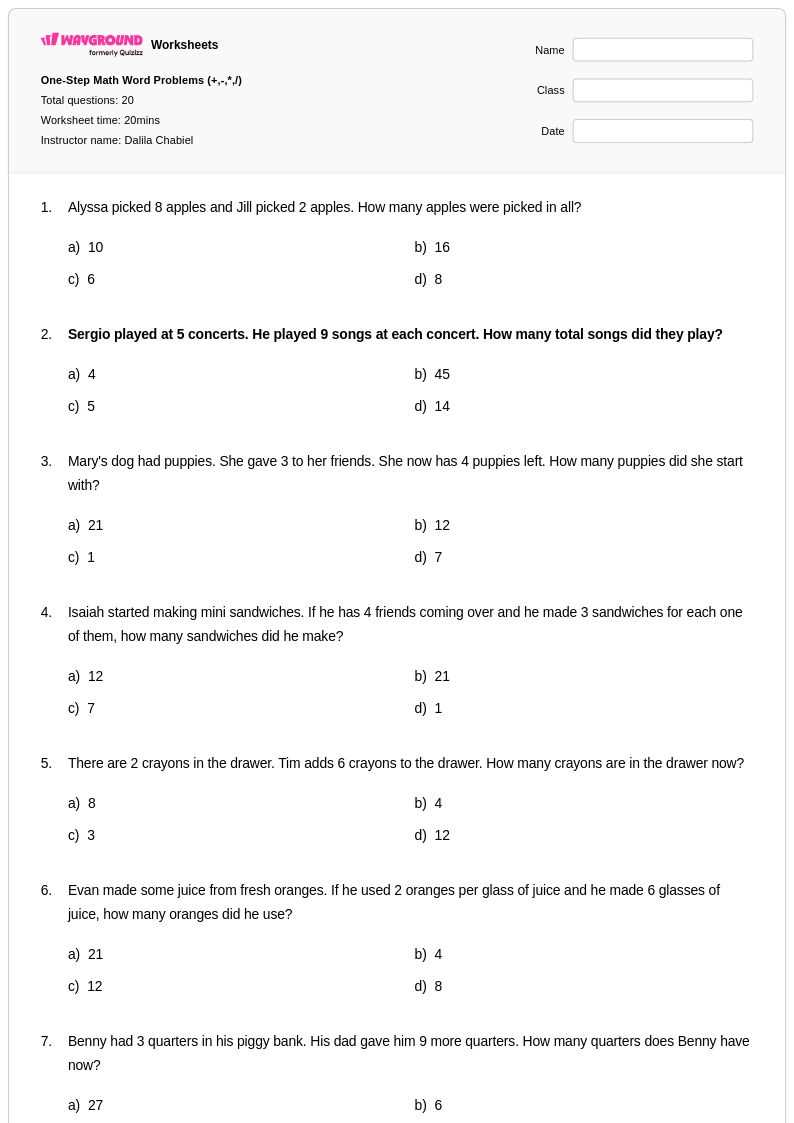
Engage with Core Concepts
Students in their developmental phase of learning are often looking for ways to sharpen their number sense and problem-solving abilities. Offering structured exercises that provide practice in fundamental arithmetic, algebraic expressions, and geometry shapes can make a significant difference. To help improve these skills, provide access to exercises that guide students through step-by-step problem-solving methods.
Arithmetic Practice
- Develop fluency with multi-digit operations such as long division and multiplication.
- Enhance speed and accuracy in solving problems involving fractions and decimals.
- Incorporate exercises that focus on working with ratios, percentages, and proportions.
Algebra Skills Development
- Introduce basic algebraic expressions and equations for solving unknowns.
- Support the transition to solving problems with variables and constants.
- Use a variety of exercises to reinforce the concept of solving for ‘x’ in one-step or two-step equations.
Geometry and Measurement Mastery
- Provide exercises related to calculating perimeter, area, and volume of common shapes such as rectangles, squares, and triangles.
- Allow practice in understanding angles, symmetry, and basic transformations.
- Incorporate exercises that deal with converting measurements between different units (e.g., inches to centimeters).
Make Learning Fun and Effective
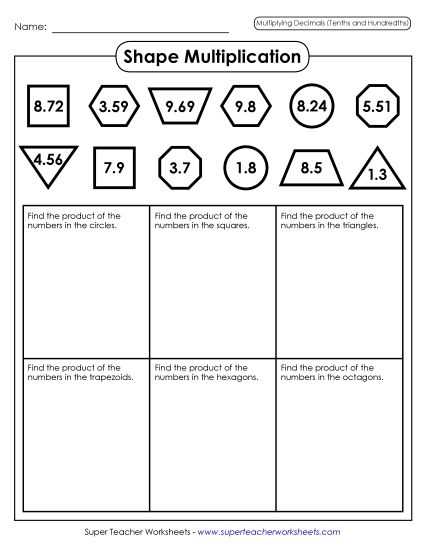
To encourage engagement, integrate diverse activities that incorporate logic puzzles, games, and real-world problems. Challenging tasks that connect classroom concepts with everyday scenarios provide students with opportunities to think critically and apply their knowledge outside of the classroom setting. Whether through a series of problem sets or dynamic challenges, the goal is to make these topics relevant, stimulating, and beneficial for continued academic success.
Engaging Activities for Skill Building in Middle School
To improve students’ understanding of operations with fractions, decimals, and percentages, challenge them with exercises where they need to convert between different forms. A solid exercise can include adding and subtracting fractions with different denominators and then requiring learners to apply the same skills to real-world problems, like calculating discounts. These types of activities not only reinforce calculations but also show the practical uses of the concepts. Focus on mixed practice to boost retention, such as alternating between computation and word problems.
Introduce exercises where students work with geometric shapes to calculate area, perimeter, and volume, varying the level of difficulty based on the type of figure. These activities should include 3D shapes as well, challenging students to visualize and compute more complex measurements. Utilize problems that incorporate everyday scenarios, like determining the amount of paint needed for a room or the fabric required to make a garment. These exercises promote critical thinking and real-life application of geometric knowledge.