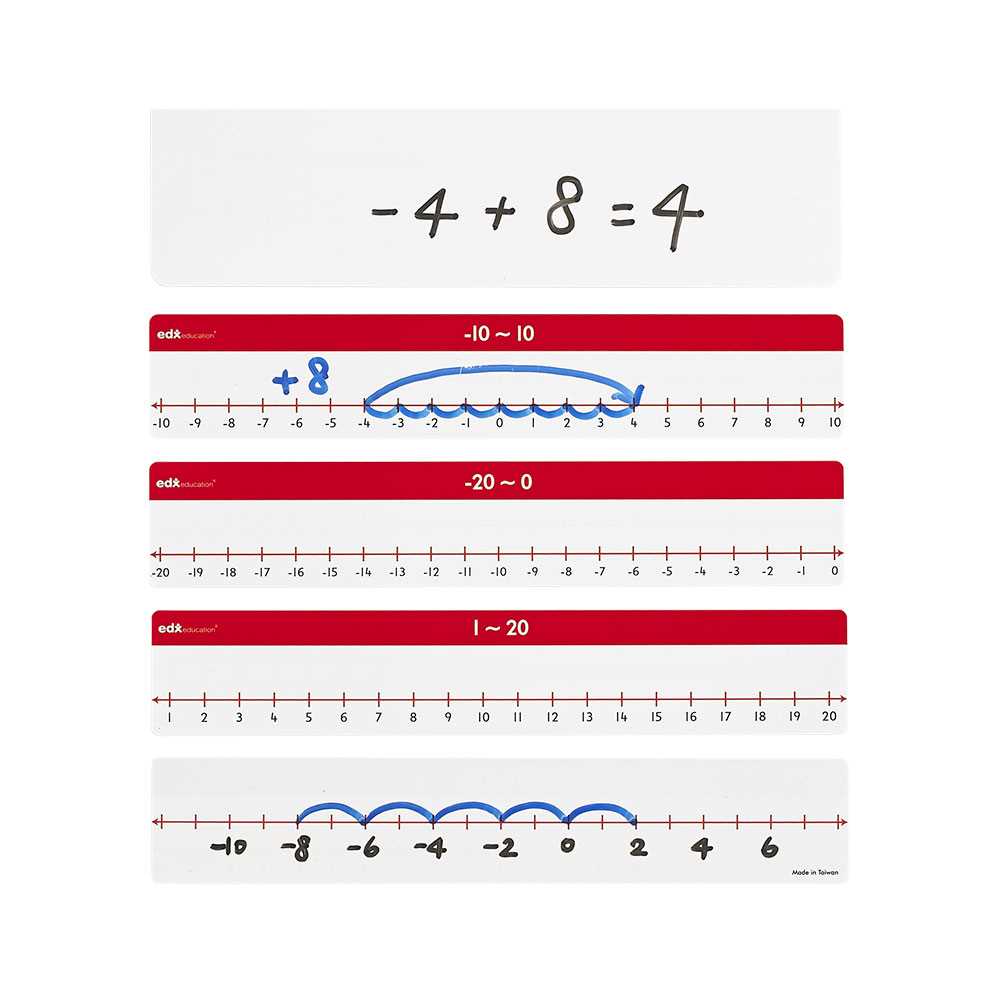
Using a visual scale to represent numerical values helps students grasp the concept of addition, subtraction, and the relationship between values. These tools offer a clear, tangible way to see how numbers progress in both directions, especially when working with quantities above and below zero.
For beginners, this tool is incredibly useful in showing how subtraction involves moving left, and addition involves moving right. By using such visual aids, children can better understand the effects of each mathematical operation on the values. This method not only enhances comprehension but also builds a solid foundation for future concepts like multiplication and division.
When selecting these resources, look for versions that clearly display the increments and have a simple, clean design. This helps avoid confusion and allows learners to focus on the concept itself. Whether you’re teaching basic math or introducing more advanced concepts, this tool can be adapted to various levels of understanding.
How to Use a Visual Tool for Teaching Addition and Subtraction
Start by marking a clear starting point on the scale. For addition, begin at a number and move right by the required amount. For example, to calculate 5 + 3, place your finger or a marker on 5, then move three steps to the right to land on 8.
For subtraction, begin at the starting value and move left by the given number. To calculate 7 – 4, start at 7 and count four steps back, reaching 3. This movement reinforces the concept of decreasing value.
To make the process engaging, encourage students to say the numbers aloud as they move along the scale. This not only helps with number recognition but also strengthens their connection between movement and calculation.
For more complex exercises, use numbers that involve both positive and zero crossings. For instance, starting at -2 and adding 5 will help students understand how values increase across zero and into positive territory. Similarly, subtracting from a number that crosses zero gives a clear visual representation of how negative numbers work.
Another effective method is to introduce a variety of problems with different increments, such as moving by 2, 5, or even 10. This introduces the concept of skip counting, allowing students to work with larger numbers in a structured manner.
Encourage students to practice with different types of problems, including word problems, to develop their mental math skills. Using the visual tool alongside these problems can help students visualize the process and gain confidence in their abilities.
As students become more comfortable, gradually remove the visual tool and encourage them to perform calculations mentally, using the understanding they gained from physically moving along the scale. This transition from concrete to abstract thinking is key in building strong arithmetic skills.
Visualizing Negative and Positive Values with Visual Scales
To clearly show the relationship between increasing and decreasing values, use a structured scale where zero acts as the central reference point. On one side, values will increase, while on the opposite side, values will decrease. This helps students see how numbers move in both directions, reinforcing the concept of movement along a continuum.
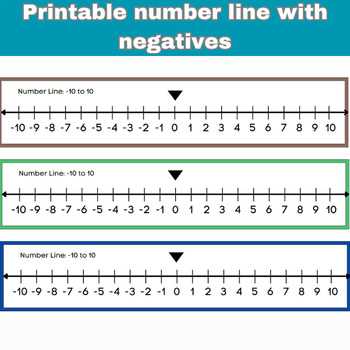
For example, consider using a range from -10 to 10. Place -10 on the far left, zero in the center, and 10 on the far right. This visual representation not only allows students to understand the scale but also shows how subtraction brings the value down, while addition pushes it up.
Encourage students to move along the scale for different operations. For instance, if starting at -3 and adding 4, students can physically count along the scale, moving from -3 to 1. This hands-on method reinforces the idea that positive changes move right, while negative changes move left.
Next, practice problems that cross over zero to help students understand the transition. For example, starting at 2 and subtracting 5 should result in a movement from positive to negative territory. Physically tracing this movement on the scale will make the concept of crossing zero more intuitive for students.
| Operation | Starting Point | Movement | Ending Point |
|---|---|---|---|
| Addition | -3 | +4 | 1 |
| Subtraction | 2 | -5 | -3 |
| Addition | -8 | +7 | -1 |
For a more advanced approach, introduce concepts like absolute value. For example, starting at -4 and counting 4 steps right will land on 0. Explain that moving from -4 to 0 is the same distance as moving from 0 to 4, even though the direction is different. This will help students understand that numbers can be compared based on their distance from zero, not just their sign.
These visual aids are also useful for introducing multiplication and division. For example, multiplying a negative number by a positive one should lead students to see that the result is a negative value, while multiplying a negative by another negative gives a positive outcome. Each movement across the scale can be linked to an operation to solidify the concept.
By repeatedly using a structured scale, students will begin to internalize these concepts, developing both their arithmetic skills and their understanding of how numbers relate to each other. The visual representation of changes, whether moving left or right, makes abstract concepts more tangible and easier to grasp.