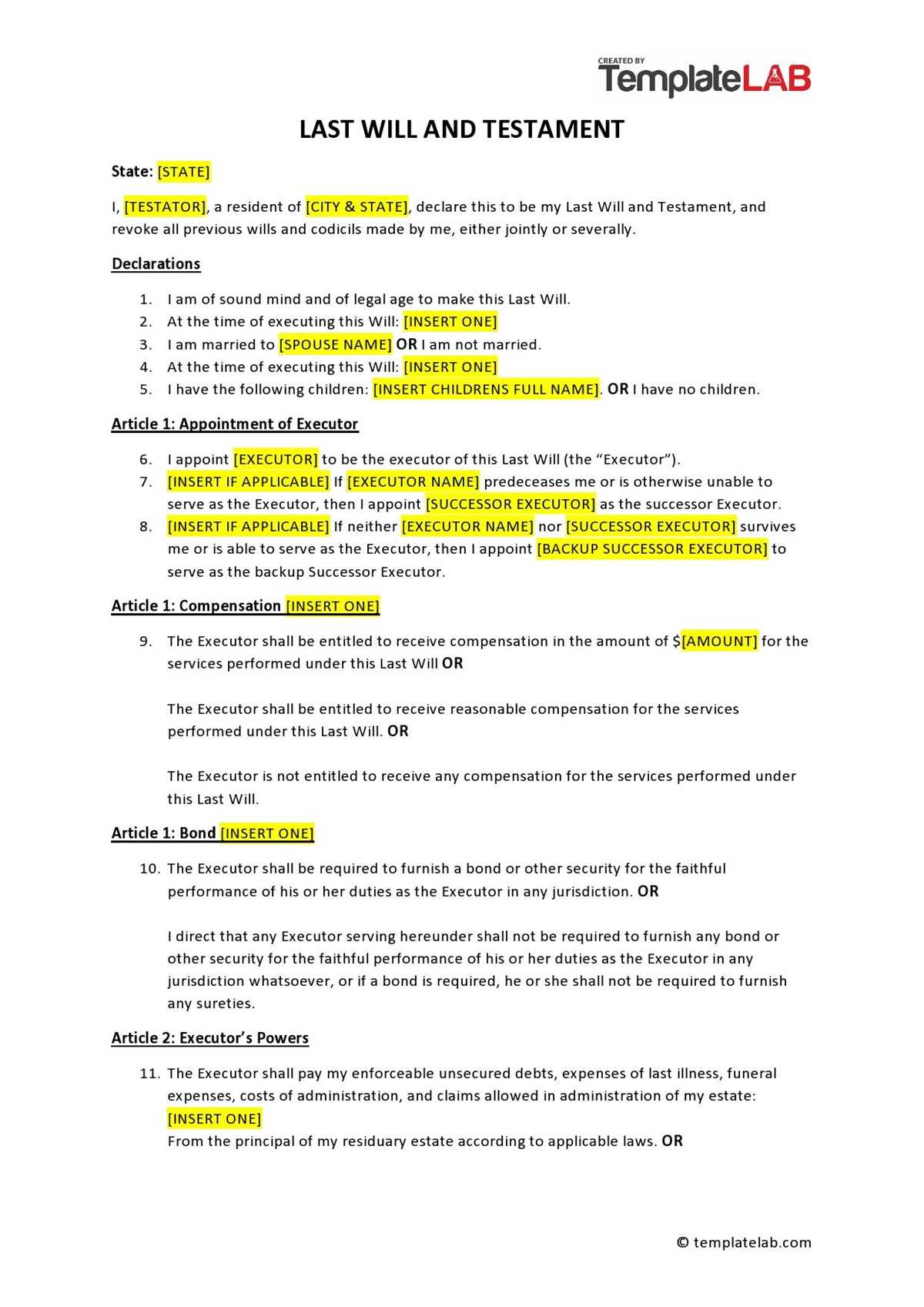
Start by selecting a template that suits your needs. Use a template that covers basic legal requirements, such as the name of the person creating the document, their declaration of intent, and the appointment of an executor. This document must outline how your assets will be distributed after your passing, ensuring clarity and legal enforceability. The document should also specify any specific instructions for the care of dependents or pets, along with preferences for funeral arrangements.
Key Elements to Include in Your Asset Distribution Document
Clearly identify all beneficiaries, including full names and relationships to you. Make sure to state exactly what they will receive, whether it is specific items, sums of money, or portions of the estate. Include instructions for the division of shared properties or accounts if applicable. You should also name an executor–someone you trust to carry out your wishes. This individual should be fully aware of their responsibilities and be legally competent to serve in this role.
For legal validity, the document must be signed and dated in the presence of witnesses, depending on local jurisdiction. It’s important that your chosen witnesses are impartial and not beneficiaries of the document. Also, consider including a clause that revokes any previous documents, ensuring there are no conflicts or ambiguities regarding your estate’s distribution.
Additional Considerations for Drafting Your Document
Always ensure that the language used is straightforward and unambiguous. Avoid technical jargon that may confuse the terms. If you have specific wishes, like leaving a portion of your estate to charity, make sure the instructions are clear and detailed. You can also include provisions for alternative beneficiaries in case your primary beneficiaries cannot be located or pass away before you.
As laws vary by state and country, consider consulting with an attorney to ensure your document complies with local regulations. While online templates can provide a starting point, professional legal advice can prevent potential issues that might arise after your passing.
How to Use a Will Template for Asset Distribution
Start by downloading a reliable template that aligns with your local jurisdiction’s requirements. These templates typically contain placeholders for the personal information of the creator, such as name, date of birth, and residence. You should fill out these fields carefully and ensure that all information is accurate. Next, clearly state who will receive your assets and specify exactly what each beneficiary will inherit. This includes tangible items, bank accounts, real estate, and other valuable possessions.
Once the document is filled out, ensure that the designated executor is named. This person will be responsible for carrying out your instructions. It’s vital that this individual understands their duties and agrees to take on the responsibility. If you have any specific requests, like a particular charity benefiting from a portion of your estate, make sure these are included in clear terms.
To make the document legally valid, it must be signed and witnessed according to your state’s laws. In most cases, you’ll need at least two impartial witnesses, none of whom can be beneficiaries. If possible, you should also have the document notarized to further validate its authenticity and prevent potential legal challenges after your passing.