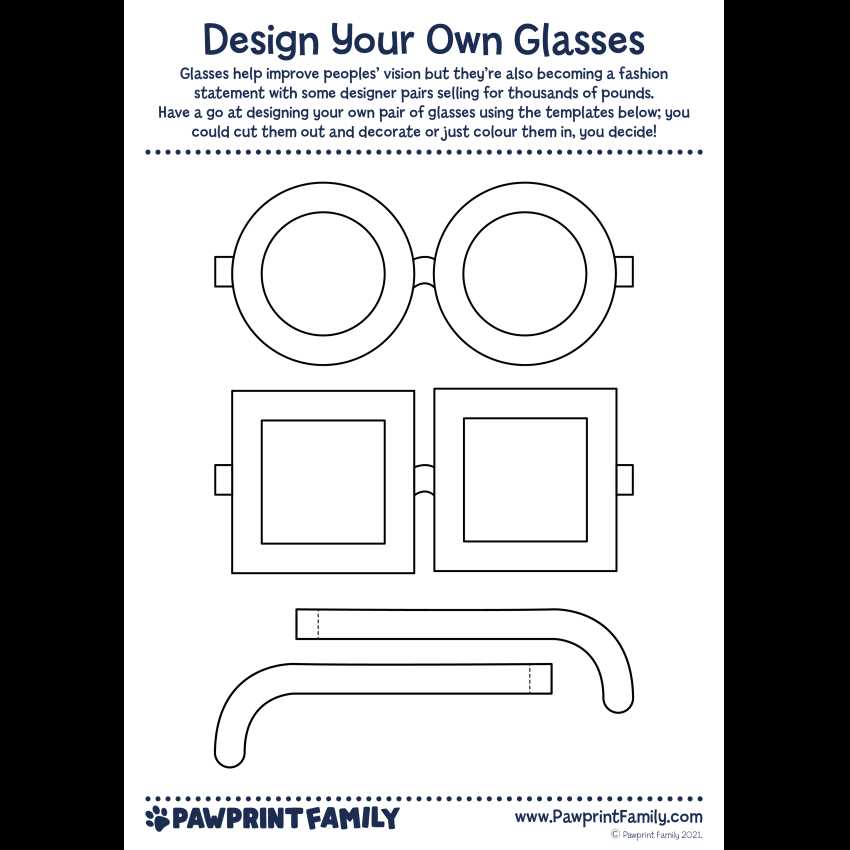
Use a thick paper stock between 200–250 gsm so the eyewear shape holds form without bending during play. Standard office sheets are too thin and collapse after cutting, while light cardstock keeps the arms stable and comfortable for short-term wear.
Set output scale to 100 percent for children ages 6–10 and reduce to 85 percent for preschool groups. This adjustment prevents oversized frames that slide off smaller faces and removes the need for redesigning the layout.
Preparing the Paper Eyewear Pattern for Clean Cutting and Assembly
Choose a version with bold outer lines at least 2 pt thickness. Thin outlines become hard to follow with scissors, leading to uneven edges and torn corners.
- Use matte cardstock to avoid glare from classroom lighting.
- Pre-cut inner lens areas with a craft knife for younger children.
- Mark fold points using a blunt tool before bending to prevent cracks.
- Leave a 5 mm margin near the temples to reinforce weak spots.
Apply small adhesive dots instead of liquid glue; they bond instantly and prevent warping. If using glue, limit to a thin strip and allow 2 minutes drying time under a book.
Decoration Techniques That Do Not Damage Structure
Provide wax crayons, colored pencils, or felt-tip pens with low moisture output. Paint introduces excess liquid that softens fibers and causes sagging across the bridge area.
- Add patterns before cutting to keep the surface flat while drawing.
- Use stickers no larger than 2 cm to avoid weight imbalance.
- Reinforce arms with transparent tape on the reverse side.
Adjusting Size and Fit for Events Group Activities or Take Home Crafts
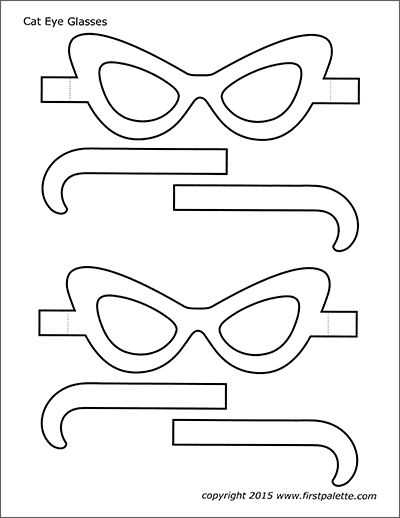
Measure temple length at 12–14 cm for most children and extend by attaching an extra strip if needed. This method adapts one design to multiple age groups without creating new files.
Punch a small hole near each end and attach elastic cord for active games. Elastic length around 18–22 cm keeps the frame secure while allowing quick removal.
Store unused cutouts in flat containers to prevent curling. Humidity above 60 percent can bend paper parts overnight, so keep materials in a dry cabinet until use.
Classroom Distribution Strategy
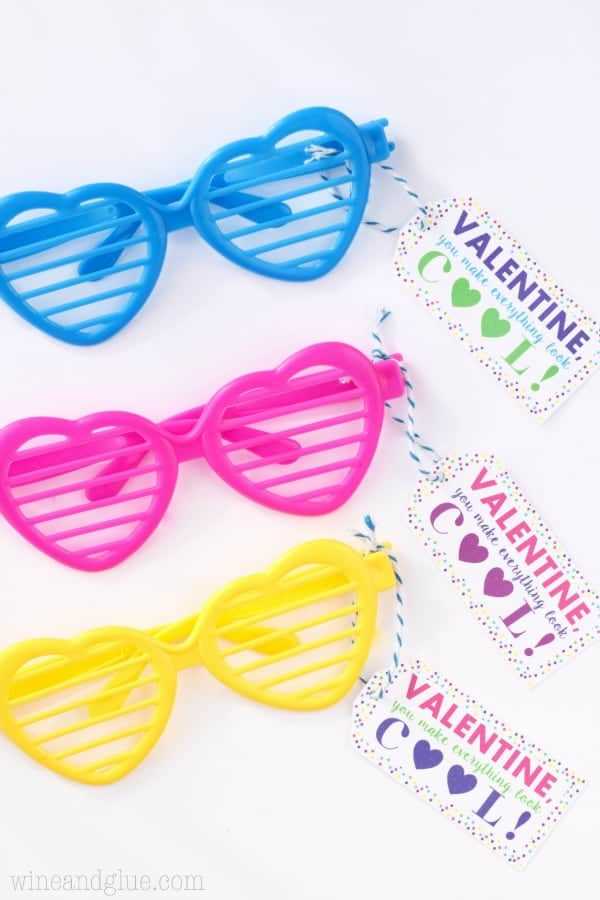
Prepare sample models in advance so students can reference placement and decoration balance. Visual guidance reduces repeated instructions and keeps the activity within a 20–30 minute timeframe.
Sunglasses Printable Template for Summer Crafts Decorations and Kids Activities
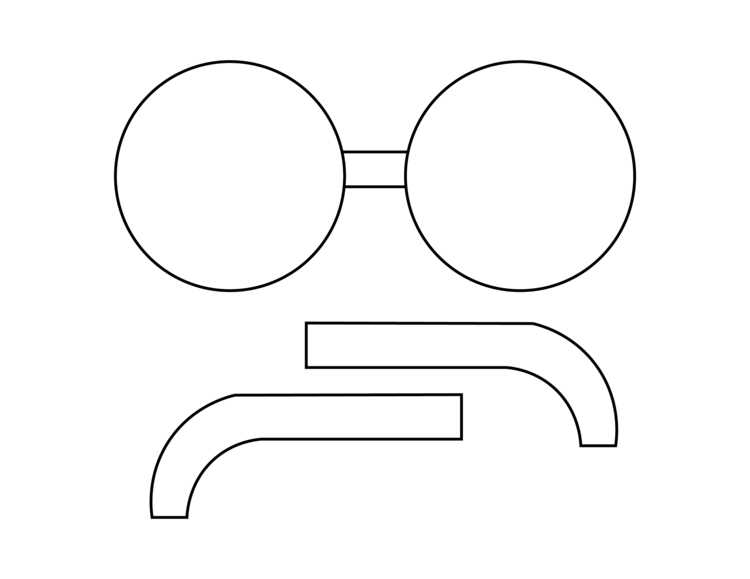
Print the frame outline on heavy cardstock 200–250 gsm so the accessory keeps its shape during outdoor events and classroom use. Lightweight sheets bend quickly under heat and handling, while thicker stock allows children to decorate without tearing edges.
Prepare decorations before cutting by laying sheets flat and adding markers, patterned tape, or small stickers. This approach keeps pressure even across the surface and prevents wrinkles that appear when drawing after assembly. Limit added elements to light materials so the structure stays balanced and wearable.
For group activities, pre-score fold lines and mark cutting paths with bold borders to guide younger participants. Store finished pieces in shallow boxes to avoid curling, and attach elastic cords instead of paper arms when planning active games, photo booths, or themed parties.