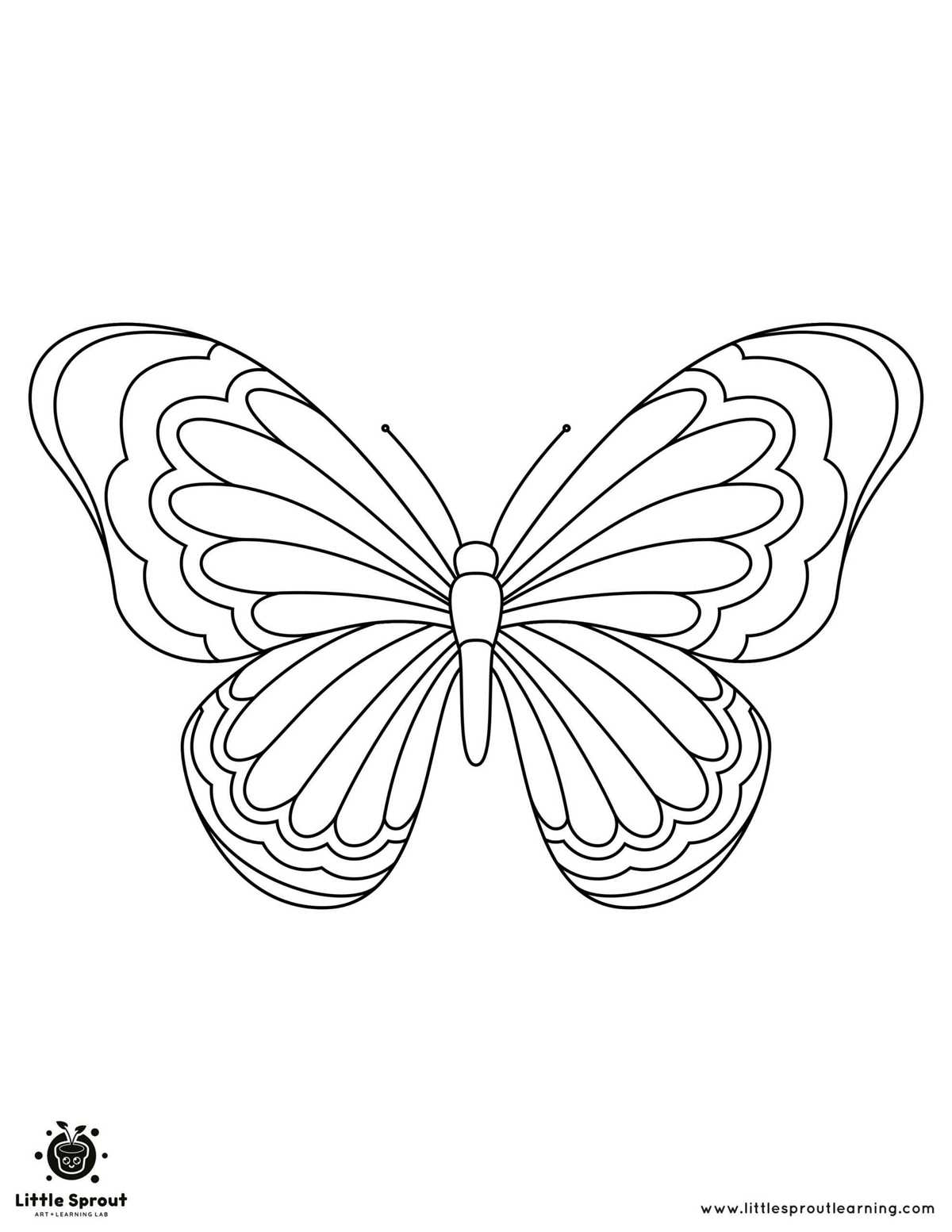
Choose vector PDF files with at least 300 DPI resolution and thick outer contours above 2 pt so crayons and markers stay within borders without tearing thin paper.
File Formats and Image Quality
SVG and layered PDF options allow unlimited scaling without pixel blur, which keeps wing patterns sharp on both A4 and US Letter sizes. Avoid compressed JPG sets under 200 KB because fine antenna lines and floral backgrounds become distorted.
- Preferred resolution: 300–600 DPI
- Line thickness: 1.5–3 pt
- File size per sheet: 500 KB–2 MB
- Separate files instead of one long document
Paper and Tool Selection
Matte paper with density 140–180 g/m² prevents marker bleed and keeps pencil shading visible under bright lighting. Glossy surfaces reflect desk lamps and hide subtle gradients.
Recommended Drawing Supplies
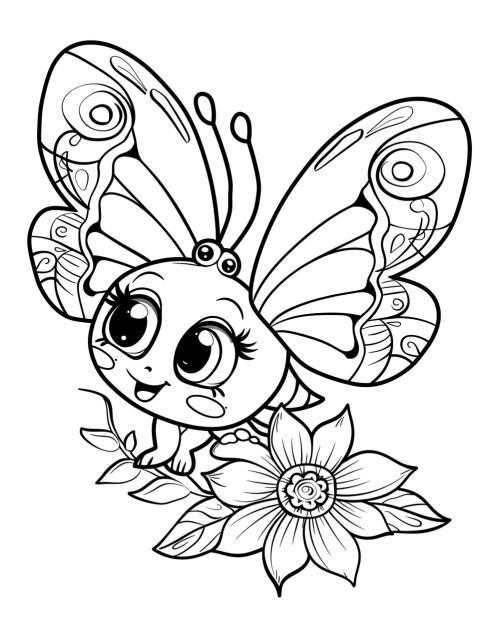
- Wax crayons for large wing areas
- Colored pencils for small ornaments and edges
- Alcohol markers for smooth gradients and bold fills
Difficulty Levels by Age
Simple silhouettes with oversized wings suit ages 3–5, medium detail designs with flowers fit ages 6–8, and complex symmetrical patterns with thin lines match ages 9 and above.
Organization and Storage
Group files by complexity and theme in labeled folders, using names like “easy wings” or “ornate garden sets,” which reduces search time and keeps digital libraries tidy.
Winged Insect Outline Sheets for Home Art
Select PDF or SVG files with 300–600 DPI resolution and outer line thickness above 2 pt so crayons, felt-tip pens, and pencils stay within contours without tearing standard 80 g/m² paper.
Use matte sheets between 140 and 180 g/m² for markers, disable automatic page scaling before sending to the printer, and store downloaded line art in folders labeled by difficulty level such as “simple wings,” “floral designs,” and “ornate symmetry” to reduce search time and keep collections organized.