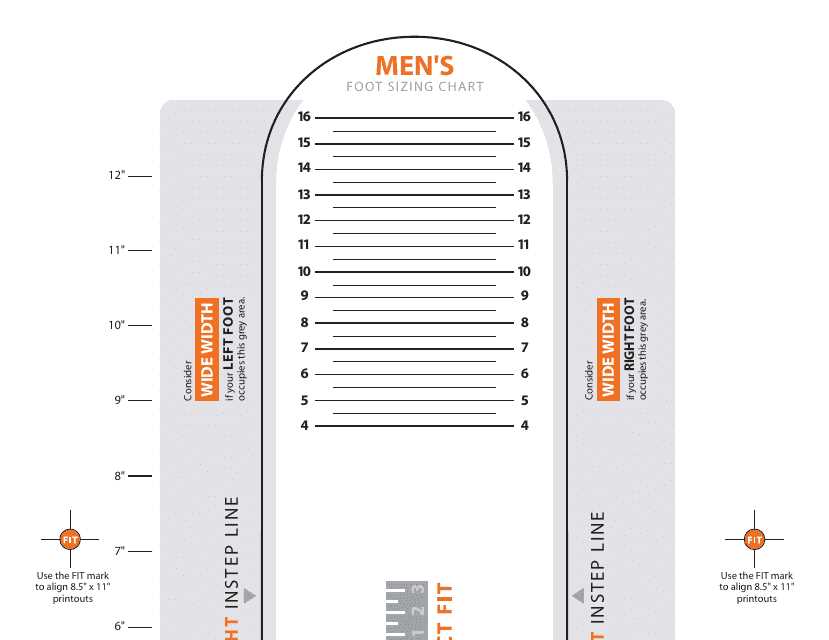
To get the right shoe fit, it’s crucial to measure your feet properly. Start by printing out a simple ruler template designed for sizing, which you can find online. Once printed, ensure you have a flat surface, and stand barefoot on the printed guide. Align your heel against the marked line and trace your longest toe for the best results.
After you’ve traced your foot, measure the length from the heel to the tip of the longest toe. This measurement will give you an accurate size reference. If possible, repeat the process with both feet, as one may be slightly larger than the other. Make sure to measure both feet in the evening, when they are at their largest due to swelling during the day.
Once you have your measurements, you can compare them with size charts provided by shoe brands or stores. This will help you determine the right size and prevent common issues like discomfort or shoes that are too tight. Always remember that shoe sizes can vary across different brands, so checking each manufacturer’s size guide is key.
How to Use a Sizing Guide for Accurate Results
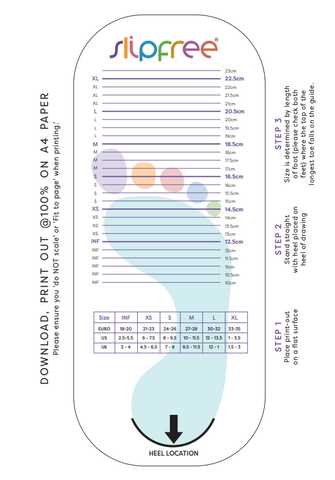
To get the most accurate results, print the sizing chart on a standard letter-sized sheet of paper. Ensure your printer settings are correct, so the scale of the template is accurate. A slight error in size can lead to incorrect readings, so check the dimensions before use. Once printed, tape the guide to the floor, making sure it is laid flat and stable to avoid any shifting during use.
Stand barefoot on the guide, ensuring your heel is at the designated line and your toes are naturally spread out. Mark the longest part of your foot. Repeat the process with both feet, as they may differ in size. After marking, use a ruler to measure the length from the heel to the longest toe for each foot individually.
After measuring both feet, compare the lengths to your preferred brand’s size chart. Keep in mind that sizing can vary between manufacturers, so always consult their specific guide. If your feet are between sizes, it is recommended to go with the larger size for better comfort.
For added precision, repeat the process at different times of day. Feet can swell as the day progresses, so measuring in the evening can give a more accurate reflection of your true size. This step is particularly useful when shopping for shoes you plan to wear all day.
If you want to be even more precise, use a ruler or measuring tape to verify the distance between the marks on your foot template. This ensures that your measurements align with the expected sizing ranges, giving you confidence when selecting shoes online or in stores.
Finally, store your measurements in a safe place or keep a digital copy of the template for future reference. This will allow you to measure your feet quickly when shopping or ordering shoes, saving you time and ensuring a better fit for every purchase.
How to Use a Foot Measuring Tool for Accurate Sizing
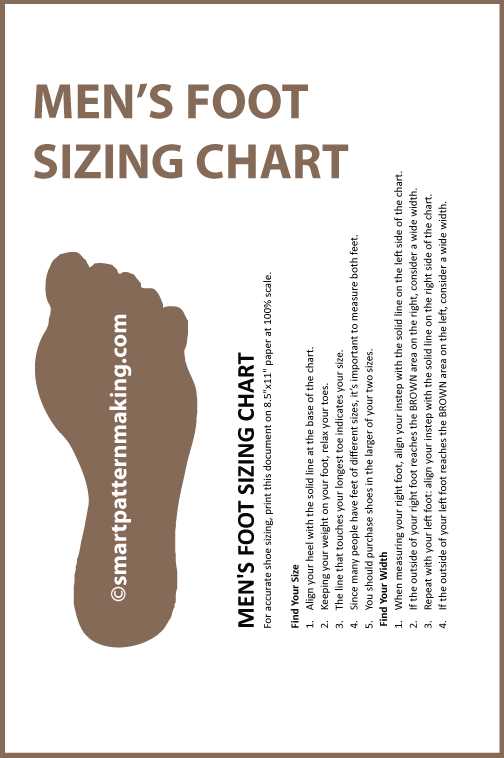
First, ensure that you’ve printed the sizing guide correctly. The guide should be printed to scale, so double-check the dimensions provided in the instructions. Place the guide flat on the floor in a well-lit area, free of obstructions, and ensure it stays secure during use.
Next, stand with your heel aligned against the start of the template. Make sure you are standing naturally, without shifting your weight, to get an accurate measurement of your true size. For a more precise reading, trace around your toes to mark the longest point. Repeat the process with both feet, as they may differ slightly in length.
Measure the distance between the heel and the tip of your longest toe. Using a ruler or tape measure, write down this length. Compare it with a size chart to determine your correct shoe size. If your feet fall between two sizes, consider going with the larger size for more comfort.
To avoid errors, measure your feet at the end of the day when they are at their largest due to swelling. This gives you a more accurate reflection of your true size, especially if you plan to wear the shoes for extended periods.
Lastly, keep a record of your measurements, either digitally or on paper, for future reference. Having this data on hand will save time when shopping for shoes and ensure you consistently purchase the correct size in the future.