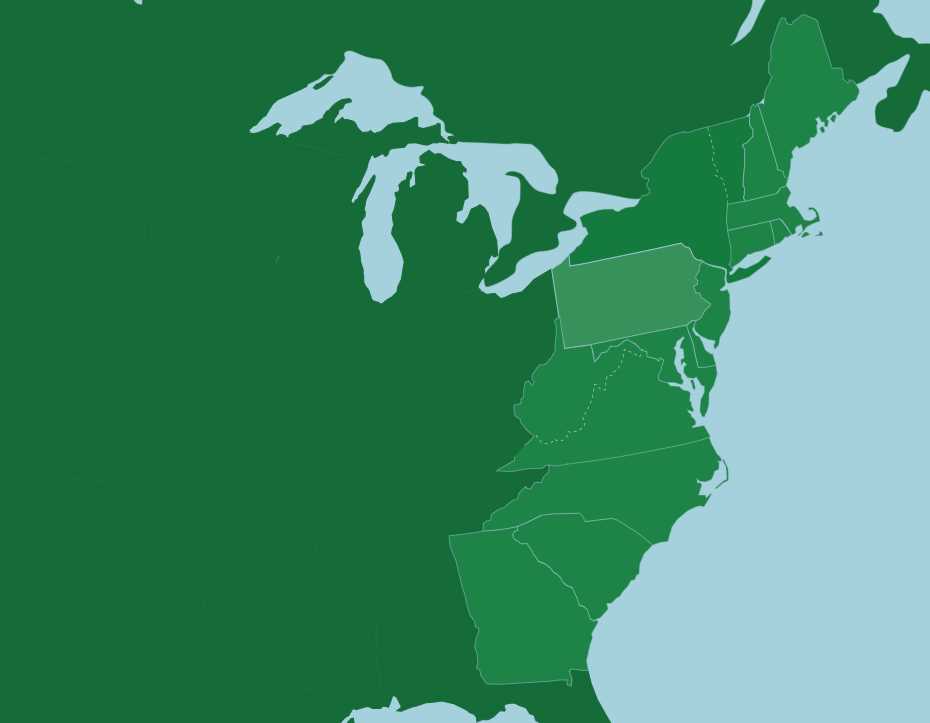
Labeling the Early American Territories
To begin, you should clearly mark the boundaries of each of the original areas that formed the United States. These include New Hampshire, Massachusetts, Rhode Island, Connecticut, New York, New Jersey, Pennsylvania, Delaware, Maryland, Virginia, North Carolina, South Carolina, and Georgia. Familiarize yourself with their historical placement along the eastern coast of what is now the United States. For clarity, divide the regions into their geographical sections, ensuring each one is well-distinguished.
Understanding the Historical Context of Early Settlements
Knowing the geographical distribution of these early regions is important for understanding their role in shaping the early American republic. For example, New England territories like Massachusetts played a critical role in the formation of religious and political movements that later influenced the colonies’ push for independence. Similarly, southern regions like Virginia were instrumental in the development of agriculture, which became a key economic factor in colonial times.
For students or history enthusiasts, it’s helpful to focus on specific historical events tied to each area. For instance, Pennsylvania was home to the Quakers and played a major part in the development of religious tolerance, while Georgia’s initial purpose was as a debtor’s haven and a buffer against Spanish Florida. These points will not only help you understand each region’s significance but also how they interacted to form the larger political landscape.
Whether you’re studying for an exam or looking to better grasp American history, paying attention to these details will enhance your understanding of early American geography and the critical events that helped shape the country.
How to Use a 13 Colonies Map for Educational Purposes
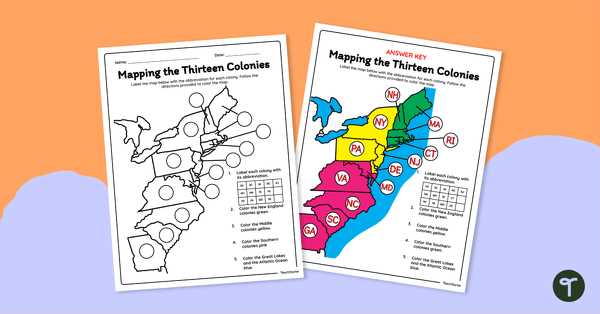
To start using a historical map of the early territories, focus on identifying each region’s geographic location and how it contributed to early American society. By labeling each area, students can better understand the role of these regions in the development of the nation. For instance, New England areas, known for their Puritan settlements, offer insight into the religious motivations that led to colonization. Encouraging students to associate each area with its historical context, such as Virginia’s role in agriculture, enhances the learning process.
Next, integrate the map into interactive activities, like tracing borders, identifying major cities, or matching regions with key historical events. Have learners connect specific events, such as the signing of the Declaration of Independence, with their geographic locations. This type of activity not only reinforces geographical knowledge but also deepens understanding of the cultural and economic factors at play in early American history. Using the map in this way makes it a versatile tool for engaging with the foundational moments of the United States.