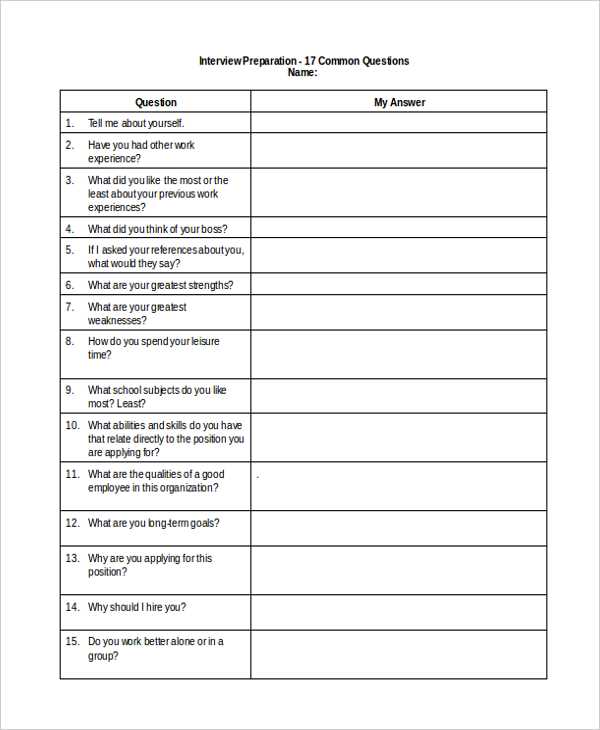
To streamline the hiring process and enhance consistency across candidates, utilize pre-structured sets of inquiries tailored to different roles. This ensures you gather uniform data from all applicants, which simplifies comparison and decision-making.
Choosing the Right Set of Prompts for Various Roles
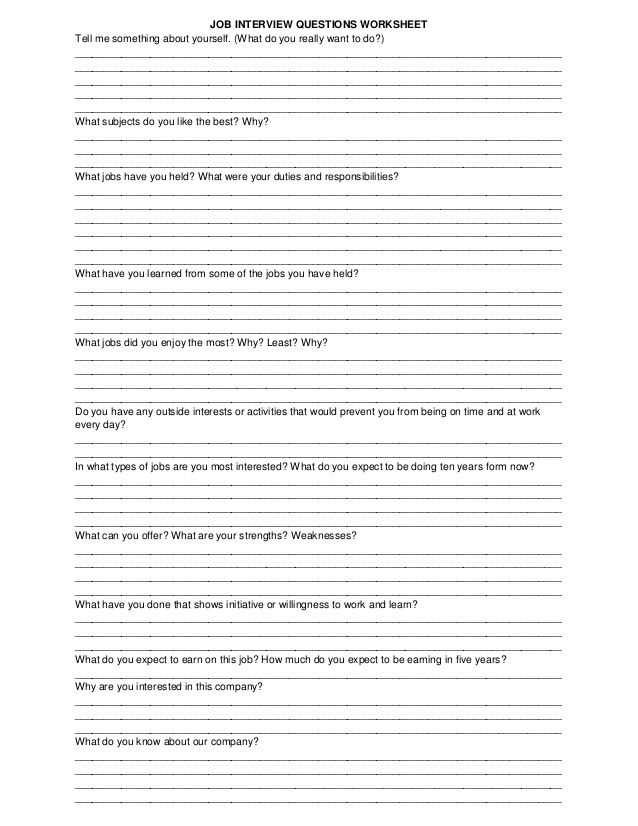
Before selecting any set of prompts, assess the core responsibilities of the job position. For example, technical roles like software development require problem-solving tasks, while customer service positions should focus on communication and conflict resolution. Aligning each set of prompts with the job’s specific requirements helps uncover the most relevant traits in candidates.
- For managerial roles, include behavioral prompts that assess leadership, decision-making, and team dynamics.
- For creative positions, prioritize prompts that reveal problem-solving abilities and innovative thinking.
- For entry-level positions, focus on adaptability, work ethic, and willingness to learn.
When you align your questions with the job’s needs, you gather data that’s relevant and informative, leading to better decisions.
Best Practices for Conducting Structured Interviews with Pre-Set Prompts
While using structured sets of prompts, follow these tips to maximize their effectiveness:
- Ensure consistency: Ask every candidate the same set of questions in the same order to prevent biases and to allow fair comparisons.
- Stay focused: Keep discussions aligned with the candidate’s responses. Avoid straying off-topic, as it can disrupt the evaluation process.
- Allow follow-ups: Sometimes, candidates will give incomplete answers. Prepare to ask for clarification or additional details based on their responses.
By maintaining a clear structure and ensuring all candidates respond to the same inquiries, you can more easily evaluate their qualifications and decide on the best fit for the position.
Maximizing the Use of Structured Evaluation Prompts
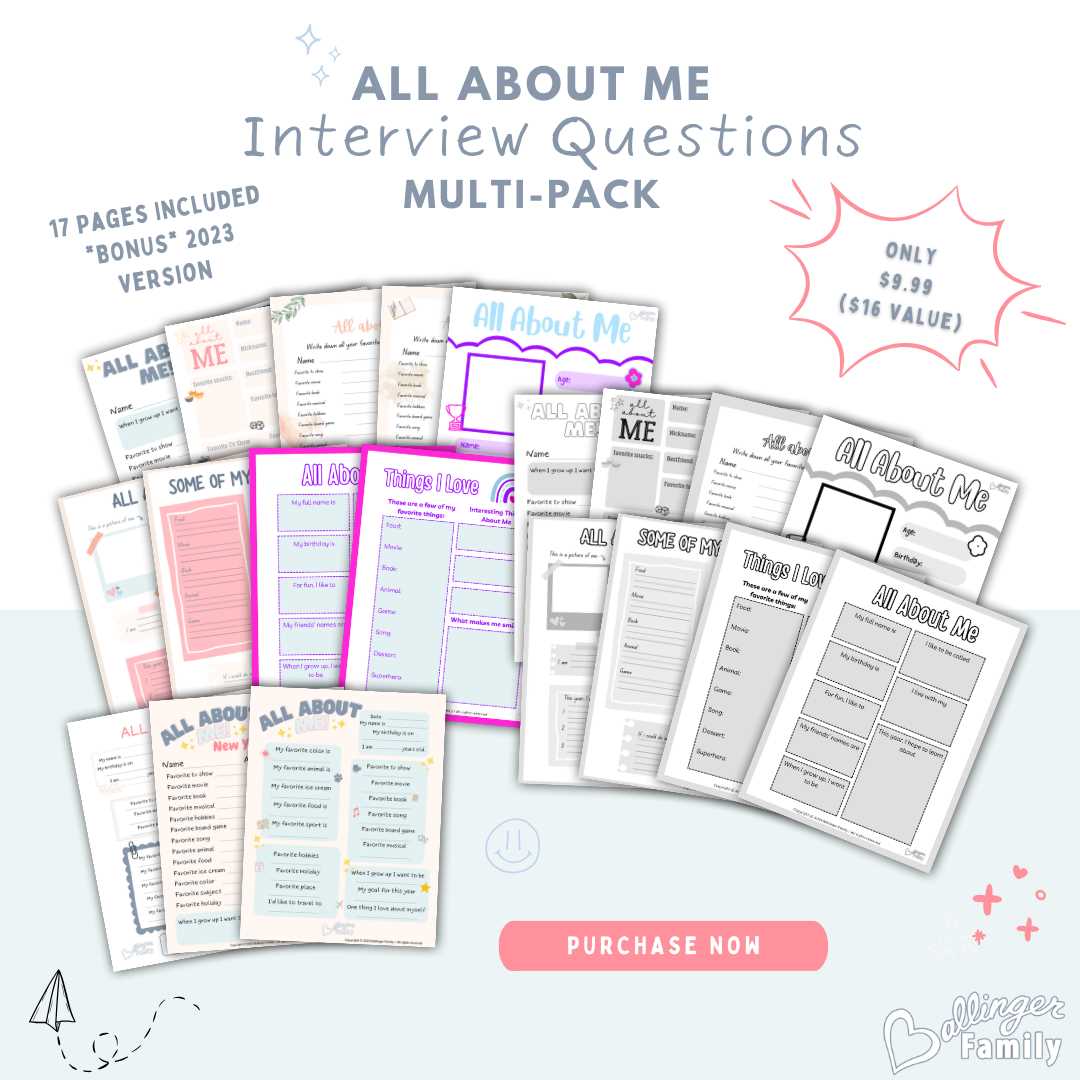
Using structured formats for assessing candidates ensures consistency and fairness. When you need uniformity in how applicants are evaluated, pre-designed formats are your go-to. This avoids personal bias and allows for clearer comparisons between candidates’ strengths and weaknesses.
Focus on the job-specific qualities you need to assess. For technical roles, emphasize problem-solving tasks that test the candidate’s practical abilities. For sales or client-facing positions, prioritize prompts that reveal communication skills and conflict resolution tactics. Tailoring the format to the role ensures that every response gathered is meaningful.
To keep things organized, print the set of tasks before each session. This minimizes distractions and allows the hiring team to stay focused. It also enables interviewers to record answers directly in a set format, keeping the process smooth and efficient.
Ensure that the prompts you select target specific skills, such as leadership or innovation. By framing each prompt with a focus on real-world scenarios, candidates are forced to demonstrate practical applications of their knowledge, which is more telling than theoretical responses.
For roles requiring problem-solving, include situational tasks that place the candidate in a hypothetical problem-solving scenario. This can include asking how they would handle a difficult client or solve an issue under a tight deadline. This approach allows you to evaluate their critical thinking and adaptability.
Print these evaluations ahead of time so that all participants in the hiring process are aligned on what criteria to prioritize. This eliminates confusion and ensures that everyone involved in the evaluation is asking questions aligned with the same goals.
Review the printed list of prompts before and after each session. This helps to assess whether any important aspects have been overlooked or if adjustments are needed for future evaluations. Regular revisions can improve the quality of your evaluation process, making it more precise and relevant for the job at hand.