
Download a one-page fretboard reference sheet in PDF and print it on A4 paper using landscape orientation to keep finger diagrams large and readable. Use 12–14 pt labels and clear dot markers on each string position.
How to Read the Fretboard Reference Sheet
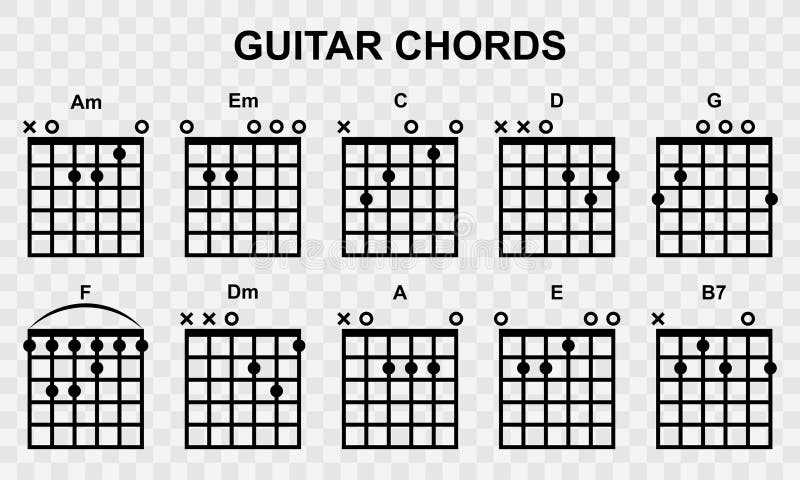
Each diagram represents six vertical lines as strings and horizontal lines as frets. The top thick line marks the nut. Black dots show finger placement, while open circles indicate strings played without pressing.
Finger Number Guide
- 1 = index
- 2 = middle
- 3 = ring
- 4 = little finger
Place numbers inside dots to clarify positioning. This prevents confusion during daily practice sessions.
Which Basic Shapes to Practice First
Focus on open major and minor shapes such as C, G, D, A, E, Am, Em, and Dm. Practice switching between two shapes at a time for five minutes without stopping.
Daily Practice Routine
- Warm up with slow downstrokes for two minutes
- Hold each shape cleanly and check string clarity
- Switch between two positions 20 times
- Increase tempo gradually using a metronome
Keep the reference sheet on a music stand at eye level. Reviewing finger placement visually reduces mistakes and shortens memorization time. Replace worn copies every few months to maintain clarity.
Guitar Chords Chart for Beginners Printable
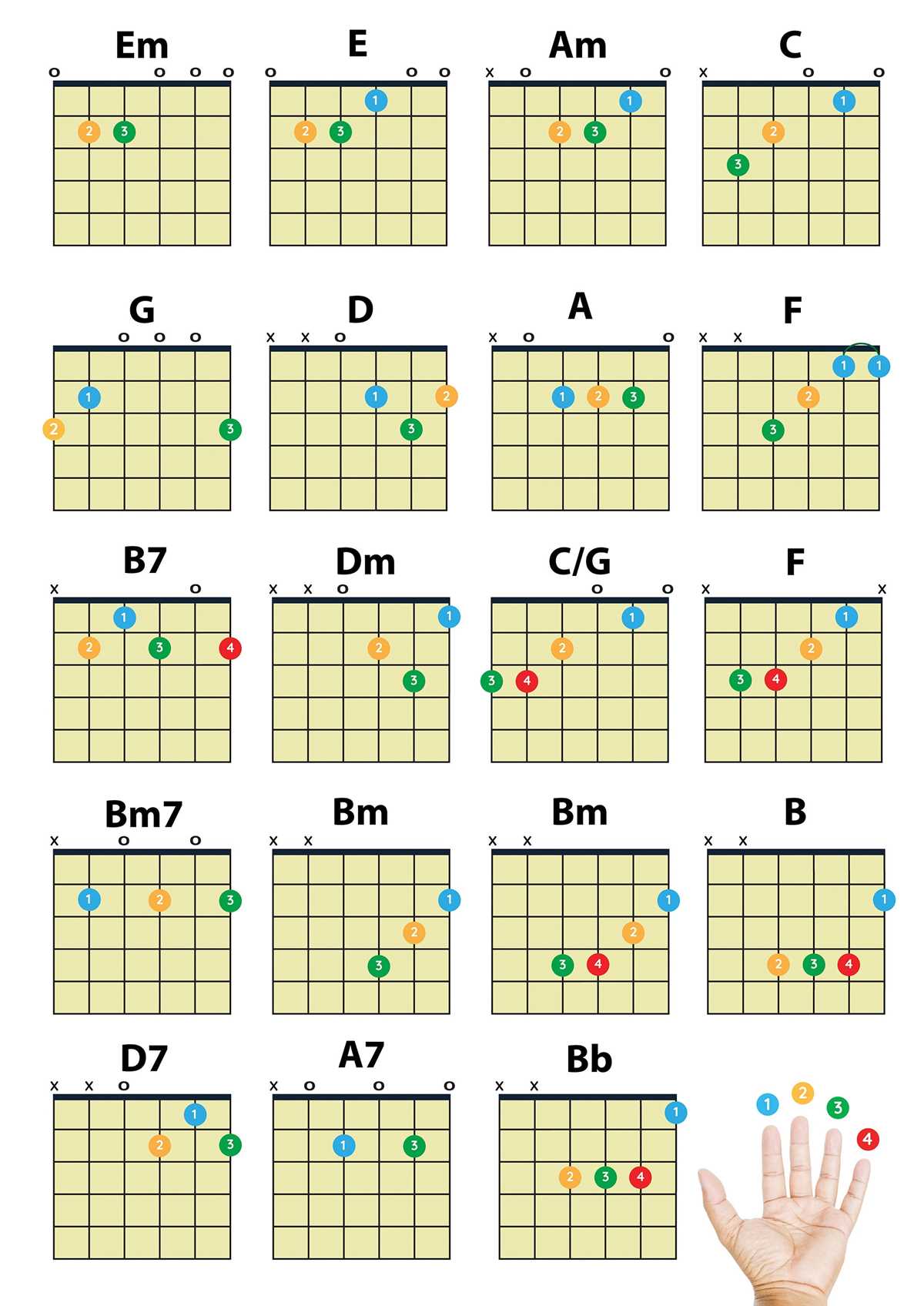
Print a single-page fretboard reference sheet in landscape orientation with large diagrams at least 4 cm wide to keep finger positions clear at a distance. Use thick string lines and bold dot markers so placement remains visible on a music stand.
Focus on eight open-position shapes such as C, G, D, A, E, Am, Em, and Dm, and practice switching between two at a time for five-minute intervals using a metronome set at 60 BPM. Keep the fretboard diagram at eye level and check that each string rings cleanly without muted buzz; if a note sounds dull, adjust finger angle and thumb placement behind the neck before increasing tempo.