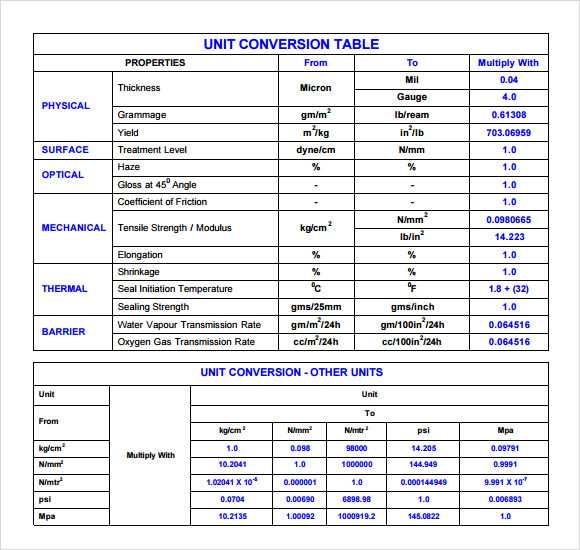
How to Effectively Use a Unit Conversion Chart
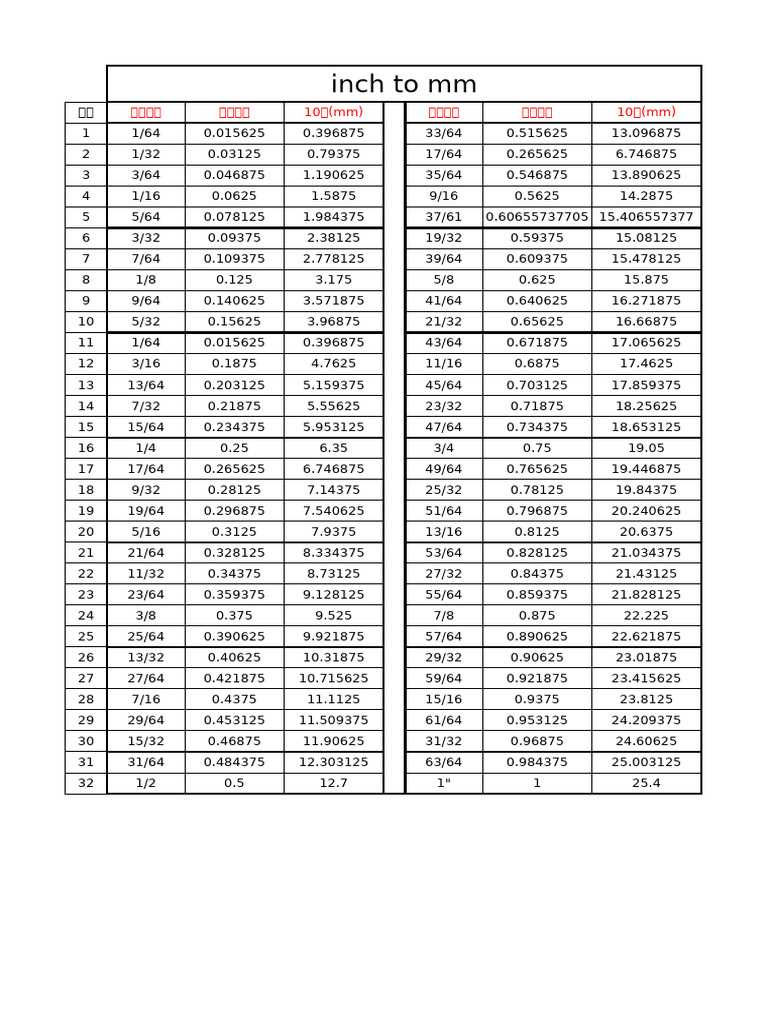
To make unit transformations simpler, start by understanding the different categories of measurements: length, mass, volume, temperature, and others. A unit conversion chart allows you to quickly switch between various systems, such as converting meters to kilometers or grams to kilograms. For example, to convert 1,500 milliliters to liters, you just need to divide by 1,000 (1,500 ÷ 1,000 = 1.5 liters).
These charts are often organized by units, with direct relations shown between them. Be sure to focus on the base units for each system–like meters for length, grams for weight, and liters for volume–and then follow the prefixes (milli, centi, kilo) to scale them up or down.
When working with measurements in daily life, such as cooking, building, or travel, always double-check your results, especially when dealing with less common units. A quick glance at a unit conversion sheet saves time and ensures accurate results.
Where to Find and Download Unit Conversion Resources
Many websites and apps offer conversion charts that can be downloaded, printed, or viewed online. For reliable, straightforward resources, check sites like ConvertUnits or UnitConverters, which provide easy-to-read charts for all types of measurements. These sites also allow for quick online conversions if you don’t want to deal with manual calculations.
If you prefer physical copies, many educational websites or resource centers offer downloadable versions of these charts. Simply search for “measurement conversion chart” or visit online educational stores. In some cases, you may also find printed versions available at your local office supply or bookstore.
Online Resources
- ConvertUnits – Offers detailed and user-friendly conversion guides for various units.
- UnitConverters – Includes both standard and advanced conversion tools for all common units.
These resources are especially helpful for students, professionals, and anyone who regularly works with numbers and measurements in different systems.
Using a Unit Conversion Chart for Accurate Measurements
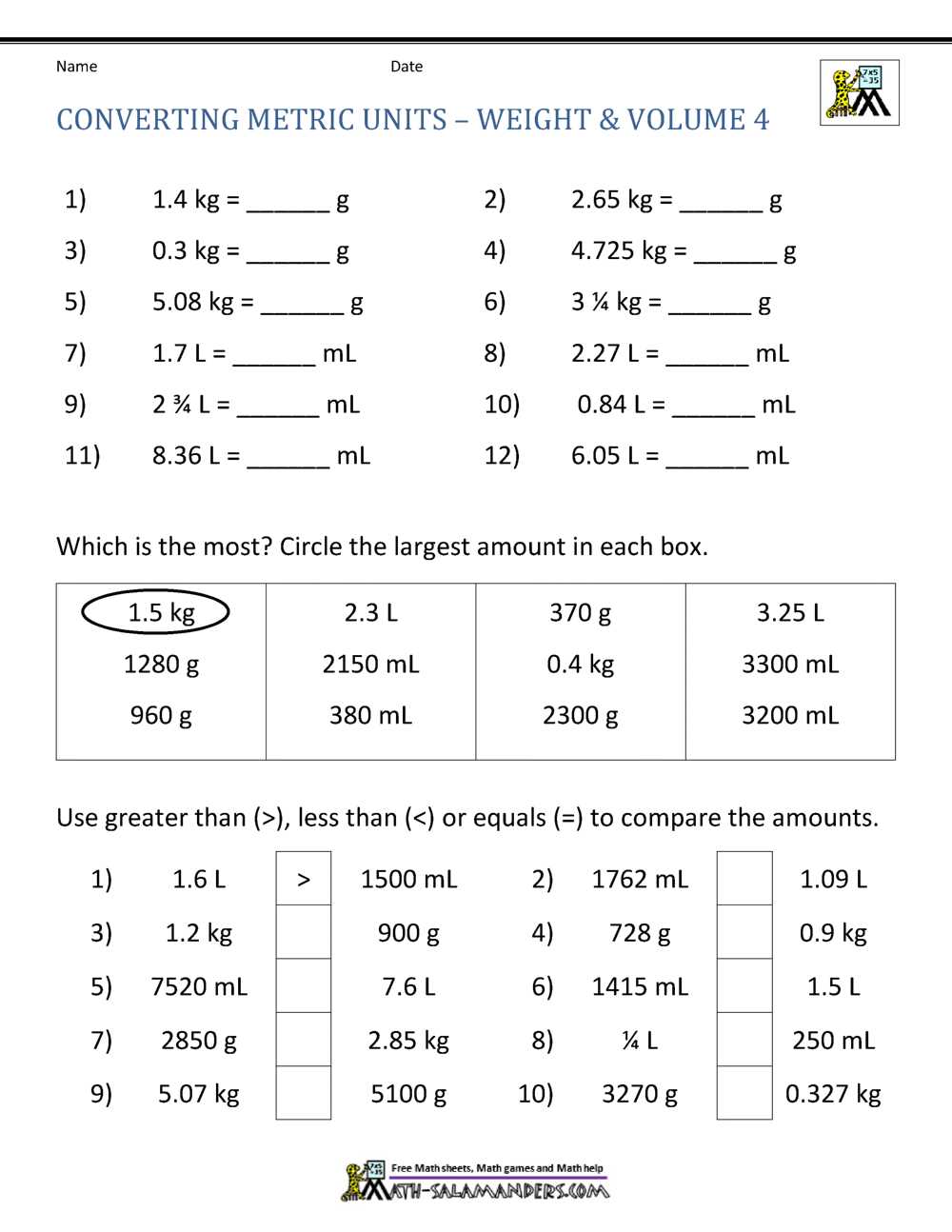
To quickly switch between different systems, use a chart that lists common conversions like kilometers to miles or kilograms to pounds. These charts are typically organized by measurement type, such as distance, weight, and volume, which makes it easier to locate the conversion you need. For instance, when converting 100 grams to ounces, you’ll know that 1 gram equals 0.0353 ounces, so 100 grams is approximately 3.53 ounces.
Having a physical copy on hand is convenient, especially when you’re working with different units in cooking, construction, or travel. Always make sure the chart you use includes all the relevant prefixes like kilo, centi, and milli, as these prefixes determine how large or small the base unit is. A well-organized chart will display these prefixes in an easy-to-read format, making the process smoother and more efficient.
For better accessibility, consider downloading these charts to your smartphone or computer. There are many apps and websites that offer these tools, and many allow you to easily input values for conversion, saving time and preventing errors in your calculations.