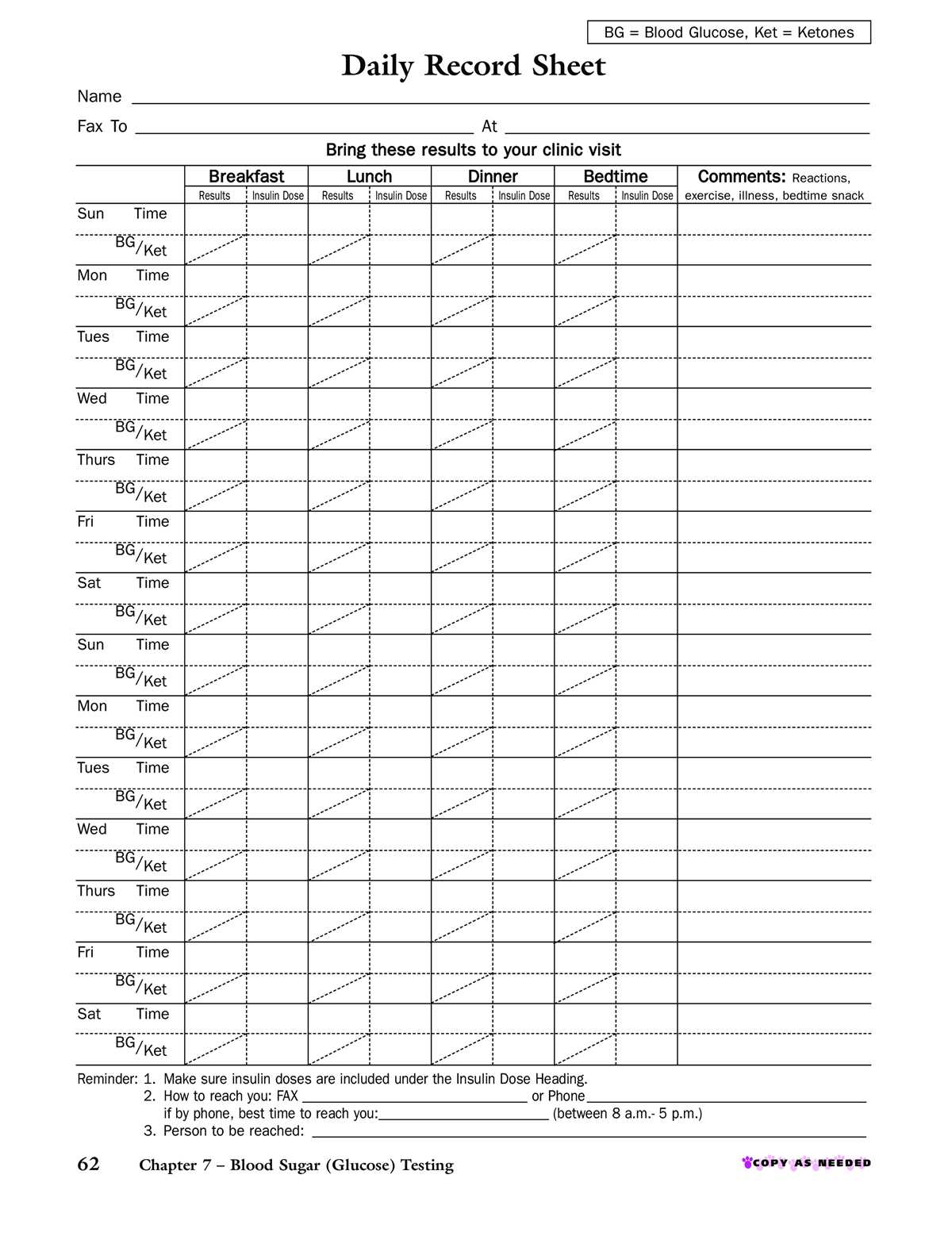
Track your glucose readings effectively with a straightforward template. Consistently documenting your measurements can help identify trends and improve decision-making with your healthcare provider.
How to Create Your Own Glucose Log
A well-structured log provides clarity on the times and levels of measurement. Use the following tips for easy tracking:
- Include the date and time of each test. This is crucial for identifying patterns throughout the day.
- Record measurements before and after meals to get a comprehensive picture of your body’s response to food.
- Note any factors that might affect readings, like exercise, stress, or medication changes.
Sample Layout for Monitoring
Consider setting up a table to keep things organized. A simple format might include the following columns:
- Date
- Time of Day
- Measurement Level
- Notes (e.g., food consumed, medication, activity)
Each entry should be precise. For example, write “6:30 AM – 110 mg/dL – Felt stressed this morning” to capture both the level and a potential influencing factor.
Additional Tips
- Consistency is key: Try to take readings at the same times every day for the most reliable results.
- Review your log weekly with your doctor to evaluate how well your management strategies are working.
- Keep your record accessible to easily track progress or adjustments in treatment.
This tracking method doesn’t require any special tools or subscriptions. It’s simple and effective for anyone looking to maintain control over their glucose management routine.
Track Your Glucose Levels with Ease
For those managing their glucose levels, keeping a record of readings is essential. Use a simple table to track measurements at regular intervals–morning, before meals, and after eating. This consistency will provide you with a clear view of fluctuations throughout the day.
Avoid confusion by marking each reading with the corresponding time. Labeling your entries will make it easier to spot patterns, such as how specific foods or times of day affect your levels. For better organization, use different sections for fasting readings and post-meal checks.
Another tip is to create a section for notes. Write down any significant changes in lifestyle or diet. Record moments of stress or illness. These factors may impact the results and help you identify correlations more effectively.
If you have a glucose meter with memory, make sure to periodically sync your results with the manual record. This ensures that you don’t miss any data and can cross-check measurements if there are discrepancies between devices.
A table that includes daily averages for each week will provide you with a better understanding of trends over time. A quick glance at weekly trends can make it easier to adjust your routine or consult with your doctor based on consistent results.
When you notice consistently high or low readings, don’t hesitate to consult a healthcare professional. They will be able to analyze your patterns and provide more specific advice tailored to your health condition.
Consider using color-coding for readings to make trends easier to spot. Green could indicate normal readings, yellow for borderline levels, and red for critical levels. This simple visual aid can save you time and reduce the risk of overlooking important data.
Lastly, setting a weekly or monthly review schedule can be an effective way to stay on top of your monitoring routine. This consistency ensures that you always have accurate data available for discussions with your healthcare provider.