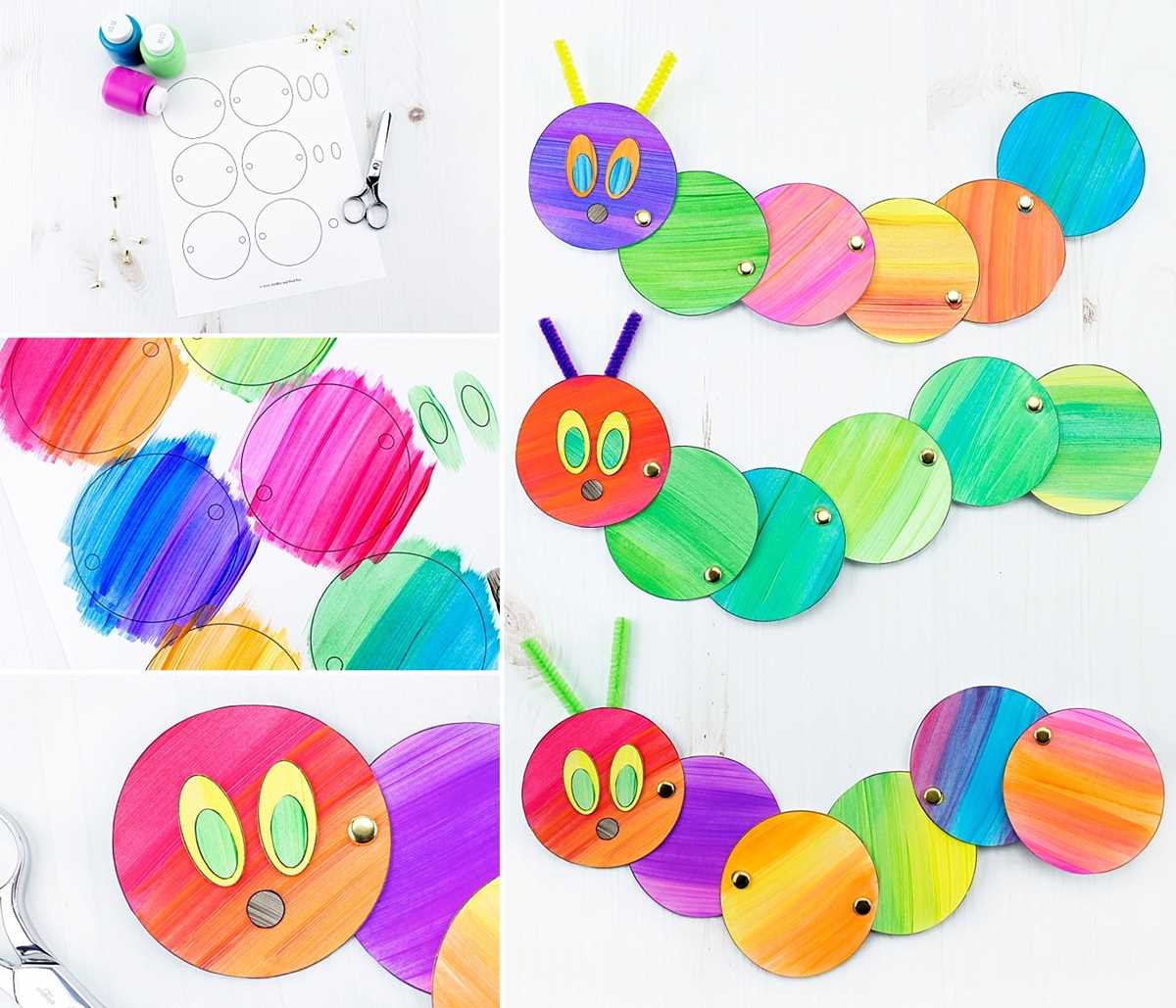
Begin by selecting a few templates of segmented creatures that are simple yet captivating for young children. These shapes can be printed onto sturdy paper or lightweight cardboard for a more durable project. Each section can be individually colored, allowing kids to explore different shades and patterns as they design their own version.
Once the basic shapes are printed, guide the child through cutting each segment and assembling them. You can connect the sections using glue or even small brads to allow the segments to move. This interactive design makes it fun for kids to animate their creation by gently bending the parts, simulating movement.
Simple Materials for Easy Setup
The required materials for this activity are minimal: colored paper, safety scissors, glue sticks, and markers or crayons. If you want to add an extra dimension, you can also use googly eyes, pipe cleaners, and stickers to enhance the look. This simple setup works well in classrooms, at home, or as a fun group activity.
Consider using non-toxic glue to keep the process safe for younger children. Using eco-friendly supplies, such as recycled paper, can also make the activity more sustainable. Encourage the kids to combine various textures, such as fabric scraps, to make the creature’s body more engaging.
Creative Variations and Add-Ons
For a more dynamic craft, experiment with adding accessories. Attach small wings or a pair of antennae, or incorporate additional decorative elements like glitter or sequins. By introducing a variety of shapes, you can encourage creativity and help children think beyond the standard template.
Older children can create more intricate designs by adjusting the number of segments or experimenting with different shapes. Try adding a 3D element, such as turning the segments into small boxes or cylinders, to bring the creature to life in a more tactile way. This type of craft fosters both creativity and fine motor skills.
Finally, don’t forget to take photos of the final creations. Kids love showing off their work, and documenting their progress helps them feel a sense of accomplishment. You can even hang these crafts on the wall or create a display for the classroom to celebrate the efforts of everyone involved.
Caterpillar Fun Activity for Kids
Start by gathering some basic supplies: colored paper, scissors, glue, and markers. Begin by cutting out the body segments, making sure they’re large enough for little hands to handle. Each piece should represent one part of the body, and the child can choose how many segments to add for a longer or shorter creature.
Next, create an engaging coloring session. Allow children to experiment with various hues, encouraging them to use a range of colors for each body section. They can opt for a rainbow pattern or a more natural look depending on their creativity. After coloring, the segments should be glued together, either in a straight line or with a slight curve to give the impression of movement.
If you’re aiming for added interactivity, consider using small brads or paper fasteners to connect each section. This makes the segments movable, allowing children to rotate them slightly and give the effect of a wriggling creature. For an even more dynamic result, you can introduce small stickers or shapes for extra decoration.
To make the activity more educational, focus on fine motor skills by encouraging the child to cut along straight and curved lines when creating each body part. This not only helps with hand-eye coordination but also adds a tactile element to the project. For older children, you can introduce the idea of symmetry by designing segments in identical shapes and sizes.
For those looking to further enhance the craft, adding facial features like eyes, antennae, and a mouth can give the creature more character. Try using googly eyes or drawing faces with markers for a personalized touch. You can also incorporate additional accessories like paper wings or a tiny crown to make the creature even more unique.
Finally, display the finished product. Whether it’s hanging from a string or glued to a sheet of cardboard, the child will love showing off their creation. You can even take photos of the process to create a visual memory book. It’s a great way to celebrate the creativity involved while also reinforcing the lessons learned in the activity.