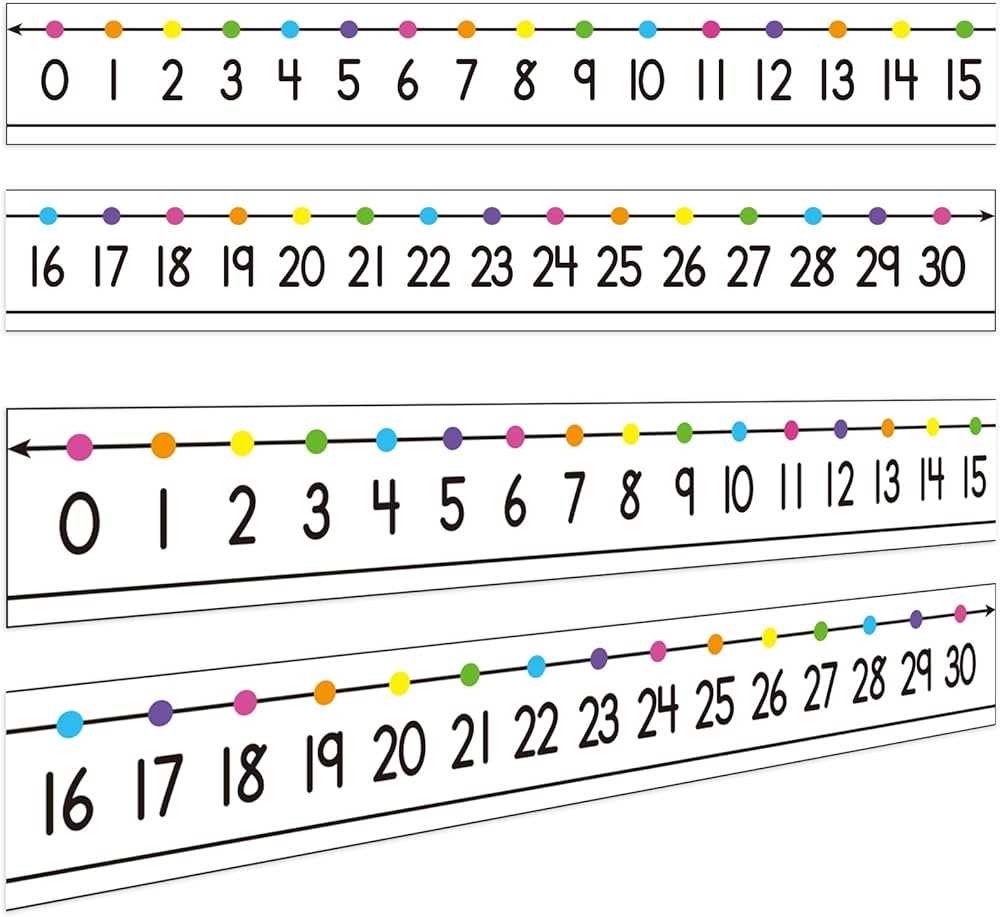
Using visual tools to reinforce basic math concepts can significantly enhance a child’s understanding of arithmetic. A helpful tool for this purpose is a simple horizontal chart with numbers from 1 to 20, which can be used for counting, adding, and subtracting with ease.
When selecting a suitable chart, ensure the numbers are clearly spaced, allowing for easy recognition and manipulation. A child can trace the numbers with a finger or a marker, helping to visually connect the concepts of forward and backward counting.
Incorporate activities that ask children to identify patterns in the sequence. For example, ask them to mark every third number or find the numbers between 10 and 15. This practice not only reinforces their counting skills but also introduces basic concepts of sequencing and order.
Printable Number Lines to 20
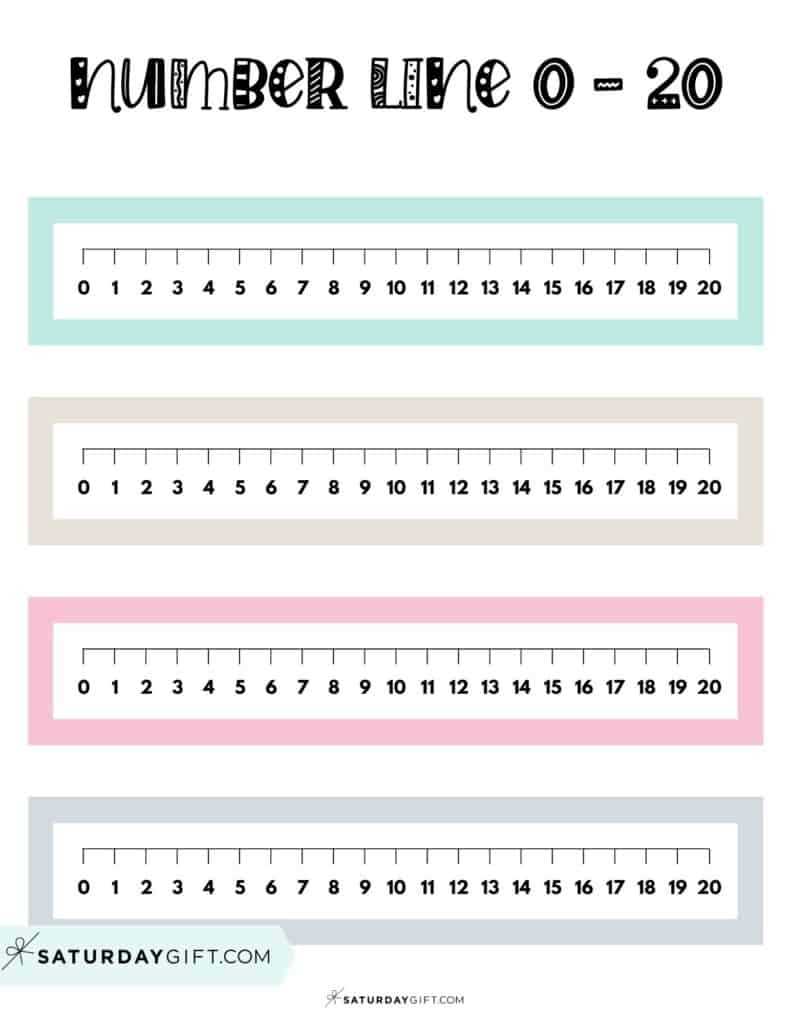
One of the most effective tools for teaching young learners how to count and perform basic arithmetic operations is a simple chart featuring consecutive digits from 1 to 20. These visual aids help students understand the sequence of numbers, making it easier for them to grasp addition and subtraction concepts.
For a clear and structured experience, choose a format where each number is evenly spaced. This helps children quickly recognize the relative positions of numbers, providing a solid foundation for mental math and counting exercises. It’s also beneficial to highlight key numbers like 10 or 5 to reinforce counting in multiples.
Incorporating interactive tasks like counting by twos, fives, or tens using the chart is a great way to engage students and make learning enjoyable. You can encourage children to mark specific numbers, such as even or odd numbers, to further improve their number recognition skills.
Additionally, consider creating variations of the chart where numbers are color-coded or paired with visual elements such as animals or shapes. This can add an extra layer of fun while keeping the learning process exciting and diverse.
How to Use Number Lines for Basic Addition and Subtraction
To start practicing addition with a simple chart, locate the first number in the equation. For example, if the problem is “4 + 3”, begin by marking 4 on the chart. From there, count three steps to the right, landing on 7. This visual movement helps solidify the concept of adding one unit at a time.
For subtraction, the process is similar. Begin at the starting number, such as in the problem “7 – 3”. Here, you’ll start at 7 on the chart and count three steps backward, landing on 4. This method demonstrates how removing units works conceptually.
As students advance, encourage them to perform larger calculations using the chart. They can practice more complex addition and subtraction problems by hopping over several numbers at once. For example, to solve “5 + 6”, they would start at 5, then jump 5 steps ahead to land on 10, and finally add the remaining 1 step to reach 11.
Another technique is to use the chart for skip counting, especially for problems involving multiples, like “3 + 5” or “2 + 8”. Encourage children to count in sets, jumping in increments to quickly add or subtract larger numbers.
Introduce the idea of negative results by subtracting numbers that go beyond zero. For example, in the problem “2 – 5”, start at 2 and move 5 steps backward, teaching the student that sometimes the result can be a negative value. A chart with negative numbers can be used for this purpose.
Finally, this tool can be adapted for more advanced concepts, such as doubles, near-doubles, and compensation strategies. Encourage students to identify patterns on the chart and use those patterns to solve problems more efficiently.