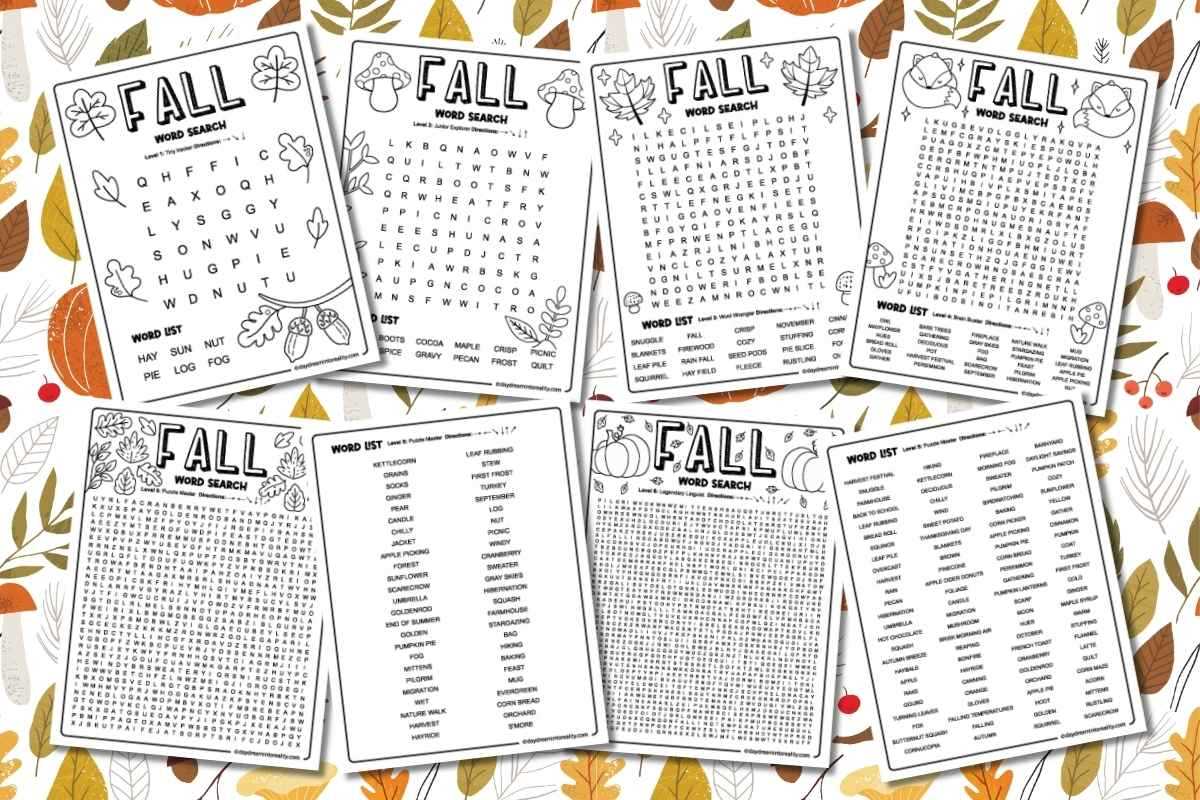
To create a fun and engaging autumn activity, design puzzles filled with seasonal terms such as “harvest,” “leaves,” and “pumpkin.” These challenges not only entertain, but they can also help sharpen observation and vocabulary skills. Simply select words that represent key elements of the season, and arrange them in a grid for users to discover.
Start by choosing a variety of words related to harvest time. Include things like “apple,” “scarecrow,” and “cornfield” to give a broad representation of autumn traditions. Keep the difficulty level in mind, adjusting word length and the grid size accordingly to fit the age group or skill level you’re targeting. For younger participants, use simpler words and larger grids. For more advanced solvers, make the puzzle more intricate by adding diagonal or backwards words.
Once you’ve compiled your list of seasonal terms, turn it into a grid by placing them in random positions. Ensure that the remaining spaces are filled with random letters to challenge users even more. For a personalized touch, consider including regional terms or specific fall activities that may be unique to your area. This custom approach will make the puzzle more relatable and enjoyable.
Printing your completed puzzle is straightforward. Use a simple word processor or online tool to create the grid and then print it out on standard paper. If you’re looking to make it available to a wider audience, sharing the document in PDF format can make it easier for others to print it from home or school. This approach allows families, classrooms, and community groups to share the seasonal fun easily.
Creating Seasonal Puzzles for Fun and Learning
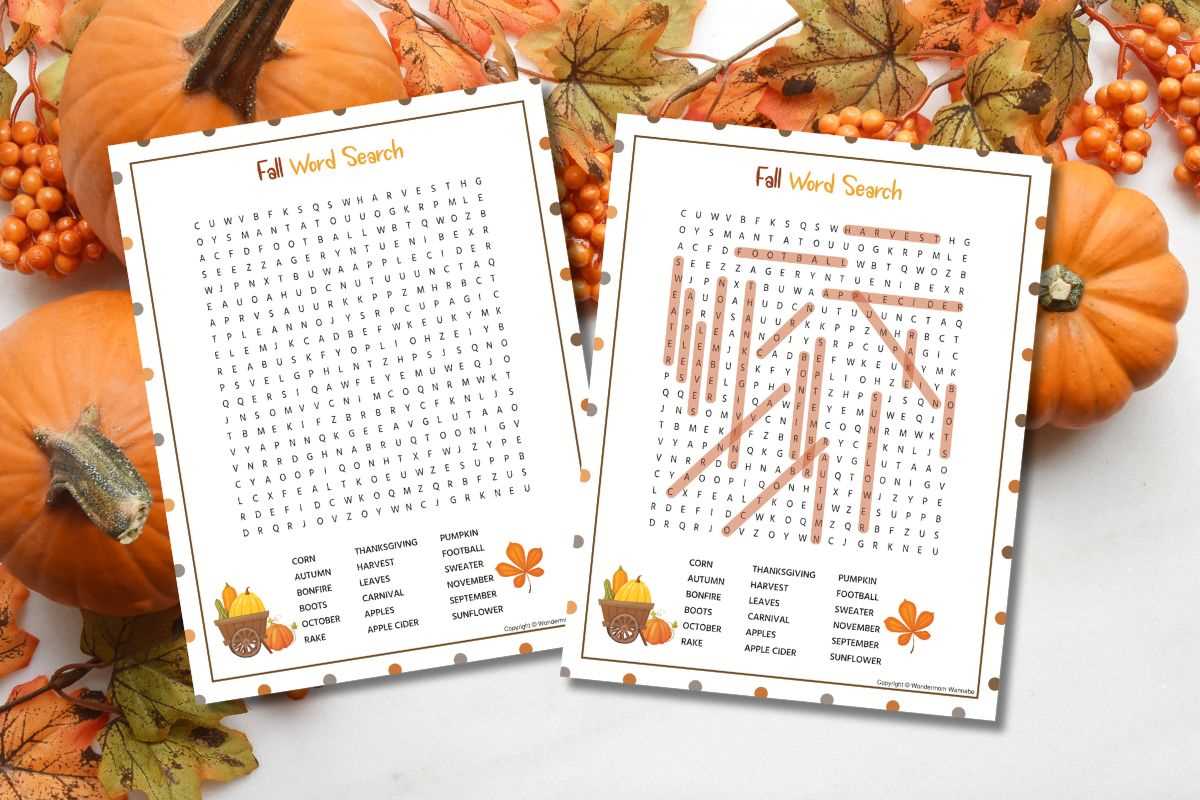
To build an engaging puzzle for any autumn-themed activity, focus on key terms tied to the season, like “acorn,” “cider,” or “harvest.” These puzzles can be simple or complex depending on the difficulty you want to offer. For beginners, choose shorter, familiar words and limit the grid size to make it easy to spot terms. For a challenge, use longer phrases or words that aren’t commonly used during the colder months.
For added variety, consider offering these challenges in different formats. Aside from the classic grid-style puzzle, mix in hidden clues that reference autumn activities, such as “apple picking” or “hayrides.” You can also create themed word lists for different audiences, including schoolchildren, senior citizens, or even event planners. This tailored approach ensures everyone has a fun, seasonal experience.
How to Create Your Own Printable Fall Word Search Puzzles
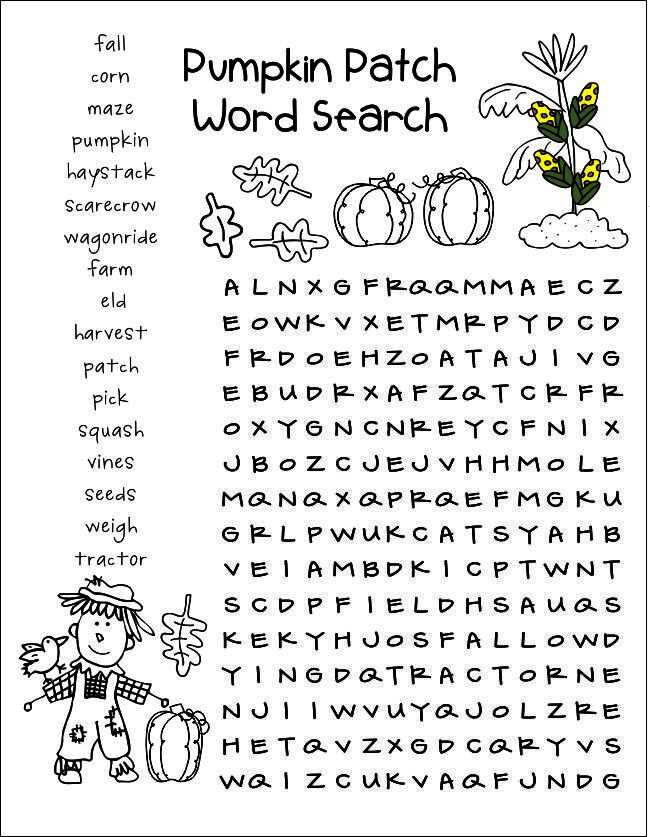
To design your own autumn-themed puzzle, begin by selecting a set of relevant terms. Choose words that reflect the essence of the season, such as “harvest,” “leaves,” and “pumpkin.” Make sure the words are simple enough to spot yet challenging enough to engage users. If you want to customize it for younger audiences, stick to familiar, easy-to-spot terms.
Once your list is ready, arrange these words into a grid. Depending on the difficulty, place the terms either horizontally, vertically, or diagonally. For beginners, it’s best to keep the puzzle straightforward with only horizontal and vertical words. For advanced solvers, add diagonals and even backwards words to increase the challenge.
After filling the grid with your selected words, populate the remaining spaces with random letters. This randomization will ensure that the puzzle isn’t too predictable and will provide more of a challenge. The key here is balancing the amount of white space to ensure the puzzle looks inviting but isn’t too easy to solve at a glance.
Test your puzzle before finalizing it. Solve it yourself to confirm the difficulty is appropriate for the intended audience. Check that every word in your list appears correctly, and that there are no overlapping terms or errors that might confuse solvers. A quick test run can help you identify any problems before sharing or printing the puzzle.
Once satisfied with your design, print it out or share it digitally. You can offer the puzzle in PDF format, making it easy to print and distribute to others. Whether it’s for a classroom, a family gathering, or a community event, these seasonal puzzles are a great way to celebrate the season while providing a fun, brain-stimulating activity.