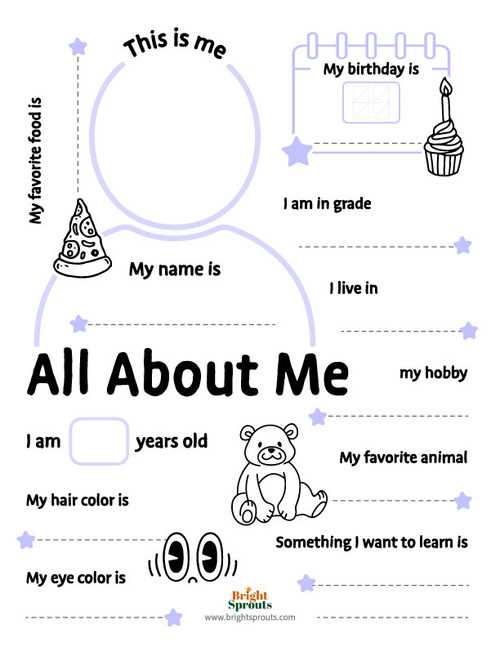
Start by providing children with a template that allows them to express their personality and interests. These activities let kids fill in details like their favorite color, hobbies, and family members. By answering these questions, they not only practice writing but also develop a better understanding of their own identity.
To make the experience more interactive, include a section where children can draw pictures or add stickers that represent their favorite activities or places. This can help make the activity more enjoyable while reinforcing their ability to connect words with visuals.
For classrooms, using these materials during the beginning of the school year is an excellent icebreaker. Kids can share their completed designs with the class, helping them get to know each other in a fun and lighthearted way. Additionally, it gives teachers insight into each child’s preferences and learning styles.
Creating Fun and Engaging Personal Templates for Kids
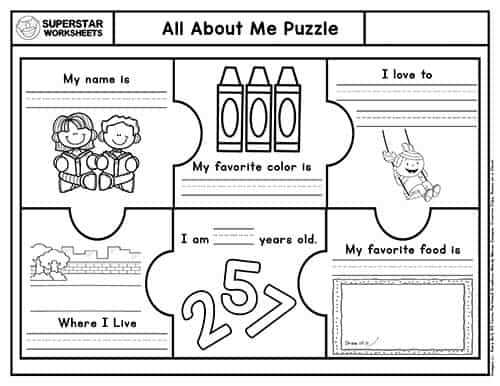
Start by designing a template that includes simple questions, such as the child’s favorite color, food, and hobby. This helps them begin reflecting on themselves in a clear and organized way. It can also serve as a great introduction to journaling and self-expression.
For younger kids, focus on providing spaces for drawing. These can include pictures of their family, pets, or favorite toys. Visual elements allow children who aren’t yet comfortable writing to still express themselves and engage with the activity creatively.
Ask fun questions like “If you could have any superpower, what would it be?” or “What’s your dream vacation destination?” These questions spark imagination while giving a glimpse into the child’s personality and dreams.
Include sections for children to describe things they enjoy doing with family or friends. This not only strengthens their understanding of relationships but also encourages them to think about the importance of these connections in their life.
Incorporate a small section for reflection, such as asking “What makes you happy?” or “What are you proud of?” This can help children begin to understand their own emotions and strengths, which is a valuable skill for emotional development.
To make the activity even more interactive, you could introduce a challenge where kids draw or write about a favorite memory or moment that made them feel special. This encourages deeper self-reflection and helps them connect more personally with the activity.
For a more educational twist, add sections that ask children to share their favorite books, shows, or subjects. This can open up discussions on learning preferences and allow children to reflect on their interests and how they relate to their surroundings.
These templates can be used in both classroom and home settings, making them versatile for various occasions. Whether as part of a school assignment or a fun family project, they offer children a valuable opportunity to learn more about themselves in a fun and engaging way.
How to Create Engaging Personal Templates for Kids
Begin with simple sections where children can provide basic details like their name, age, and favorite things. This allows them to engage with the activity without feeling overwhelmed. Keep the questions clear and direct for younger children, using age-appropriate language.
Incorporate spaces for drawing. Including visuals like pictures of their pets, family members, or favorite places helps kids express themselves without relying solely on writing. This also keeps younger children engaged, especially those who are still developing their writing skills.
Make the template interactive by adding fun questions that spark creativity, such as “What superpower would you love to have?” or “What’s your favorite holiday and why?” These questions encourage children to think creatively while giving insight into their preferences and personality.
Include a section that asks about their emotions, such as “What makes you feel happy?” or “What do you like to do when you’re sad?” This helps children practice identifying and articulating their feelings, which is important for emotional development.
To deepen their reflection, ask questions that invite children to describe their personal strengths or things they’re proud of. This can build their self-esteem and confidence, as they’ll have the chance to focus on what makes them unique.
Make the template more personal by including family-related questions like “What is your favorite family tradition?” or “What’s something fun you did with your family recently?” This can help children connect with the activity by involving their loved ones and celebrating meaningful moments.
To make the activity more memorable, allow room for them to add a small keepsake or drawing that represents something important to them, such as a favorite memory or a special object. This adds a personal touch that makes the experience even more enjoyable.
Finally, ensure that the activity is adaptable for different settings, such as classrooms or at home. It’s a versatile tool that can serve as an icebreaker, a creative exercise, or a meaningful reflection activity that fosters connection and self-awareness.