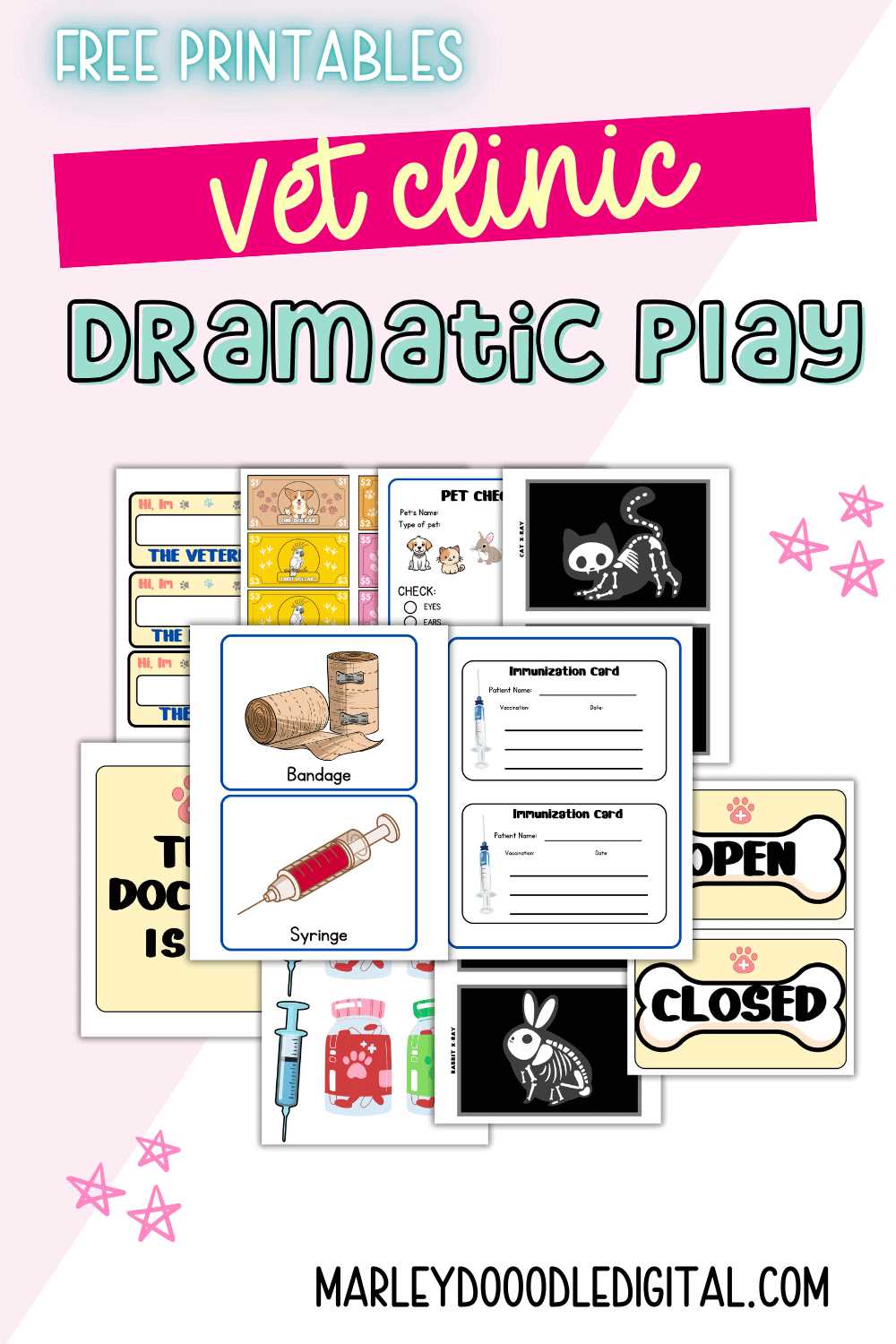
Download ready made PDF role cards, pet patient forms, appointment slips, and exam room signs sized for US Letter or A4, then print at 100% scale to keep text fields aligned. Use bold 20–24 pt fonts for headings and 14–16 pt for writing lines so children can read labels and fill in details independently.
Set up three clear zones: reception desk, exam table, and treatment area. Place sign boards above each station and attach name badges with lanyards for roles such as animal doctor, technician, receptionist, and pet owner. Keep forms on clipboards to support early writing practice.
Choose 160–200 gsm cardstock for signs and labels to prevent bending. Laminate high use items like prescription sheets and intake charts with 3–5 mil pouches for repeated use across the school year.
Include structured prompts on each sheet. Add fields for pet name, species, symptoms, weight, temperature, and treatment plan. This encourages vocabulary growth, sequencing skills, and realistic scenario building during center time.
Free Vet Clinic Dramatic Play Printables for Preschool Centers
Download ready to use PDF role cards, patient intake sheets, appointment slips, prescription pads, and exam room signs, then print at 100% scale on US Letter or A4 to keep margins aligned and writing fields clear.
Create labeled stations for reception, examination, and treatment using bold 24–36 pt headings so children can identify each area independently. Place intake forms on clipboards with attached pencils to encourage name writing and symptom descriptions.
Use 160–200 gsm cardstock for signage and name badges to prevent bending during daily center rotations. Laminate high traffic items such as prescription forms and medical charts with 3–5 mil pouches to allow dry erase markers for repeated use.
Include structured fields on each sheet: pet name, species, age, weight, temperature, symptoms, diagnosis, and care plan. Clear lines spaced at least 1 cm apart support early writers and reduce overcrowded text.
Rotate character roles every 15–20 minutes between animal doctor, technician, front desk assistant, and pet owner. Provide simple scenario cards such as “limping puppy” or “cat with cough” to guide conversations and vocabulary growth.
Store all materials in labeled folders or bins sorted by function to speed up setup and cleanup. Keep a master copy of each document in a protected binder for quick reprinting when supplies run low.
How to Set Up a Vet Clinic Dramatic Play Center Step by Step
Divide the area into three clear zones: reception desk, examination table, and treatment station. Use small shelves or low tables to define each section and keep walking paths at least 60 cm wide for safe movement.
Place a sign above each zone with large 24–36 pt text so children can identify spaces independently. At the reception desk, add clipboards with intake sheets, appointment cards, and pencils attached with string to prevent loss.
Set up the examination area with a child sized table, toy stethoscope, thermometer, bandages, and stuffed animals. Keep tools in labeled bins to support cleanup routines and vocabulary recognition.
Prepare the treatment station with pretend syringes without needles, medicine bottles with paper labels, gauze rolls, and pet carriers. Store small items in clear containers so contents remain visible.
Assign roles using name badges:
- Animal doctor
- Technician
- Front desk assistant
- Pet owner
Rotate roles every 15–20 minutes to ensure each child practices different language skills and social interactions. Use short scenario cards such as “kitten with sore paw” or “dog needs a checkup” to guide conversations.
Keep all forms and signs in a labeled binder for quick replacement. Review materials weekly and restock paper copies so the center remains organized and ready for daily use.