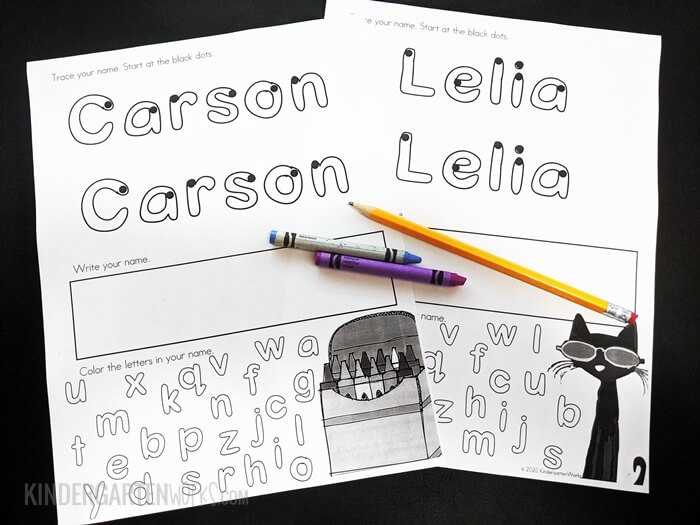
Start by using sheets with large letters and spaces for tracing. This simple approach helps improve control over the pen and builds muscle memory, which is key for legibility.
Customize these sheets for individual needs. If a child or adult struggles with specific letters, focus on those with tailored exercises that reinforce the correct formation.
For more advanced learners, transition from tracing to freeform exercises. Use dotted lines that gradually fade to encourage independent writing while maintaining proper letter structure.
Printable Practice Sheets for Learning to Write Names
Start with clear, large blocks of letters for beginners to trace. This method ensures learners gain confidence and consistency when forming each character. It’s helpful to use bold lines and ample space for ease of tracing.
Next, gradually reduce the visibility of the letters, transitioning to a dotted outline. This allows the student to rely on muscle memory, reinforcing proper letter construction without over-reliance on tracing.
Once comfortable, shift to exercises that challenge writing from memory, with no visual cues. This will build both speed and precision, and can be adjusted by offering optional guides for more difficult characters.
How to Create Custom Name Writing Practice Sheets
To design personalized exercises, start by selecting a clean layout with enough space between lines for comfort. Use a font that’s easy to follow, like a simple sans-serif style. Adjust the size of the characters depending on the learner’s age or skill level.
For more tailored sheets, include dotted or dashed outlines for the learner to trace. This method is especially useful for beginners or those who need additional support with letter formation.
Next, create a set of lines that fade or transition from dotted to solid, encouraging independence. The sheets should guide without being restrictive, helping learners connect the dots to form each letter confidently.
Finally, provide areas for free-form exercises, where learners can practice writing without any visual cues. These sections are key for solidifying skills, and you can add optional guidelines like slanted lines or arrows to support correct letter orientation.