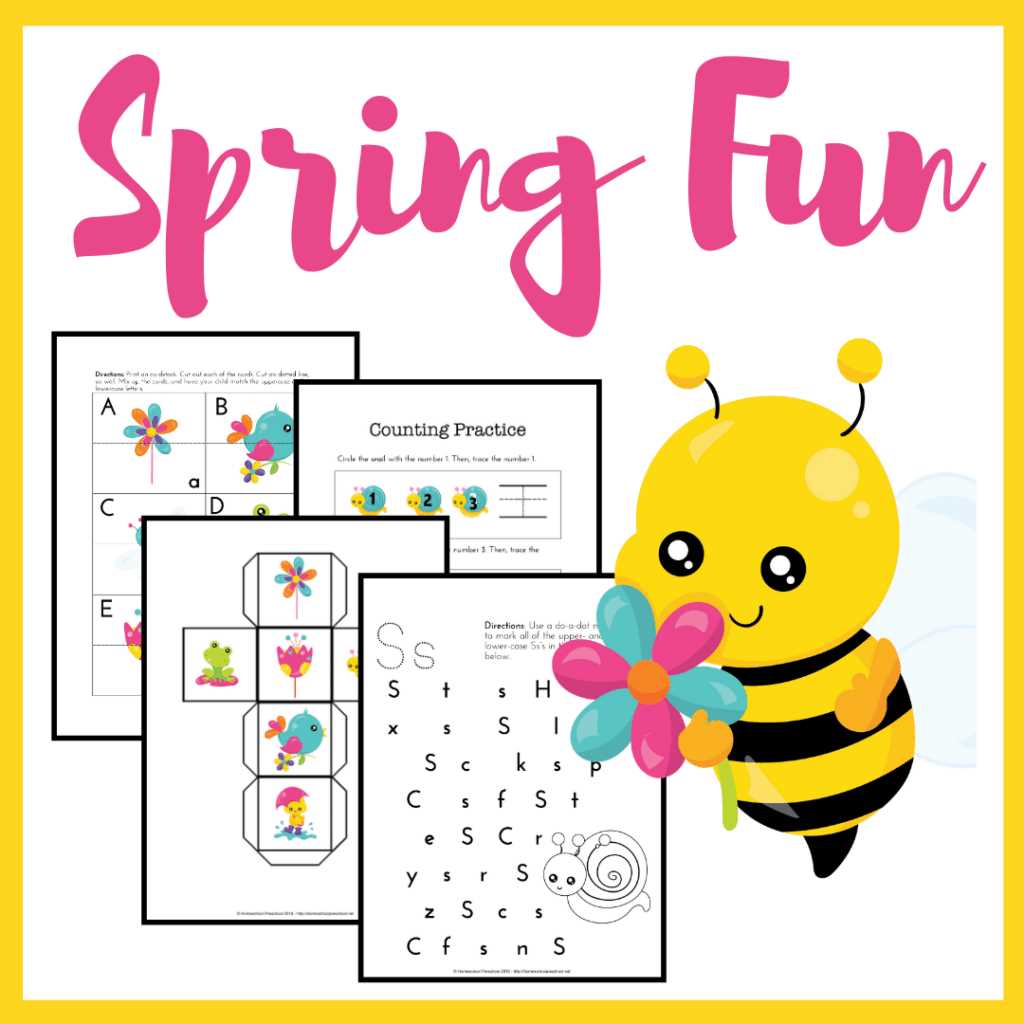
Start by focusing on easy and engaging projects that can be done with minimal preparation. Simple coloring sheets featuring flowers, animals, and weather symbols are perfect for younger children. You can easily find templates that allow little ones to express creativity while reinforcing basic concepts like color recognition and fine motor skills.
Another great way to keep kids entertained during this time of year is through hands-on learning exercises. Print materials that encourage sorting and matching, such as puzzles featuring different plants or animals that are common in warm weather. These can also be used to teach kids about seasons, habitats, and animal behavior in a fun, interactive way.
For more tactile learners, consider offering templates for arts and crafts. Cut-out patterns for butterflies, birds, and trees are a fantastic way to engage kids in both art and nature discussions. Use materials you already have at home, such as colored paper, glue, and scissors, to help bring their creations to life while enhancing their coordination and focus.
Printable Spring Ideas for Preschool Learning
Start by selecting fun coloring sheets with a focus on nature, such as flowers, insects, and trees. These simple drawings allow young children to explore their creativity while learning about the environment. You can even incorporate educational elements like labeling parts of plants or animals to introduce early science concepts.
In addition to coloring, consider offering activities that build on sensory experiences. Templates with patterns of leaves, raindrops, or weather symbols can be cut out and assembled, allowing kids to touch and feel different textures while learning about different seasonal phenomena.
Encourage matching and sorting tasks. You can print images of different types of flowers, trees, or birds, and have children categorize them based on color, shape, or type. These exercises improve their ability to observe, classify, and develop cognitive skills while engaging them with the natural world.
Introduce an interactive element through counting exercises. Print out scenes featuring clusters of items like flowers, clouds, or animals and ask children to count specific objects. This simple math concept helps them build number recognition while enhancing their attention to detail.
For a more active approach, offer fun templates for creating simple crafts. Kids can trace and cut out images of animals or flowers and then glue them together to create a colorful scene. This hands-on activity promotes fine motor skills while allowing children to express their creativity in a practical way.
To incorporate storytelling, print out outlines of scenes or characters and let children create their own narratives. Whether it’s about a growing garden or a busy bee, storytelling fosters their imagination while helping with vocabulary and sentence construction.
Lastly, seasonal-themed puzzles can be a great tool for both learning and play. Printing out puzzle pieces based on nature or animal themes gives children a chance to engage in problem-solving while enjoying the rewards of completing their tasks. These activities not only improve their patience but also build critical thinking skills in a fun, dynamic way.
Creative Drawing and Coloring Ideas for Spring
Encourage children to draw scenes of nature, such as blooming flowers, buzzing bees, or trees growing new leaves. You can start by providing simple outlines, allowing kids to color them with their preferred shades. This exercise will not only help them recognize the natural world but also spark their imagination as they bring their own details to the drawings.
Introduce themes that invite storytelling through art. Ask the children to create a picture of a garden, a picnic scene, or a bird in flight, and then make up a short story to go along with their drawing. This will help develop their verbal skills while enhancing their understanding of seasons and the animals that come with them.
Incorporate texture by using different materials like tissue paper or fabric scraps to fill in parts of the artwork. For example, kids can use tissue paper for flowers or grass, or glue small fabric pieces to create a colorful scene. This tactile approach engages more senses, making the artwork more enjoyable while refining fine motor skills.