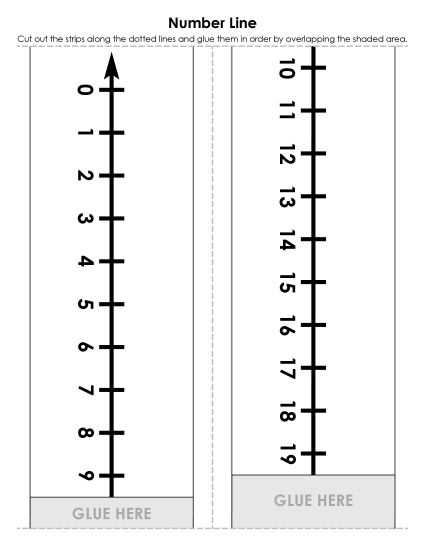
Use a graduated scale with evenly spaced marks to train arithmetic accuracy faster than abstract drills. A well-designed horizontal scale showing values from –20 to 20 helps learners visualize addition, subtraction, and distance between values. For early grades, spacing of 1.5–2 cm between marks improves finger tracking and reduces counting errors by up to 30% during practice sessions.
Choose formats that match the task: whole values only for beginners, mixed integers for grade 2–3, and fractional segments (½, ¼, 0.1) for advanced exercises. Black-and-white layouts save ink and stay readable after multiple copies, while bold tick marks every five units support quick orientation without crowding the scale.
Prepare ready-to-use worksheets in A4 and US Letter with margins no smaller than 15 mm to avoid trimming issues. Horizontal orientation works best for desk work; vertical versions fit notebooks and interactive boards. For durability, laminate copies used daily, or print on 120–160 gsm paper so repeated handling doesn’t blur marks or values.
Counting Tracks for Classroom and Home Use
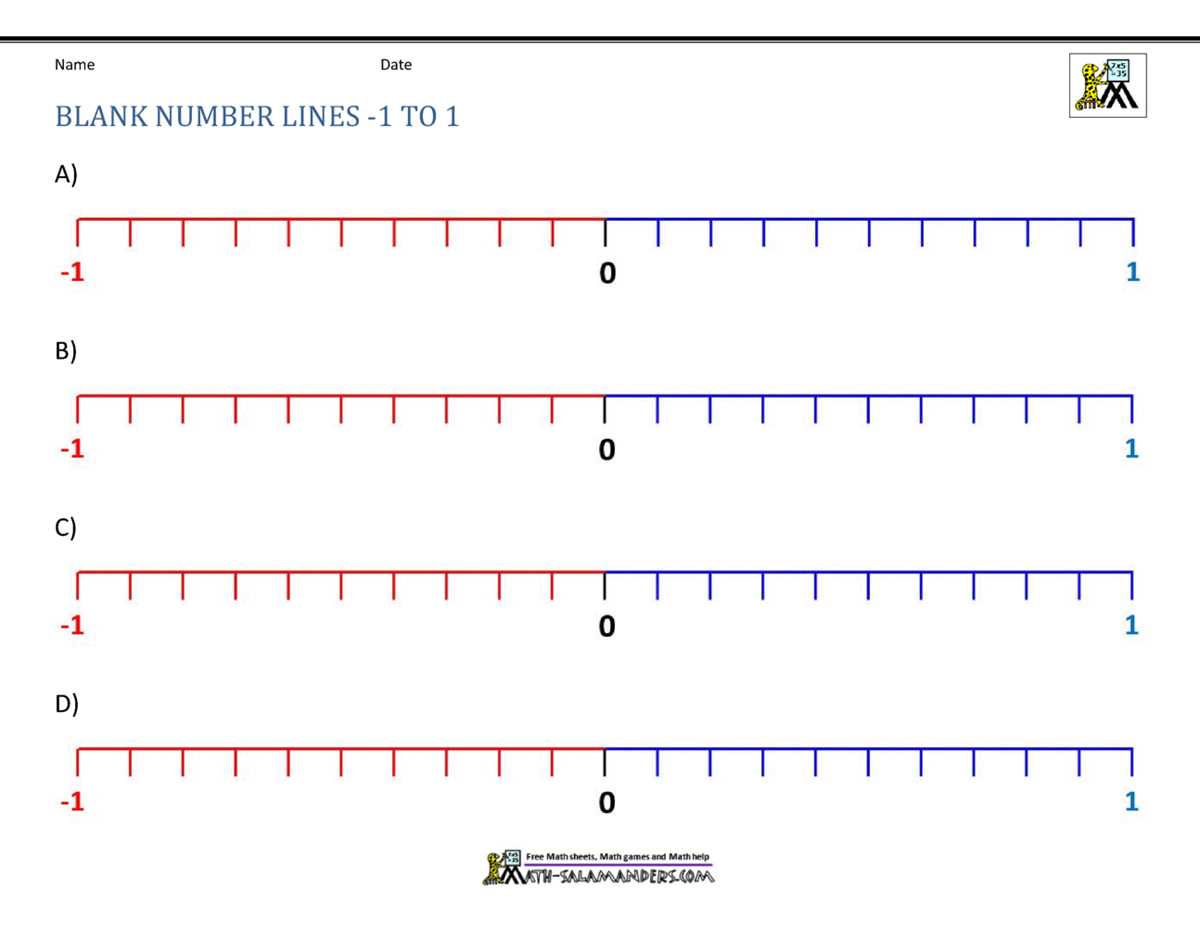
Choose a counting track that spans from negative values to positive ones, with zero clearly centered, and laminate it for repeated marker use during quick drills.
For early grades, select a scale strip marked in single-step increments across a short range, then pair it with small movable tokens; this setup supports skip-counting by 2s, 5s, or 10s without clutter.
Older learners benefit from extended integer tracks that include fractional tick marks at 1/2 and 1/4 intervals; spacing of at least 1.5 cm between ticks reduces misreads during rapid problem solving.
At home, place a compact math track on the desk edge and use a dry-erase arrow to model addition and subtraction jumps; limit sessions to five minutes to maintain focus while reinforcing magnitude and direction.
In classrooms, mount a large-format counting strip at eye level and align it with floor tiles to visualize step size; this physical reference improves estimation accuracy during mental arithmetic checks.
For assessments, provide a blank scale strip with only endpoints labeled and ask students to insert missing tick marks; this reveals understanding of intervals without relying on rote memorization.
Store multiple versions–whole-value, fractional, and decimal tracks–in labeled folders, and rotate their use weekly to reinforce transfer across topics like ratios, inequalities, and coordinate placement.
How to choose the right range and scale for specific grade levels
Choose a range that matches the counting span students actively use: for kindergarten, fix the span at 0–10 with unit steps of 1 and wide tick spacing of 2–3 cm to support finger tracking and one-to-one correspondence.
For Grade 1, expand the span to 0–20 and keep unit steps at 1, but add midpoint markers at every five units; spacing can tighten to 1.5–2 cm to fit two spans per page without crowding.
Grade 2 benefits from two formats on the same sheet: a primary axis from 0–100 with steps of 10 emphasized, and a secondary strip from 0–50 with unit steps of 1; this pairing supports skip counting and place-value shifts without visual overload.
From Grade 3 onward, introduce negative values cautiously: begin with −10 to 10 using equal intervals of 1, then widen to −50 to 50 once students handle direction and magnitude; avoid mixed step sizes on a single axis.
Upper elementary classes (Grades 4–5) require fractional precision: select spans such as 0–2 or −1–1 with subdivisions of 1/4 or 1/8; label only endpoints and major ticks to reduce clutter and keep attention on partitioning.
Middle school work calls for variable scaling by topic; apply these presets:
- Integers: −100 to 100, steps of 5 or 10.
- Rational values: 0–5, steps of 0.5 or 0.25.
- Ratios and rates: 0–10, logarithmic spacing avoided.
Match each preset to the lesson goal and keep one axis per page for clarity.