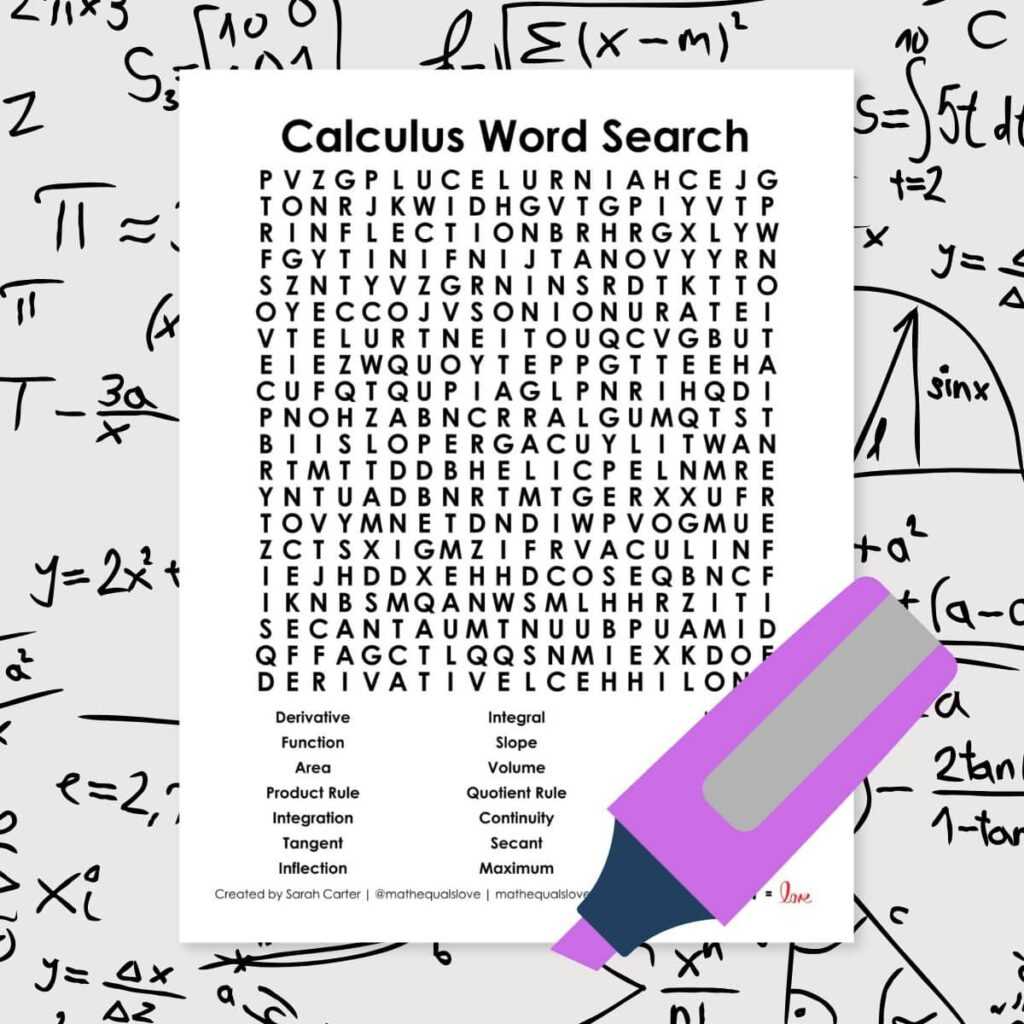
Start by selecting grids that focus on mathematical terminology. These exercises are a great way to build vocabulary and reinforce key concepts. Choose grids that align with the specific topics you’re studying, whether it’s geometry, algebra, or arithmetic terms. Regular practice will not only help you recognize these terms faster but will also improve retention.
To get the most out of these exercises, solve them with a purpose. Before starting, review the terms you’re looking for and think about their meanings. Once you’ve completed a puzzle, reflect on how these terms relate to broader mathematical ideas. This helps connect vocabulary with real-world applications, making learning both engaging and practical.
Consider using these grids as part of a broader study plan. You can integrate them into homework assignments or use them as a warm-up before tackling more complex tasks. Whether you’re a student or someone looking to keep your skills sharp, these challenges offer a fun and effective way to enhance mathematical knowledge.
How to Use Educational Puzzles to Improve Concept Recognition
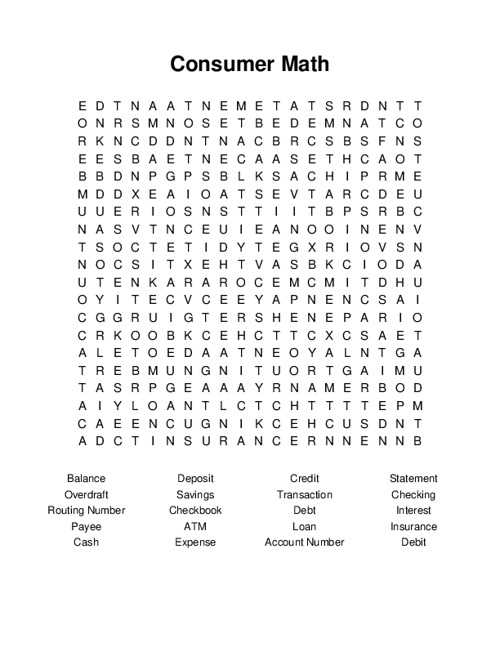
Start by choosing exercises that cover specific terms relevant to your current studies. Look for grids that focus on particular themes like algebraic formulas, geometric shapes, or numerical operations. This targeted approach ensures that you’re reinforcing the vocabulary and concepts most applicable to your learning needs.
To maximize the benefits of these activities, aim for a balanced mix of difficulty levels. Beginners can start with easier grids that focus on basic terms, while more advanced learners should tackle more complex challenges that incorporate less common terminology. Gradually increasing the complexity helps build confidence and deepens understanding over time.
Don’t just solve these grids passively–engage with them actively. Before you start, make a list of the terms you’re looking for and take a moment to think about their meanings. Afterward, try to recall each term’s role within its respective mathematical context, helping to solidify your understanding of how each concept is applied.
Consider using these puzzles as a group activity. Working with peers on these challenges not only makes the process more enjoyable but also allows for collaborative learning. Discussing the terms and their connections with others can offer fresh insights and help fill in any gaps in your knowledge.
Incorporate these exercises into your study routine as quick, fun warm-ups before tackling more in-depth problems. The repetitive nature of the activity helps improve recall and speeds up recognition, which is particularly useful during timed exams or fast-paced problem-solving scenarios.
If you prefer a more structured approach, set goals for the number of puzzles you want to complete within a week. Tracking your progress can help you stay motivated and encourage consistent practice. Over time, you’ll notice an improvement not only in your ability to recognize terms but also in how quickly you can identify them during problem-solving sessions.
Lastly, make use of high-quality sources for your puzzles. Websites that offer free educational resources or specialized books often have well-designed grids that are both challenging and fun. Choosing puzzles from reputable sources ensures that the terms you’re working with are accurate and relevant to your studies.
How to Create Your Own Educational Puzzle
Start by selecting a theme that aligns with the concepts you want to reinforce. Choose terms that are specific to your subject matter, such as formulas, shapes, or operations. Creating a focused theme will help you craft a more engaging and educational puzzle.
Next, create a list of the terms you want to include. Aim for a balance between common and more complex terms to challenge the solver. Ensure that the terms are of varying lengths to create a well-rounded and interesting grid.
Once you have your list, it’s time to arrange the terms on a grid. Use an online puzzle generator or manually place the terms in rows, columns, and diagonals. For a more challenging puzzle, hide some terms backwards or diagonally. This increases the level of difficulty and keeps solvers engaged.
After placing all the terms, fill the remaining empty spaces with random letters. This will add complexity and prevent the solver from guessing the remaining terms too easily. Be sure to check that the words do not overlap in confusing ways, ensuring clarity in the puzzle.
For a more professional appearance, consider using a grid generator tool. These tools help you adjust the size of the grid and ensure even spacing for each term. They also allow you to customize the puzzle with different fonts and colors to make it visually appealing.
Before sharing your puzzle, verify that all the terms can be found and that the grid is correctly formatted. You can even ask someone else to solve the puzzle for validation. This step ensures that your puzzle is both challenging and fun to solve.
Finally, distribute your puzzle in a format that’s easy for others to use, such as a downloadable PDF or image file. This way, your creation can be easily printed and enjoyed by learners looking to improve their skills.