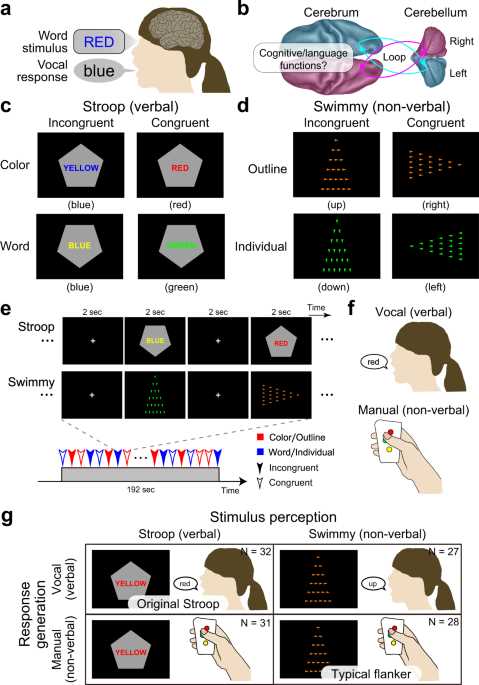
To assess cognitive flexibility and processing speed, you can utilize a simple and engaging color-word conflict exercise. By examining how quickly individuals can identify the color of a word when the word itself is a different color, you gain insights into their mental processing abilities. This activity is ideal for those interested in understanding attentional control and how interference can impact performance.
The activity typically involves a series of words printed in various colors. The challenge arises when the text spells out a color name that differs from the ink color used for printing. For example, the word “blue” might be printed in red ink. Participants are required to state the color of the ink, not the word itself, which tests their ability to suppress automatic reading tendencies and focus on the task at hand.
Using this type of exercise allows you to measure the extent of cognitive interference. The greater the delay or difficulty in correctly identifying the ink color, the higher the level of interference caused by the conflicting information. This task is commonly used in psychology research, offering a simple yet powerful way to explore cognitive functions like attention, inhibition, and processing speed.
For accurate results, ensure the task includes a variety of word-color combinations and allows participants enough time to respond. It can be easily tailored for different age groups or skill levels, making it a versatile tool for anyone interested in evaluating cognitive flexibility.
Visual Color-Word Conflict Evaluation
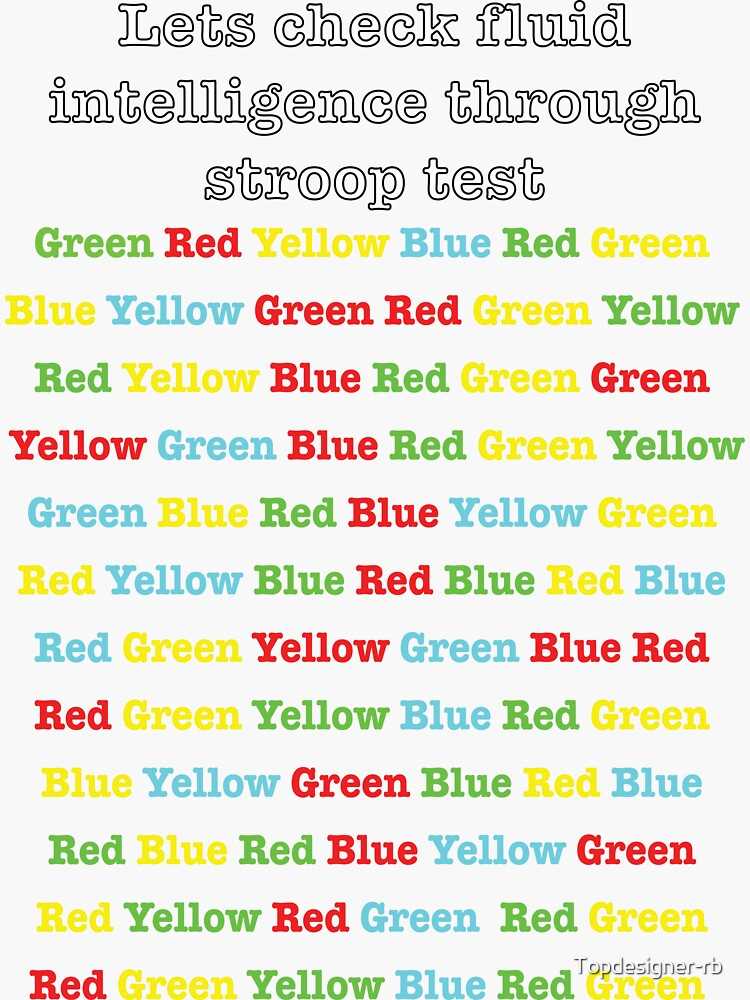
For an immediate hands-on approach to assessing cognitive flexibility, use a worksheet where color names are written in hues inconsistent with their meaning. Instruct participants to identify the color of the text as quickly as possible, disregarding the word itself. Prepare several variations of the task to avoid practice effects, including words like “blue” written in red, green in yellow, and so on. By printing multiple pages with different color-word pairings, you provide a range of difficulty levels for the assessment.
This approach can highlight mental interference caused by incongruent information, a phenomenon that typically slows reaction time. For a more detailed analysis, include a timed aspect to measure how quickly individuals process the conflicting stimuli. As this method involves no complex equipment, it is a practical tool for both classroom and research settings, offering insight into cognitive processing speed and attentional control.
How to Create a Home Version of the Cognitive Color-Word Task
To begin, choose a simple word processor like Microsoft Word or Google Docs. Create a document with two columns. On the left, list several color names written in black ink, and on the right, write the same color names, but use contrasting ink colors (e.g., the word “red” written in blue ink). Ensure the text aligns and fits evenly across the page for ease of reading.
Next, format the document so that the colors are mixed in a random order. Don’t group similar colors or use patterns that may make the task predictable. You can create a random mix by copying and pasting text in different spots, adjusting font size, or varying the order of the words.
For each participant, prepare a sheet with a consistent font style and size. Make sure the font is easy to read, but bold enough to stand out against the paper. A recommended font size for clarity is between 18 and 24 points. Adjust the margin and line spacing to avoid cluttering the page.
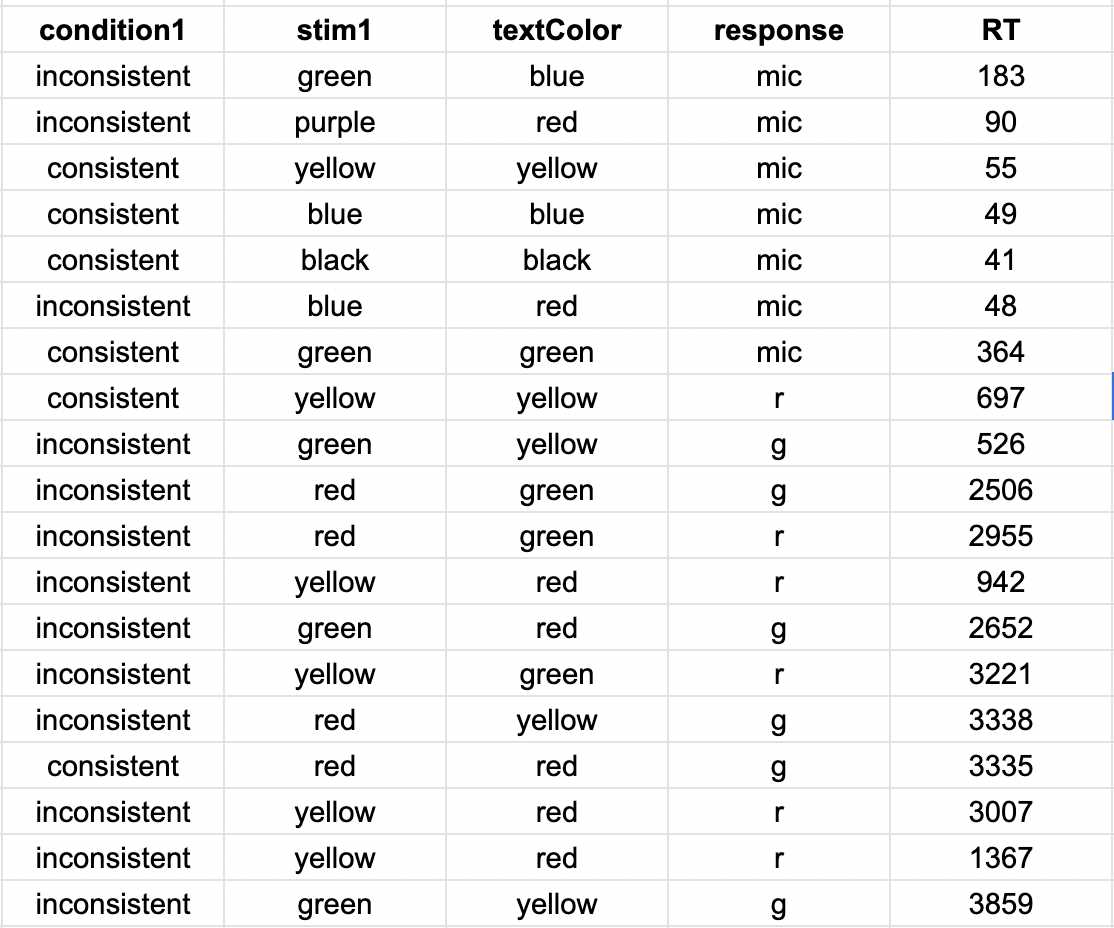
Now, print the document and have the participant read the words aloud while focusing on the color of the ink rather than the word itself. Use a timer to track their response time. If you want to make the task more challenging, add additional distractions, such as background noise or visual elements.
- Begin with a short list of 10-15 words for beginners.
- For more advanced users, include 25-30 words to increase difficulty.
- Ensure there are no repeating words across multiple tests to maintain consistency in results.
Lastly, provide a clear set of instructions. Participants should be aware that their task is to focus on the color of the ink rather than reading the word itself. If you plan on tracking performance, use a stopwatch or an app to measure their speed and accuracy. This setup will allow you to conduct the activity effectively at home without the need for specialized equipment.