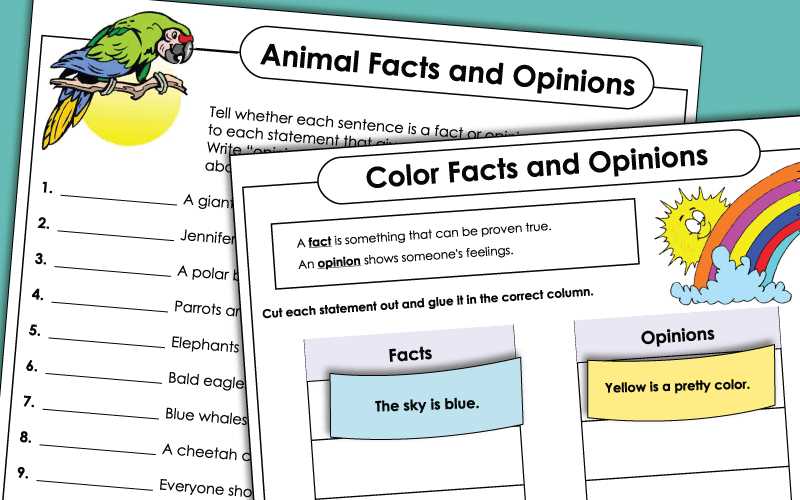
Start by selecting simple activities that help distinguish between objective statements and subjective thoughts. Focus on worksheets where students match statements with their appropriate categories. Use clear, straightforward examples to avoid confusion, such as “The sky is blue” for a fact and “I think ice cream is the best dessert” for a view.
Next, create exercises that involve identifying the nature of various claims. These can include short passages or sentences that ask the student to decide whether the statement is based on measurable data or personal belief. This kind of hands-on practice reinforces the distinction in a practical and engaging way.
For more advanced learners, you can incorporate analysis tasks where students must explain why a certain statement qualifies as a fact or a view. This deepens understanding and strengthens their ability to articulate the difference in their own words. This step helps students build critical thinking skills, essential for recognizing bias and making well-supported arguments.
Understanding Printed Resources for Differentiating Facts and Beliefs
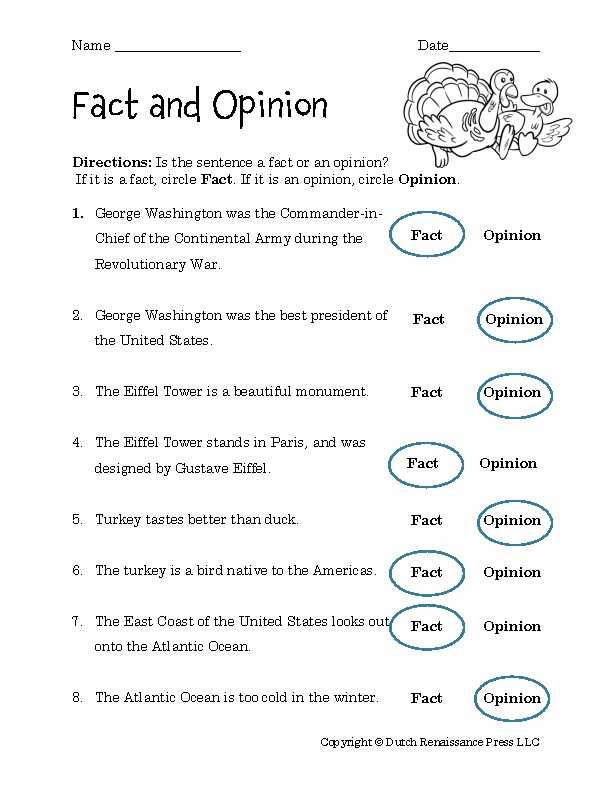
To help students or participants identify real information versus personal perspectives, use worksheets that focus on distinguishing statements based on evidence from those rooted in individual interpretation. Offer activities where users match phrases to categories based on whether they are backed by verifiable data or reflect someone’s viewpoint.
Prepare a series of examples for learners, where some assertions are supported by measurable data, while others are subjective claims. This encourages analytical thinking and builds clarity in understanding how claims can be either universal or unique to an individual’s experience.
Organize exercises where participants are asked to categorize sentences as objective or subjective based on established criteria. The use of checklists or visual cues can enhance comprehension, particularly for younger learners who benefit from step-by-step guidance.
Incorporate scenarios that present ambiguous statements. Provide guidance on how to ask the right questions to test whether a statement is open to interpretation or universally accepted. Create environments where one can practice these evaluations, such as mock debates or discussions.
Consider using stories or case studies to practice identifying statements grounded in observable facts versus those built upon assumptions. For instance, let students analyze historical events, scientific discoveries, or social trends through this lens to sharpen their analytical skills.
Finally, regularly provide feedback and corrections after such activities. This ensures the individual can discern the structure and foundation of each type of statement, reinforcing the learning process and helping them develop a keen eye for distinction in real-life situations.
How to Use Fact and Opinion Worksheets in the Classroom
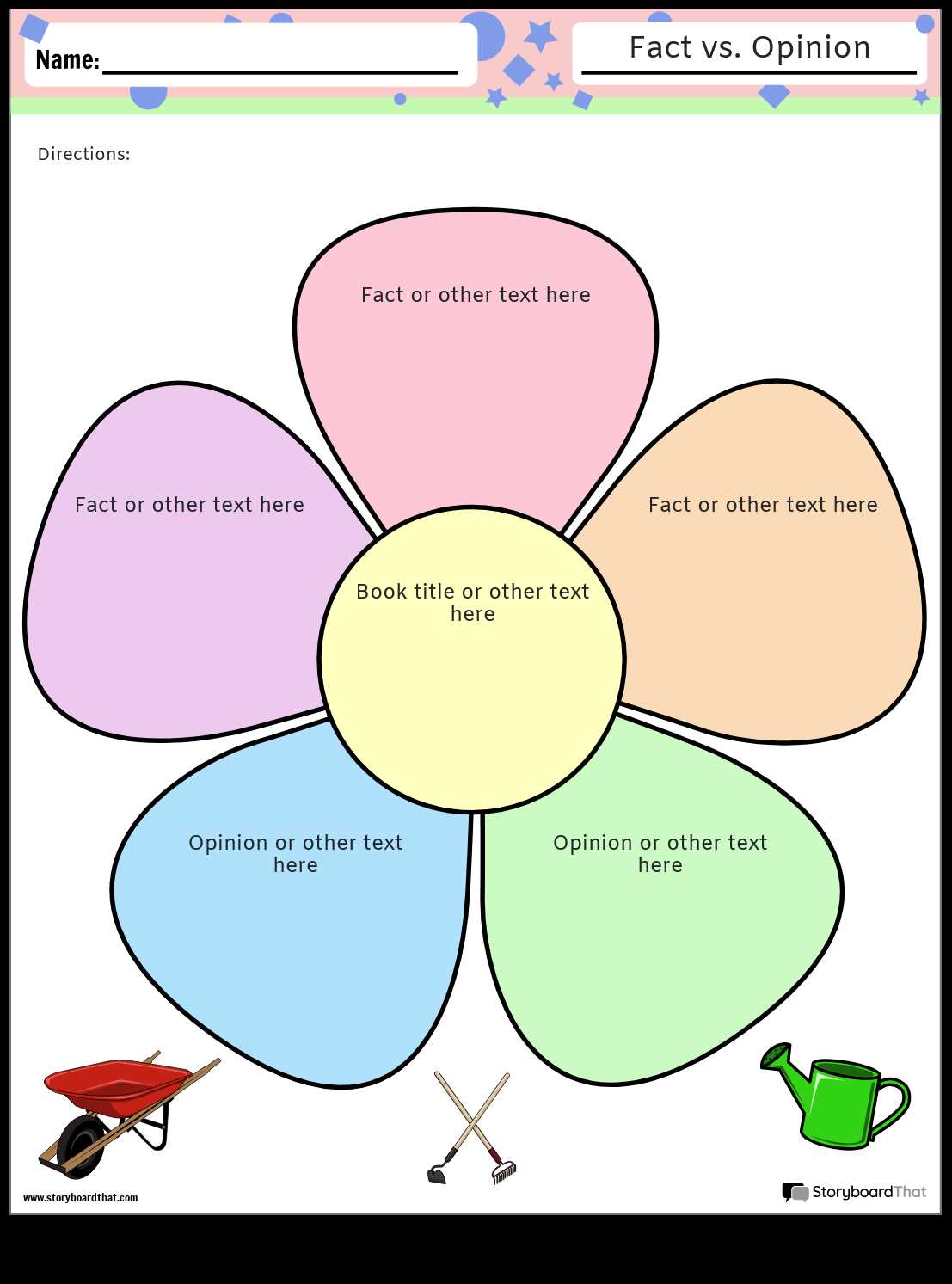
Distribute worksheets that focus on the classification of statements, asking students to label each one based on whether it can be verified with evidence or reflects a personal belief. These tasks help develop critical thinking skills, as learners must evaluate each statement on its own merit. To reinforce learning, allow students to work in pairs and discuss their reasoning before sharing answers with the class.
After the initial exercises, encourage more complex tasks, such as identifying subtle differences between claims that appear factual but are actually based on assumptions. Organize class discussions or debates where students must defend their answers, citing evidence or offering counterarguments. This provides an interactive way to reinforce the distinctions and improve comprehension.