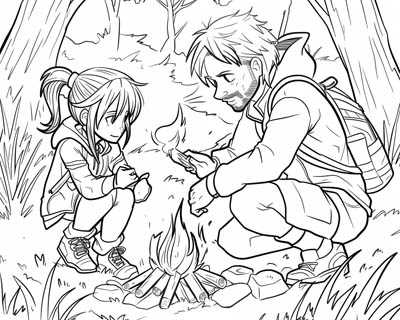
Choose line art with medium-thick outlines (1.5–2 pt) and clear shapes such as tents, campfires, backpacks, pine trees, and forest animals; this makes illustrations easier to fill for ages 4–8 and reduces frustration. For older children, select detailed forest scenes with layered elements like mountains, lakes, and starry skies to extend focus time to 20–30 minutes per sheet.
Use A4 or US Letter format at 300 DPI to keep lines sharp and avoid pixelation. Set printer scaling to 100% and disable “fit to page” to prevent distortion of small details like lantern handles or tree branches. For markers, choose 120–160 gsm paper to limit bleed-through; for crayons or pencils, standard 80–100 gsm works well and keeps printing costs lower for classroom sets.
Group illustrations into themed sets of 5–10 designs, mixing simple object-based drawings (single tent, compass, mug over fire) with full-scene forest compositions. This structure supports both short activities of 5–10 minutes and longer creative sessions, while allowing teachers or parents to pair each sheet with vocabulary tasks about gear, wildlife, and safety rules.
Camping Coloring Pages Printable
Select black-and-white outdoor adventure worksheets with clear 2 pt outlines and balanced white space; this allows children to stay within shapes such as tents, lanterns, pine trees, backpacks, and marshmallows on sticks. For ages 3–5, choose single-object illustrations with large areas to fill. For ages 6–9, pick detailed forest scenes that include mountains, lakes, wildlife tracks, and night skies to extend focus and hand control.
Set your printer to 300 DPI and disable automatic scaling to preserve small elements like rope knots and zipper pulls. Use standard Letter or A4 format and keep margins at least 10 mm to avoid trimming artwork. For felt-tip markers, switch to 120–160 gsm stock to prevent bleed-through; crayons and colored pencils work well on 90–100 gsm sheets, which lowers bulk printing costs for classrooms or activity packs.
Organize designs into themed bundles of 6–8 sheets: camp setup, campfire cooking, forest animals, hiking gear, and night sky observation. This structure supports both short 10-minute tasks and longer 30-minute sessions. Add simple labels under objects–“compass,” “flashlight,” “sleeping bag”–to reinforce vocabulary while children fill the artwork.
Adjust complexity by mixing bold contour drawings with partially shaded backgrounds. For younger learners, avoid tight patterns like dense pine needle clusters. For older kids, include texture details such as wood grain, stone outlines, and layered mountain ridges to increase challenge without overcrowding the sheet.
Store finished artwork in labeled folders by theme and date to track progress in line control and color choices. Reprint favorite forest scenes on thicker cardstock to turn them into greeting cards, wall displays, or binder covers for outdoor-themed units.
How to Choose Age Appropriate Camping Scenes for Toddlers and School Kids
Pick simple outdoor illustrations with large shapes and thick 2–3 pt outlines for toddlers; single objects such as a tent, campfire, or backpack reduce visual overload and help children aged 2–4 stay within boundaries. Limit each sheet to one or two main elements and avoid dense backgrounds like layered forests or star-filled skies.
For preschoolers aged 4–5, select adventure-themed drawings that combine 3–5 clear objects–tent, lantern, trees, and a small animal–while keeping spacing between elements wide enough for crayons. Include recognizable gear with bold contours and minimal internal patterns to support hand control and object recognition.
Choose more detailed forest and trail scenes for children 6–8 years old, adding layered mountains, lakes, wildlife tracks, and textured tree bark. Fine lines (around 1–1.5 pt) and moderate background detail increase focus time to 20–30 minutes and allow practice with colored pencils and fine-tip markers.
Match subject matter to experience level: younger kids respond better to friendly animals and basic campsite setups, while school-age learners can handle night scenes, map reading visuals, or step-by-step tent assembly drawings. Adjust complexity gradually by increasing the number of elements and reducing white space rather than introducing crowded compositions all at once.