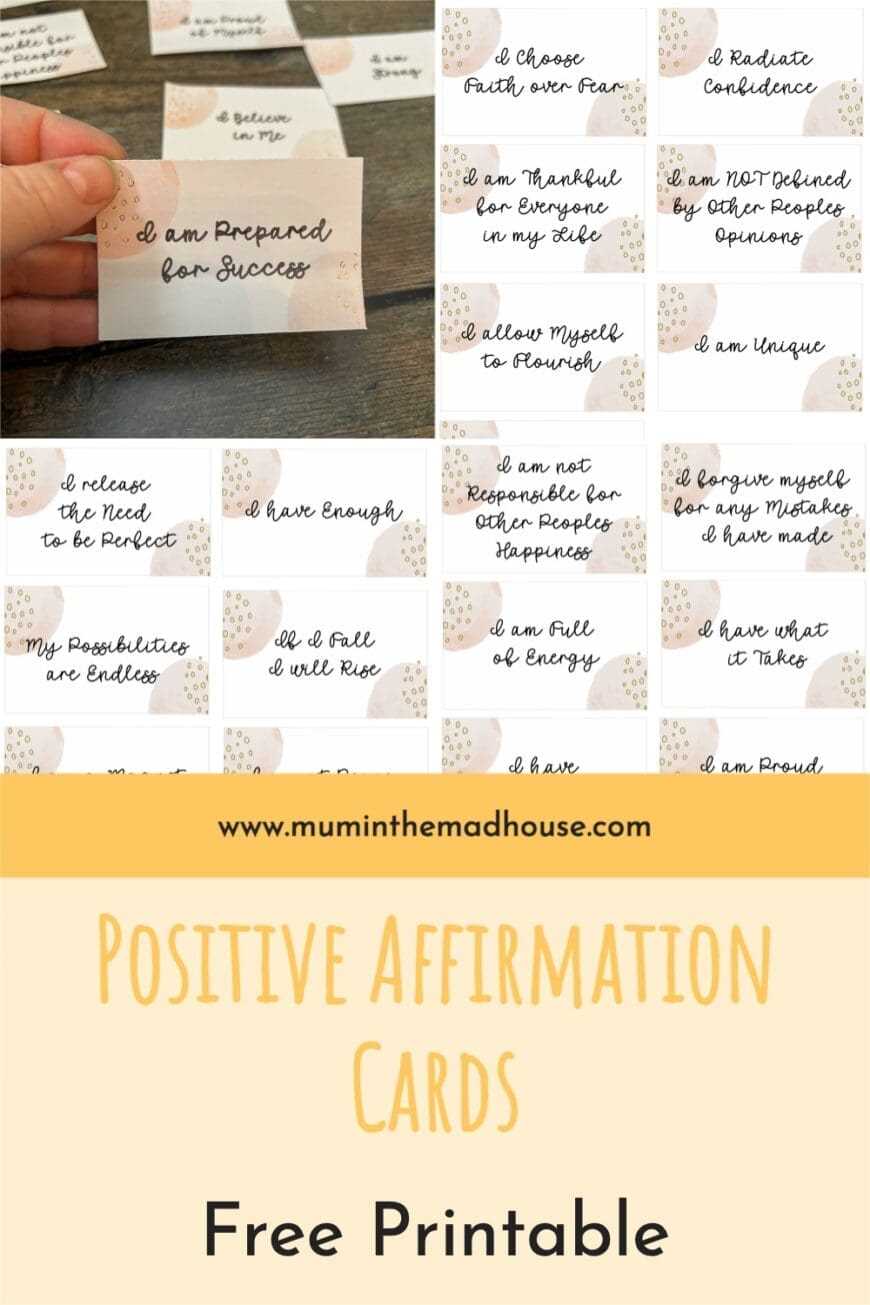
Choose short self-belief statements written in the present tense such as I am capable or I handle challenges calmly; limit each line to 6–10 words so it can be read in under three seconds and remembered without effort. Clear, direct wording increases daily repetition and reduces mental resistance.
Use high-resolution PDF files set to 300 DPI and print at 100% scale on A4 or Letter paper. For small quote cards, select a layout with four to eight designs per sheet and cut along marked trim lines. Thicker stock (160–200 gsm) works well for desk displays, while standard 90–100 gsm paper suits wall pinboards.
Rotate statements weekly rather than displaying dozens at once. Place one card near a mirror, one at a workspace, and one inside a notebook to create multiple exposure points during the day. Repeat each line aloud five times in the morning and five times before sleep to build consistency and reinforce language patterns.
Free Printable Positive Affirmations
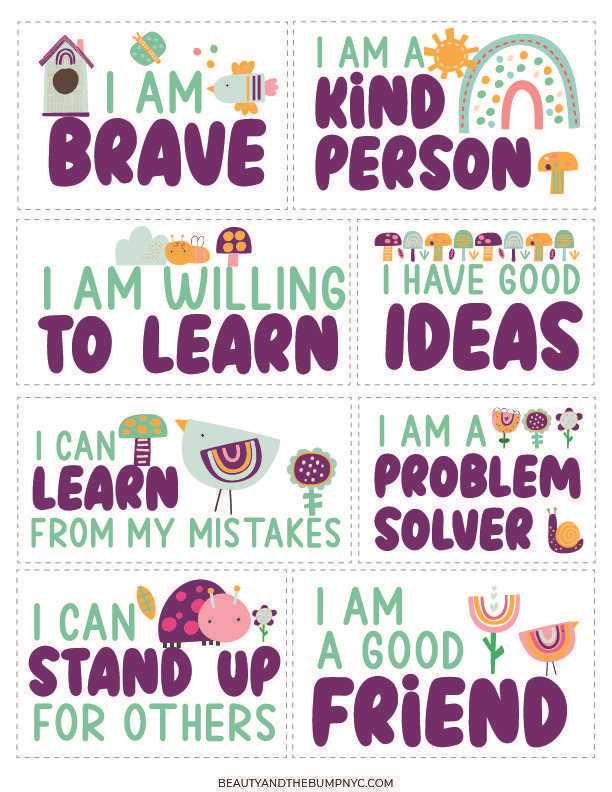
Select short confidence statements written in the present tense and limited to one clear idea per card, such as I learn from mistakes or I speak with confidence. Keep each line under 10 words to support quick reading and daily repetition without distraction.
Download high-resolution PDF quote sheets set to 300 DPI and print at full scale on Letter or A4 paper. For small cards, choose layouts with four to eight designs per page and trim with a paper cutter for clean edges. Use 160–200 gsm cardstock for desk displays and 90–120 gsm paper for planners or journals.
Group statements by theme to match specific goals: self-esteem, focus, resilience, or gratitude. Rotate themes weekly instead of displaying dozens at once to maintain attention and prevent visual clutter.
Place one card near a mirror, one at a workspace, and one inside a notebook or backpack to increase daily exposure. Read each statement aloud five times in the morning and repeat before sleep to build consistency.
For classroom or family use, assign one belief phrase per week and discuss its meaning in practical terms. Encourage writing the line by hand to reinforce memory through repetition and motor engagement.
Store unused quote sheets in labeled folders and track which lines resonate most over a 30-day period. Replace statements that feel routine with new ones to maintain engagement and personal relevance.
How to Choose Affirmation Cards for Kids Teens and Adults
Select age-appropriate wording with clear, concrete language for children, short identity-based statements for teens, and goal-focused belief phrases for adults. Match reading level and emotional maturity rather than using the same set for every age group.
- For ages 4–7 use simple lines such as I am kind or I can try again
- For ages 8–12 include growth-focused phrases like I learn from practice
- For teens choose confidence and self-image statements such as I respect my boundaries
- For adults focus on responsibility and mindset such as I manage my time wisely
Limit each card to one idea and no more than 8–12 words. Avoid abstract language for younger children; replace phrases like “I radiate confidence” with direct wording such as I speak clearly in class. Specific phrasing increases relatability and daily use.
Adjust visual design to the audience. Younger children respond to large fonts, high contrast, and simple icons. Teens prefer minimal layouts with neutral tones. Adults often choose clean typography without decorative graphics.
- Choose 10–15 statements aligned with a current goal
- Rotate every two weeks to maintain attention
- Remove lines that feel repetitive or disconnected
- Add new belief phrases based on recent challenges
Test each card by reading it aloud. If the sentence feels unnatural or exaggerated, rewrite it in realistic language. Statements that sound believable are more likely to be repeated consistently.