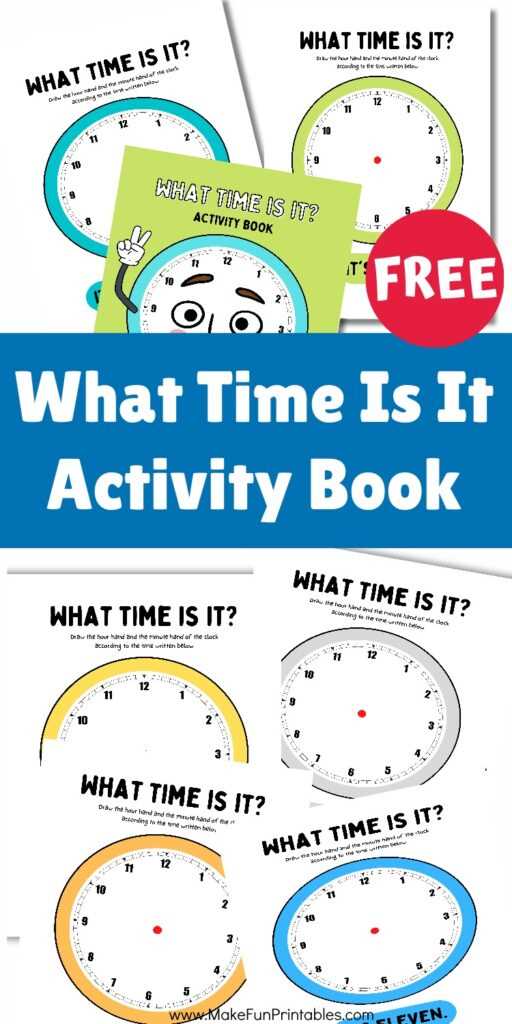
If you’re helping children understand how to read analog clocks, hands-on activities are one of the best ways to make the process engaging. Start by selecting materials that guide learners step by step through recognizing both the hour and minute hands. Make sure the activities align with their age and current learning stage. Beginners should focus on identifying hours first, gradually adding minutes as they become comfortable.
Use visual aids that show a variety of clock faces and gradually introduce more complex scenarios. Some templates may include clocks without numbers or clocks with the minute hand already positioned, encouraging children to estimate the time. You can also challenge them with word problems that describe specific times, helping them connect real-world events to the numbers on a clock.
These activities not only improve understanding of time but also promote fine motor skills as kids draw and manipulate clock hands. Providing a variety of templates and methods ensures learners stay engaged and excited about learning how to read the clock.
Guide to Worksheets for Learning How to Read Clocks
To begin teaching clock reading, provide exercises that start with basic tasks such as identifying hour markers. Focus on simple analog clock faces with clear hour markings and large, easy-to-read numbers. This allows learners to familiarize themselves with how each hour is represented on a clock. Once they are comfortable, gradually move on to activities that introduce the minute hand, emphasizing how the two hands work together to display time.
As children advance, incorporate more complex exercises such as clocks without numbers. These challenges encourage students to focus on the positions of the clock hands rather than relying on numerals. You can also include matching activities where students match times written out in words with clock faces. These types of activities encourage deeper understanding by connecting written descriptions of time with visual representations.
For more engaging practice, use interactive exercises like drawing clock hands at specific times or filling in missing parts of a clock face. These types of tasks develop both cognitive and fine motor skills while reinforcing time-telling concepts. Ensure variety in activities to maintain interest and encourage mastery at each learning stage.
How to Use Worksheets to Teach Time to Kids
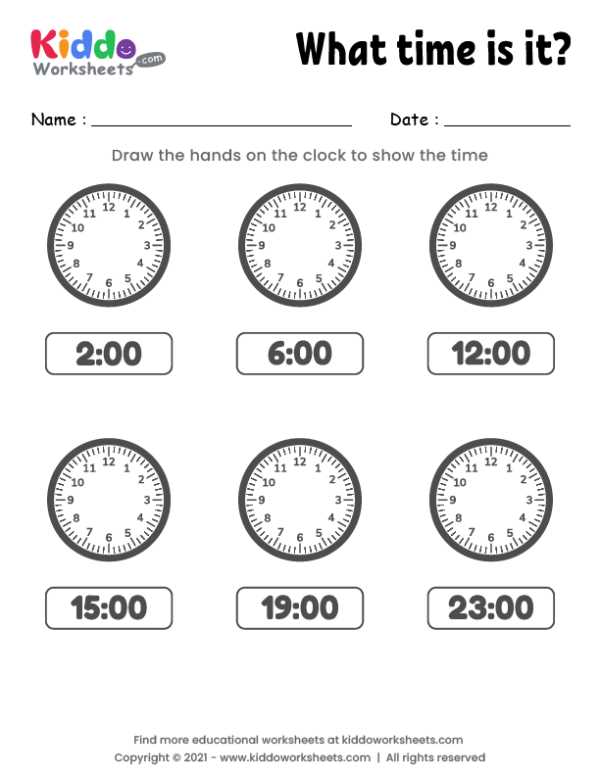
Start with basic exercises that focus on identifying the hour and minute hands on analog clocks. Use clear, simple visuals with large numbers and tick marks to help children understand the concept of time divisions. Begin by having them draw the hour hand to specific times, such as 3 o’clock or 9 o’clock, before gradually introducing minute intervals. Once students understand this, provide worksheets with clocks showing times for them to read and write down.
As kids progress, incorporate activities where they match times written out in words with clock images. This will help reinforce both reading and comprehension skills. You can also introduce activities that ask students to calculate the time between two events, encouraging them to think about time in a more abstract manner. These exercises will help students build fluency in reading clocks and understanding time as it relates to daily activities.