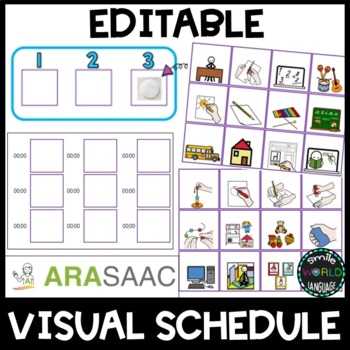
Choose a daily routine chart with clear picture cards sized at least 2×2 inches so children can recognize tasks from a distance of 1–2 meters. Arrange activities in chronological order from left to right or top to bottom, limiting each row to 5–7 items to prevent overload.
Use bold icons with high contrast backgrounds and short labels of one to three words such as Brush Teeth, Get Dressed, or Pack Bag. Keep font size at 18–24 pt for early readers. For non-readers, rely on consistent imagery and color coding, assigning one color to morning tasks and another to evening tasks.
Print activity cards on 160–200 gsm cardstock and laminate them for repeated use. Attach hook-and-loop dots (1 cm diameter) on the back of each card and align matching strips on a board or binder page. This setup allows children to move completed tasks into a “Done” column, reinforcing progress through physical interaction.
Limit the total number of daily tasks to 10–12 for preschoolers and 12–15 for school-age children. Review the chart every Sunday evening, replacing outdated cards and adjusting time blocks to reflect school changes, extracurricular activities, or holidays.
Free Printable Visual Schedule
Download a ready-made daily routine chart with picture task cards formatted for US Letter or A4 paper, keeping each activity tile at least 5×5 cm for clear recognition. Choose a layout that separates morning, school, and evening blocks into distinct rows and limits each section to no more than six steps to prevent overload.
Use high-contrast icons paired with short action labels such as Wash Hands or Pack Backpack, set in 20 pt font for early readers. Print on 160–200 gsm cardstock, laminate for durability, and attach hook-and-loop dots so children can move completed tasks into a Done column, reinforcing task completion through physical interaction.
How to Choose Icons and Activity Cards for Different Age Groups
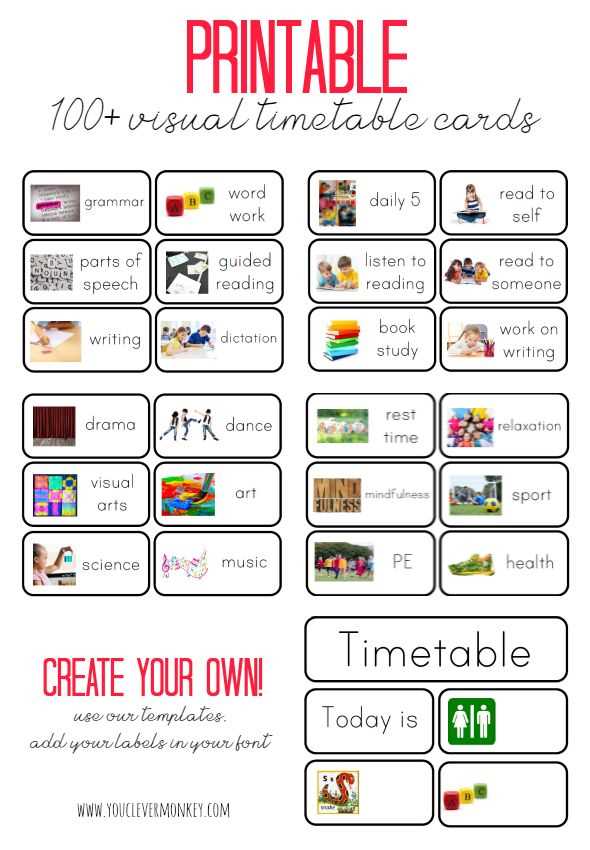
Select large, simple picture symbols for toddlers aged 2–4, keeping each card at least 6×6 cm with bold outlines and minimal background detail. Use real-life object images rather than abstract drawings so tasks like brushing teeth or putting on shoes are immediately recognizable.
Limit choices for preschoolers to 5–8 activity tiles per routine board and avoid text-only labels. Pair each image with a single keyword in 18–24 pt font, such as “Snack” or “Nap,” placed directly under the picture to reinforce early word recognition.
For children aged 5–7, introduce more detailed illustrations and short two-word action phrases. Organize tasks into clear time blocks.
- Morning: Wake Up, Get Dressed, Eat Breakfast
- School: Pack Bag, Homework, Reading Time
- Evening: Bath, Pajamas, Bed
For ages 8–10, shift toward icon-plus-text formats with smaller 4×4 cm cards and concise instructions of up to five words. Replace generic symbols with task-specific graphics, such as a math worksheet for homework or a soccer ball for practice, reflecting real commitments.
Adapt complexity by reviewing attention span and reading level every few months. Reduce visual clutter by using consistent color coding per time block and keeping total daily tasks under 12 for younger children and under 16 for older ones to maintain clarity and usability.