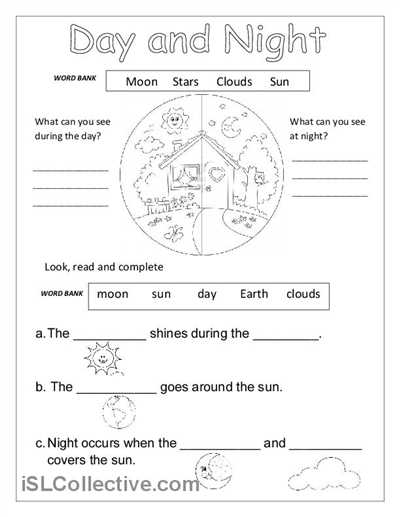
Use contrasting themes to create engaging activities for young learners. By focusing on the differences between light and darkness, you can introduce children to basic concepts like time, shadows, and changes in the sky. This helps them develop observational skills while enjoying a fun and hands-on approach to learning.
Incorporate simple visuals that illustrate the contrast between bright, sunny scenes and calming, starry evenings. Whether it’s the use of different colors or varying shapes and elements, these activities provide an excellent opportunity for children to explore the cyclical nature of the world around them. Printouts can feature elements like the sun, clouds, stars, or moon, helping little ones connect these ideas to their everyday life.
Encourage creativity by giving children opportunities to add their own personal touches. With various templates available, kids can color, cut, or assemble images that reflect their understanding of the themes. These projects also offer a great way to enhance motor skills while exploring concepts of balance and symmetry, depending on the shapes and compositions used in the artwork.
Guide for Themed Visuals of Light and Dark
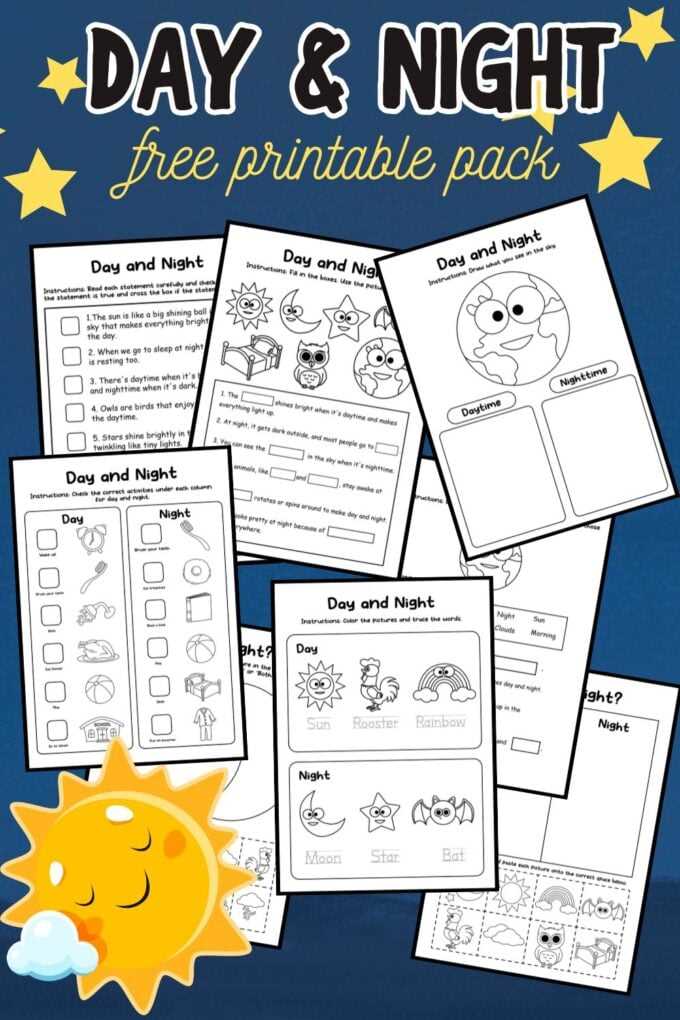
Choose simple, clear visuals that clearly separate light and dark concepts. Use elements such as the sun, stars, and the moon to illustrate these differences in an easy-to-understand way for younger audiences. Illustrations of clouds, trees, or animals can help reinforce the idea of how life transitions between brightness and shadow.
Focus on contrast in colors. Use bright yellows, oranges, and blues for daylight scenes, while incorporating dark purples, blacks, and grays for evening settings. The shift in tones will not only make it easier for kids to distinguish between the two times of day, but will also help them build a connection between colors and moods.
Incorporate activity sheets that encourage children to engage directly with these visuals. For example, they could color in an image of a bright sun during the morning and add stars to a night sky. This not only helps reinforce the concepts visually, but it also provides an interactive method to explore the difference between these two periods.
Use hands-on crafts that reflect the themes of both light and darkness. Cut-outs and simple crafting exercises such as creating sun rays from paper or assembling a glowing moon from foil can add a tactile element to the learning process. These activities build motor skills while introducing children to these concepts through play.
Introduce basic time concepts through these visuals. For instance, as you go through these illustrations, teach children about when the sun rises and sets, and what happens during those times. This can help them start to understand the natural rhythm of the earth in a practical and engaging way.
Provide templates for families to engage in at home. These visual materials can serve as educational tools not just for classrooms but for family learning too. By making the process both fun and informative, parents can create memorable moments while educating their children on the transition from light to dark.
How to Create Day and Night Themed Artworks for Children
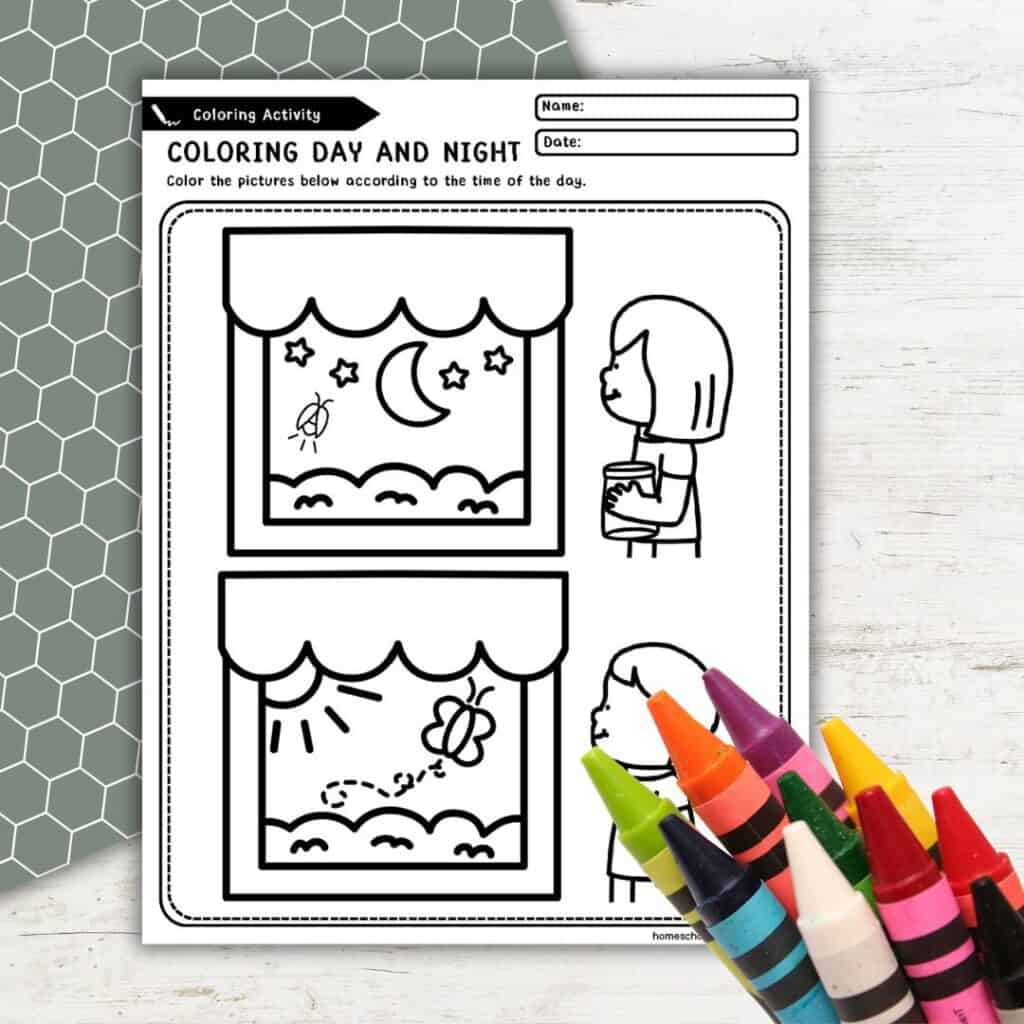
Use contrasting colors to clearly differentiate the scenes of light and darkness. For daytime scenes, use vibrant yellows, blues, and oranges. For evening, go for deep blues, purples, and blacks. This contrast in colors will immediately evoke the feeling of different times of the day.
Incorporate simple shapes like circles for the sun and crescent for the moon. Kids are more likely to connect with easily recognizable symbols. Keep the illustrations clear and simple, allowing children to focus on the core idea of the artwork.
Introduce basic nature elements such as clouds, trees, or stars. In the morning scenes, have a bright sun rising over trees, while in the evening, stars and the moon can illuminate a calm sky. These elements help children associate familiar concepts with the transition from light to dark.
Integrate interactive elements into the artwork. You can include simple activities like coloring certain sections of the scene, drawing in stars for the night sky, or adding rays to the sun. This makes the artwork more engaging for children, encouraging them to participate in creating their own interpretations of these times.
Focus on time indicators to explain the concept of light and darkness throughout the day. Show different animals or people engaging in various activities that are relevant to the time of day, like animals waking up in the morning or people winding down for bed at night. This helps children understand how activities change with the hours.
Use mixed media to create more dynamic scenes. For instance, use tissue paper for clouds or glitter for stars, adding texture to the artwork. Mixing materials encourages creativity and provides a multi-sensory experience for children as they explore the theme.
Allow for customization in the artwork by leaving areas blank for children to fill in. Whether it’s adding extra animals, plants, or other objects relevant to the scene, giving children the freedom to personalize their creations helps foster creativity and personal connection to the artwork.