Choose skill-based activity sheets that match eight- to nine-year-old learners’ curriculum: focus on multi-digit addition and subtraction within 1,000, basic multiplication tables up to 10×10, introductory division as repeated subtraction, and word problems requiring two-step reasoning. Select sets that provide at least 20–30 varied tasks per topic so a child can practice one concept intensively without repeating identical patterns.
Prioritize PDF packs that include mixed problem pages combining place value (hundreds, tens, ones), rounding to the nearest ten and hundred, and comparison of three-digit numbers using <, >, and =. Materials with visual models–number lines, area models for multiplication, and arrays–help children move from concrete understanding to abstract calculation. A well-designed packet typically alternates computation drills with 4–6 applied story tasks to strengthen analytical thinking.
Use timed fact fluency sheets sparingly: 3–5 minutes per session, 2–3 times a week, targeting specific tables (×3, ×4, ×6) rather than the entire set at once. Complement these with logic-based puzzles such as magic squares with sums up to 30 or simple fraction identification (1/2, 1/3, 1/4) shaded in geometric figures. Alternating structured exercises and problem-solving challenges maintains engagement while reinforcing numerical accuracy.
Organize practice into short blocks of 15–20 minutes, grouping tasks by skill: one page on regrouping subtraction, one on multiplication arrays, and one on word problems involving measurement units like inches and centimeters. Track progress by marking accuracy percentages at the bottom of each page; aim for 85–90% correctness before increasing complexity to larger numbers or multi-step scenarios.
Cost-Free Arithmetic Practice Sheets for Year Three Learners
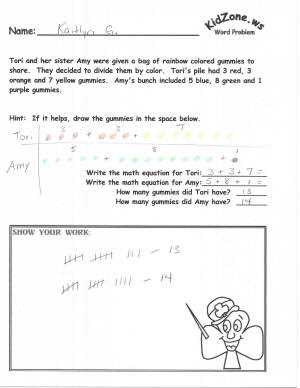
Download sets focused on multi-digit addition and subtraction within 1,000, including regrouping tasks and column alignment drills. Choose packets that mix 20–30 problems per page with increasing difficulty: begin with horizontal equations, then move to vertical formats with carrying and borrowing. Include at least two word problems per sheet that require selecting the correct operation, such as calculating total distance after three trips of 125 miles each or determining change from $50 after purchases totaling $37.48.
Integrate multiplication tables up to 12×12 through structured arrays, skip-counting sequences, and missing-factor grids. A strong layout places fact families in clusters (e.g., 6×4, 4×6, 24÷6, 24÷4) to reinforce inverse relationships. Timed drills of 60 questions completed in five minutes help build recall speed, while shaded array models support visual learners who benefit from grouping concepts.
Use fraction comparison pages that feature number lines from 0 to 1 divided into halves, thirds, fourths, sixths, and eighths. Tasks should require learners to plot 3/4, 5/8, or 2/3 accurately, then compare values using >, <, or = symbols. Add exercises on equivalent fractions such as matching 2/4 with 1/2 or 4/8 with 1/2, supported by area models divided into equal parts.
Incorporate measurement challenges involving unit conversions between inches and feet, centimeters and meters, and elapsed time calculations across hours and minutes. Example prompts: convert 3 feet 8 inches entirely into inches; determine the finish time if an activity starts at 2:35 p.m. and lasts 1 hour 45 minutes. Include perimeter problems based on rectangles with side lengths labeled, requiring addition of all edges.
Add geometry tasks centered on identifying quadrilaterals, classifying triangles by side length, and determining area through square-unit counting. Provide grid diagrams where students count 6 by 4 rectangles to compute 24 square units, then compare with irregular composite shapes split into two smaller rectangles. Include symmetry drawing prompts using dotted lines that guide reflection practice.
Finish with mixed-review packets combining operations, fractions, measurement, and data interpretation through bar graphs and pictographs. Charts should present concrete data sets–such as favorite fruits chosen by 48 children–and require calculation of totals, differences, and comparisons. Rotate question order weekly to prevent memorization patterns and track progress by scoring accuracy percentages, aiming for steady improvement above 85% across five consecutive sessions.