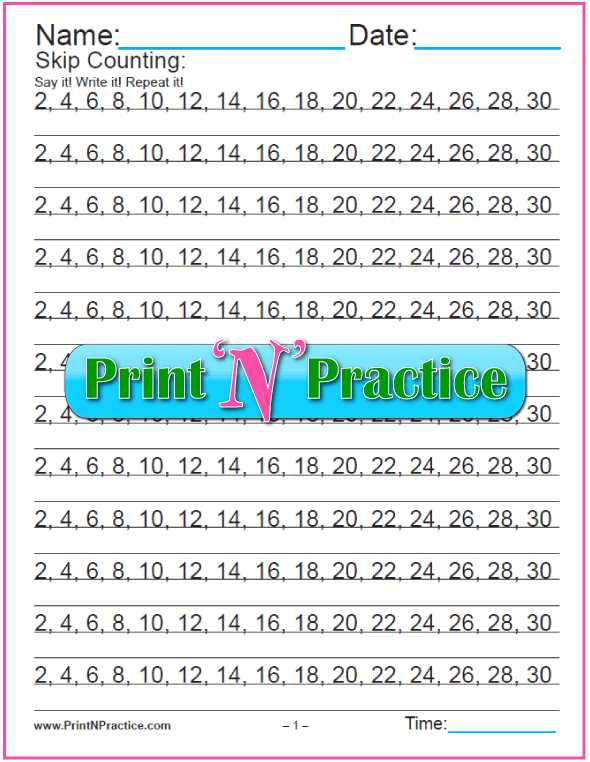
To help young learners improve their ability to recognize number patterns, using a visual tool that highlights number sequences is a great approach. A number sequence grid allows students to identify patterns by skipping numbers, which strengthens their understanding of basic arithmetic.
Start by choosing a sequence based on the numbers you’re working with, such as 2s, 5s, or 10s, to develop their ability to identify regular intervals. The repetitive nature of these sequences helps solidify foundational skills in addition and multiplication.
To maximize the effectiveness of this method, incorporate the tool regularly in lessons. Whether used as a daily exercise or part of a larger curriculum, this practice helps students connect abstract number concepts with tangible visual aids, improving retention and comprehension over time.
Skip Counting Chart Guide for Kids Learning
Start by using a simple grid with numbers spaced at regular intervals to help children understand numerical patterns. A useful method is to choose a starting number, such as 2 or 5, and then show how each subsequent number is formed by adding that interval. This method helps young learners see the relationship between numbers and reinforces the idea of addition as repeated steps.
For more advanced practice, you can expand to larger intervals, such as counting by 10s or 100s, to introduce multiplication concepts. Engaging children with visual aids and interactive exercises, like coloring in the appropriate numbers or filling in missing numbers, can make the process more fun and memorable. Over time, they will build a solid foundation in basic arithmetic and develop a greater understanding of number patterns.
How to Use Skip Counting Charts for Early Math Skills
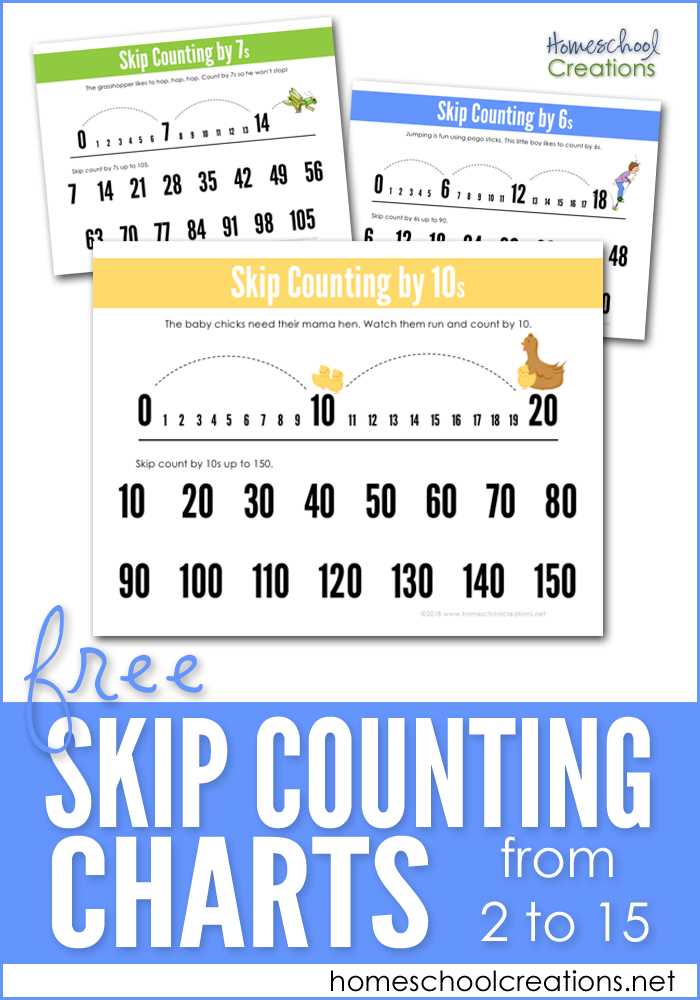
To start, use a visual aid with numbers spaced at consistent intervals to help children grasp the concept of numerical sequences. Begin by focusing on easy intervals like 2, 5, or 10. This approach helps them recognize patterns and understand how numbers grow. Ask them to verbally repeat the sequence as they point to each number, reinforcing both auditory and visual learning.
As children become more confident, increase the complexity by using higher intervals or incorporating fun activities. For instance, you can ask them to fill in missing numbers within a sequence or match numbers with objects. These activities not only strengthen basic arithmetic but also build their understanding of multiplication, as skip counting naturally relates to repeated addition.