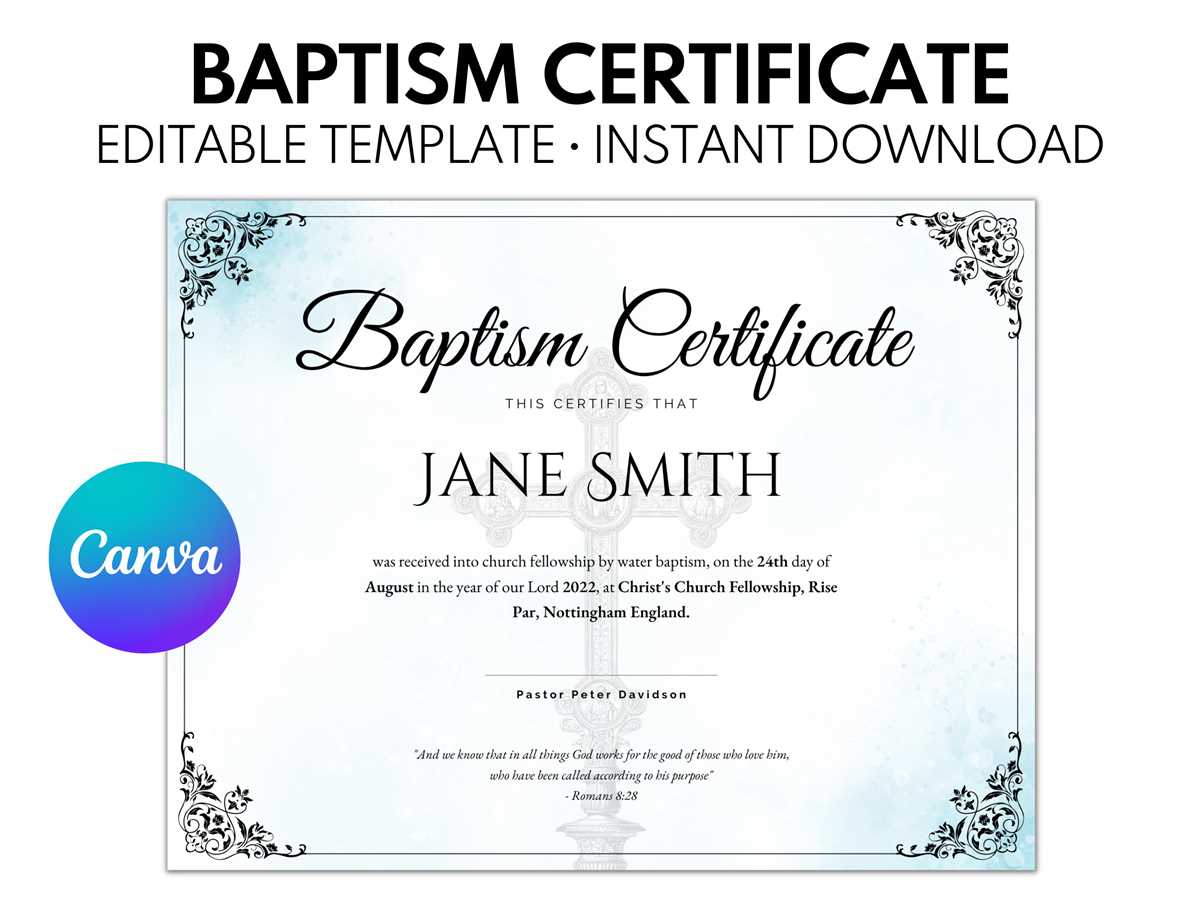
Start by searching for downloadable templates that allow easy editing and printing of formal documents related to a religious event. These designs can be easily adapted to suit personal details and ceremony specifics. Many online sources offer templates that can be tailored, whether you need them for a specific religious milestone or for archiving a special occasion.
To get the best results, consider using simple editing tools that allow you to insert names, dates, and other relevant details. Focus on finding layouts that offer clean lines and ample space for the required information. Once you’ve chosen a template, ensure the design matches the tone of the event while leaving enough room for personalization.
Where to Find Baptismal Record Templates Online
Several websites offer downloadable templates for religious event documentation. Websites such as Canva and Template.net have a wide selection of customizable designs. These platforms allow easy editing and provide various templates, from formal designs to more creative layouts. Browse through different categories to find one that best fits the tone of the ceremony.
Another excellent option is church-related websites. Many religious organizations provide templates for sacred occasions, including baptisms. These templates often align with the traditions of the faith, ensuring a formal and respectful design. Look for these options on denominational or regional church websites, where they might offer exclusive designs or even allow customization of certain details.
Additionally, free design software like Google Docs or Microsoft Word can be used to create your own template. These tools come with built-in text formatting and design elements that make customization simple. You can start from scratch or download a basic template from an online source and adjust it as needed.
Lastly, check out online forums and communities where people share templates. Sites like Reddit or specific Facebook groups might have users offering their templates for religious events at no charge. These platforms can provide valuable suggestions and links to additional resources or custom designs from other individuals.
How to Customize and Personalize Religious Event Records for Your Family
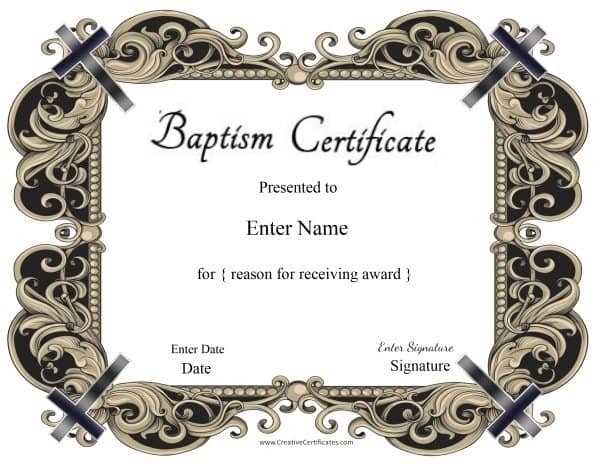
Start by including the name of the individual being honored and the date of the event. These basic details are often the first elements to personalize on any document. Use an elegant font to ensure these details stand out, making the certificate both formal and memorable. You can also add a short family message or quote that reflects the significance of the occasion.
For a more traditional look, incorporate religious symbols or emblems that hold personal meaning for your family. Consider adding a cross, dove, or any other imagery related to your faith. Some design tools allow easy drag-and-drop features, letting you place icons or illustrations seamlessly into the template.
Adjust the color scheme to reflect the theme of the ceremony. Light pastels or classic gold and white tones work well for many spiritual occasions. However, feel free to experiment with colors that hold special significance to your family or community, ensuring that the final design feels personal and unique.
Another key customization option is adding specific ceremony details. Include the name of the officiant, location, and any special readings or prayers. This adds an extra layer of personalization, making the document a true reflection of the event.
Finally, for a touch of luxury, print the document on textured paper or parchment to give it a more formal and permanent feel. Adding a family crest or seal as a finishing touch can also make the document feel truly special and unique for your family to cherish for years to come.
Step-by-Step Guide to Printing and Using Religious Event Records
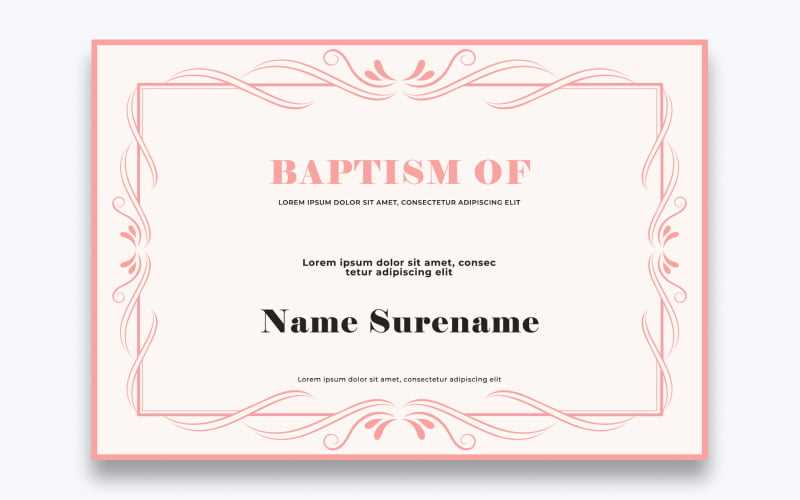
First, ensure the document you’re using is the correct format for your needs. If you’ve found a template, confirm it is compatible with your printer settings. Choose either a portrait or landscape layout based on how you want the document to appear when framed or displayed.
Next, check the resolution of the file. High-quality images will produce the clearest print. If you’re printing from a digital version, make sure it’s at least 300 DPI to avoid pixelation when printing. This ensures the text and images are sharp and readable.
Once the resolution is set, select the appropriate paper type. Opt for thicker, high-quality paper that can handle ink without bleeding. Smooth or textured cardstock works well for these types of commemorative documents, providing a more substantial, elegant feel.
Before printing, perform a test print on regular paper. This allows you to double-check alignment, margins, and any content that may need adjusting. Ensure the text is legible, the symbols are clear, and the design fits within the page without any cropping.
After your test print, load your preferred paper into the printer and adjust the print settings. Select the best print quality available to achieve the sharpest image possible. Avoid using draft mode, as it might result in faded or inconsistent printing.
Once printed, allow the document to dry completely to prevent smudging. If the certificate includes any ornate elements like gold or silver detailing, you may want to laminate the document or frame it under glass to preserve its appearance.
Finally, personalize the document with signatures or stamps from the officiant, or add any additional notes or religious phrases that are relevant to the event. Store the completed documents in a safe place for future reference or presentation.