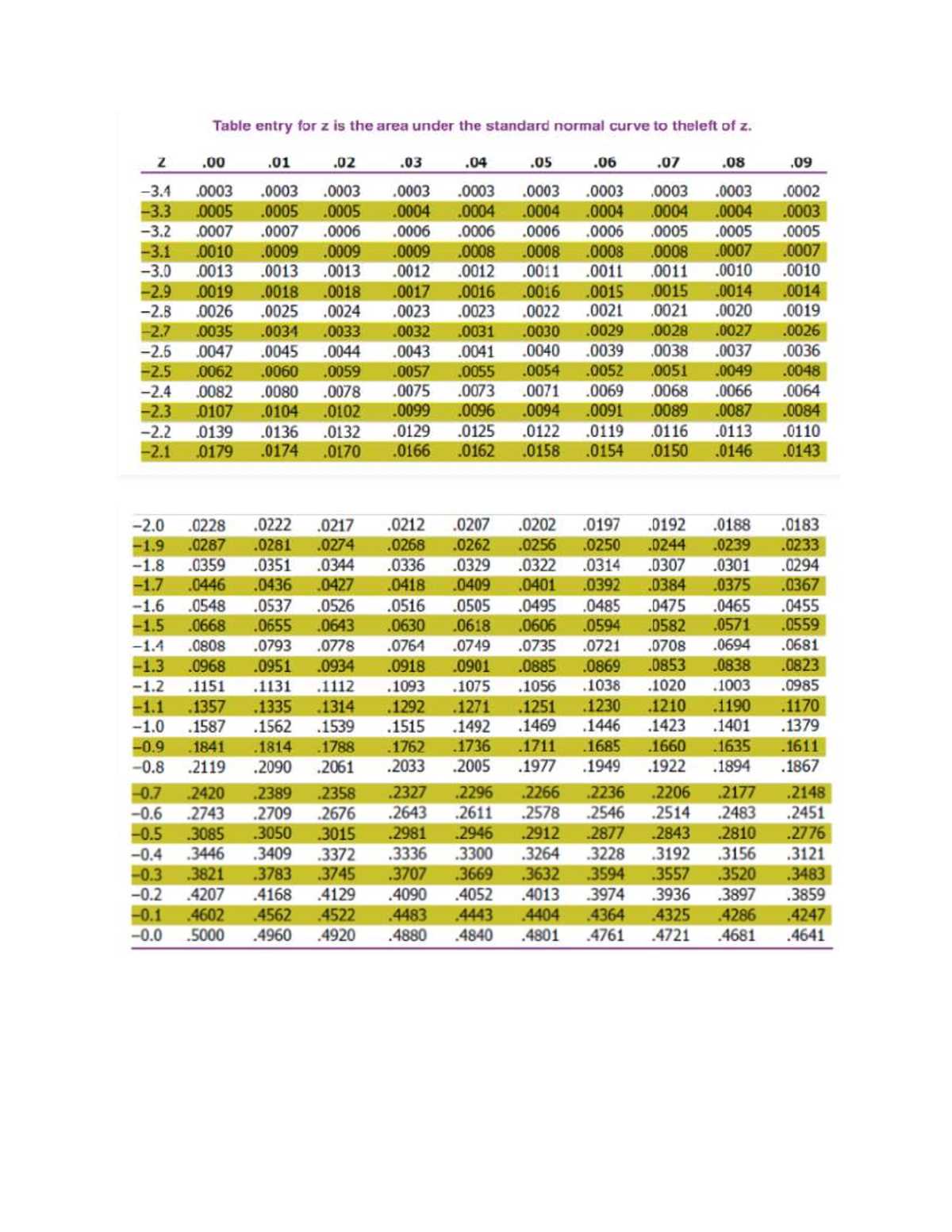
To simplify statistical analysis, a reliable chart can assist in determining how far a data point deviates from the mean. A tool that offers quick access to cumulative probabilities associated with Z-values is extremely useful for standardizing data.
How to Utilize a Z-Value Chart
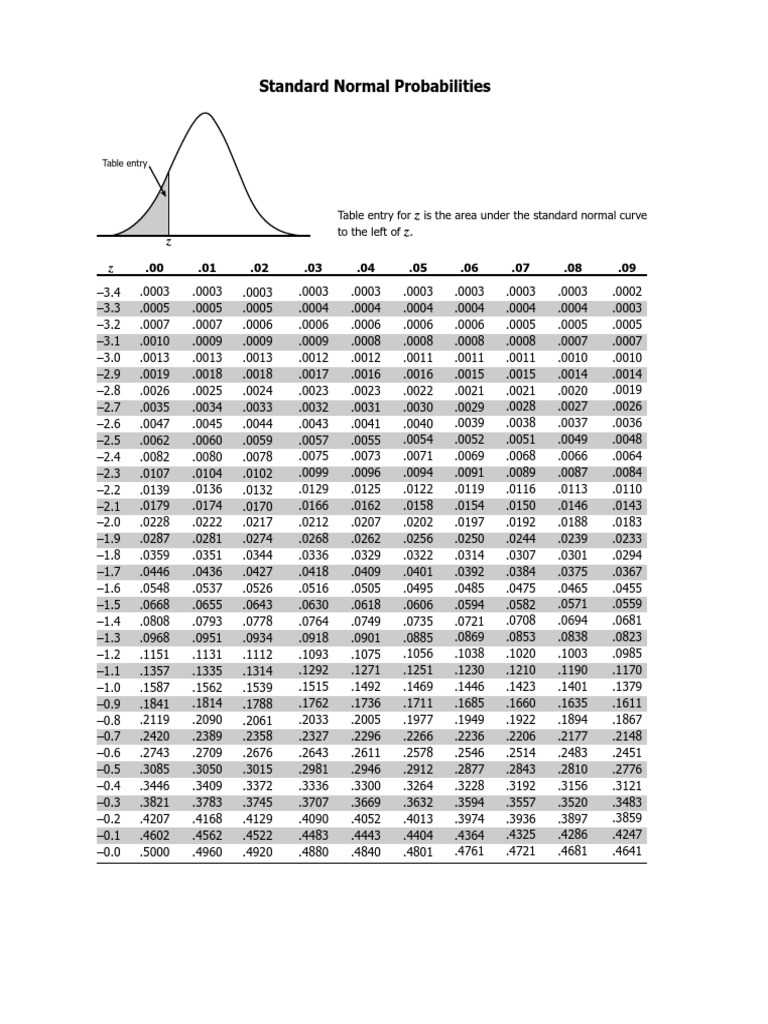
The Z-value, or standard score, measures the number of standard deviations a data point is from the mean. You can consult a reference guide to quickly find corresponding probabilities for any given Z-value. This is particularly helpful when dealing with the standard normal distribution.
Understanding Z-Values
A Z-value represents how many standard deviations an individual value is away from the mean of the dataset. For example, a Z-value of +2 indicates that the data point lies two standard deviations above the mean, while -1 means the data point is one standard deviation below.
Applying the Z-Value Chart
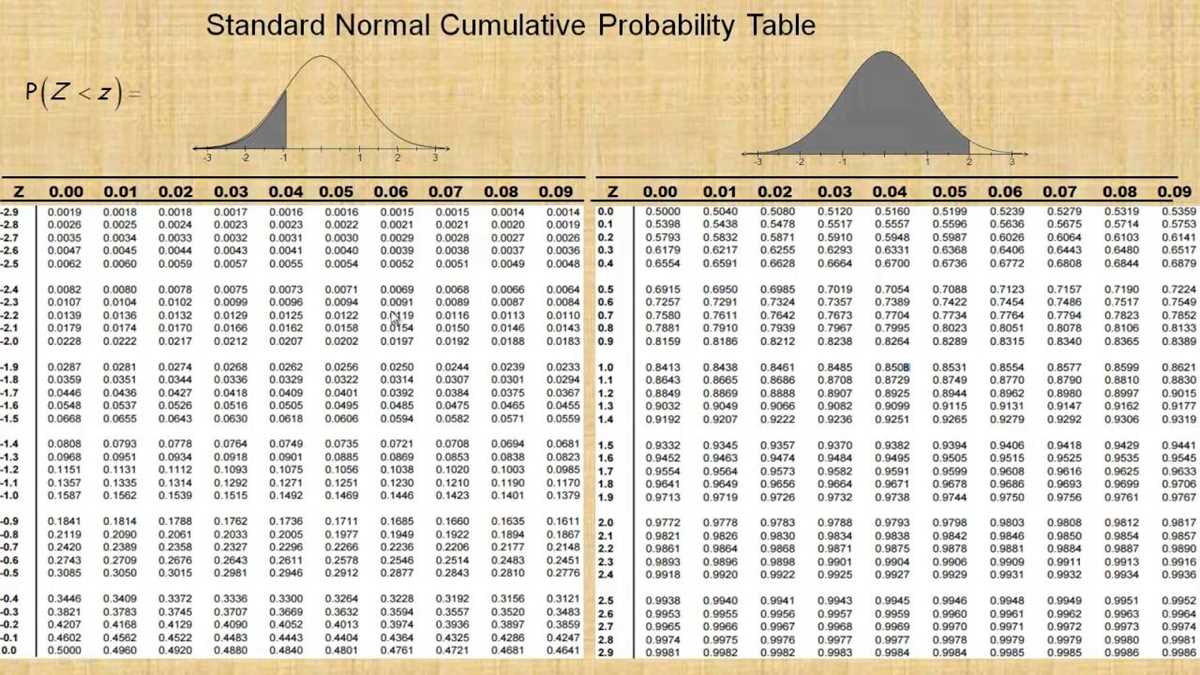
The most common use of a Z-value chart is to identify the area under the curve for a given Z-value. This area represents the probability that a value falls below that Z-score in a normal distribution. If you’re working with a right-tail problem, you’ll need to subtract the value from 1 to determine the upper-tail probability.
Practical Applications in Statistical Analysis
- To assess probabilities in hypothesis testing, you can use the Z-value to find critical values and calculate p-values.
- In quality control, determining how many units fall within acceptable limits often requires referencing Z-values to understand the process variation.
- Financial analysts use Z-scores to assess risk, particularly in portfolio management or credit scoring models.
Key Recommendations for Using This Resource
Before using the reference, ensure you understand the data’s standard deviation and mean. Always confirm that the data follows a normal distribution, as the tool is most effective for normally distributed data.
Choosing the Right Z-Score Chart
Opt for a reference that includes precise values with high granularity for accuracy. Commonly, charts will list Z-values from -3.9 to +3.9, corresponding to probabilities from nearly 0 to 1. For more complex analyses, it may be necessary to utilize more detailed resources, including those that go beyond the standard range of Z-values.
How to Use Z Value Lookup Charts for Statistical Calculations

For quick reference, having access to a ready-to-print chart of Z values is ideal. These charts allow you to directly find the corresponding probability for a given Z value without needing to perform any calculations manually. Whether you’re working on hypothesis testing or calculating confidence intervals, this tool streamlines the process significantly.
By marking the row with the first digit and the column with the second digit of the Z value, you can easily pinpoint the precise probability. For example, a Z value of 1.96 corresponds to a probability of 0.9750, meaning that approximately 97.5% of the distribution lies below this value.
If you need values beyond the typical range of -3.9 to 3.9, extended charts are available to cover a wider range of data. These extended tables include negative values and larger Z scores, which might be relevant in more extreme cases of standard normal distribution.
Having a hard copy can save time during exams or while performing manual calculations, especially when software tools or calculators aren’t readily available. Instead of navigating complex functions or formulas, a physical chart offers immediate results, saving valuable minutes on tasks that are otherwise time-consuming.
When interpreting the chart, note that values near zero indicate results close to the mean of the distribution, while values further from zero show more extreme outcomes. This distinction is crucial for understanding the significance of your results.
Different versions of these charts may present the cumulative probability, or the area to the left of a given Z value. Be sure to check the format of the chart you’re using to avoid confusion during your calculations.
Lastly, if you’re working in a highly precise field, consider having several versions on hand to double-check your calculations. This ensures that you are always referencing the most accurate and relevant data for your specific needs.