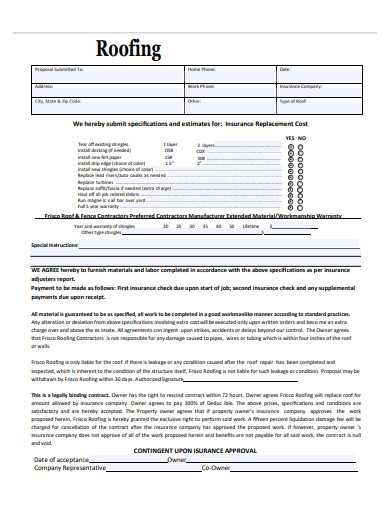
Having a well-drafted agreement for roofing services can significantly reduce misunderstandings and legal disputes between contractors and property owners. Below is a detailed outline of the critical aspects to include in a document for roofing services, ensuring clarity and security for both parties involved.
Key Components of a Roofing Agreement
When preparing an agreement for a roofing project, the following components must be addressed clearly:
- Parties Involved: Clearly identify the property owner and the contractor by name, address, and other contact details.
- Scope of Work: Outline all the specific services to be provided, including roof replacement, repairs, or inspections, along with any materials or equipment to be used.
- Payment Terms: Detail the total price for services, the payment schedule, and acceptable methods of payment. Specify any deposits required before work commences.
- Start and Completion Dates: Set clear deadlines for both the commencement and completion of the project to avoid delays.
- Warranty and Guarantees: Include information on warranties for materials, craftsmanship, and other assurances related to the work provided.
- Permits and Licenses: Clarify who is responsible for obtaining necessary permits or meeting legal requirements for the work.
- Insurance and Liability: Specify the insurance coverage to be provided by the contractor, protecting against potential accidents or damage during the work.
- Termination Clause: Outline conditions under which the agreement can be terminated by either party, including refund policies and any penalties for breach of terms.
Additional Considerations
Ensure the following points are addressed to further protect both parties:
- Dispute Resolution: Include a clause on how disputes will be resolved, whether through mediation, arbitration, or court action.
- Cleanup and Disposal: Specify who will be responsible for debris removal and site cleanup after project completion.
- Changes to the Agreement: Clarify how any changes or additions to the scope of work should be documented and approved in writing.
Why a Solid Agreement is Crucial
A clear and precise document can prevent miscommunications about timelines, costs, and the quality of work. It also provides a legal framework for resolving disputes, giving both contractors and property owners confidence in the project’s execution and outcome.
Detailed Agreement for Construction Services
For any building or repair task, a clear and well-structured agreement is necessary. A documented agreement ensures transparency and protects all involved parties, minimizing misunderstandings. Before starting any work, clearly outline the scope of the project, including timelines, materials, and payment schedules. Specify the payment terms, such as deposits and final balances, to avoid financial disputes.
The document should define the roles and responsibilities of both parties. List the contractor’s obligations, such as providing skilled labor, sourcing quality materials, and ensuring compliance with local laws. Similarly, the homeowner or client should agree to provide access to the property, facilitate necessary permits, and pay according to the terms. Establish clear boundaries for both parties to avoid any confusion later on.
Incorporate a clause that covers how to handle unexpected delays. This may include weather interruptions or supply chain issues that might affect the timeline. If unforeseen issues arise, define what happens next–whether that involves extending the deadline or renegotiating payment terms.
Be sure to include a section for addressing any disputes. Outline the steps to resolve conflicts, such as mediation or arbitration, to avoid lengthy legal battles. This clause should also include information about the jurisdiction in which any legal matters will be handled, ensuring both parties are on the same page.
Clarify the ownership of materials and property rights. For example, who owns the materials on site before the project is completed? If a contractor brings in specific equipment or materials, outline how those items are managed or returned once the work concludes.
Include provisions for insurance. A clear insurance requirement helps avoid liability if accidents or damage occur during the job. Contractors should carry general liability coverage and provide proof of insurance to the client. This protects both sides in case of damage to the property or injury on the site.
Specify terms for job completion and inspections. Once the job is finished, allow for a thorough inspection to ensure that all aspects meet the agreed standards. If issues arise during the inspection, set up a process for repairs or corrections at no extra charge, or at a discounted rate, depending on the terms.
Finally, make sure both parties sign and date the document. Both parties must review and agree to the terms before work commences. Having clear documentation signed by both individuals helps provide clarity and legally binding commitments for both sides.