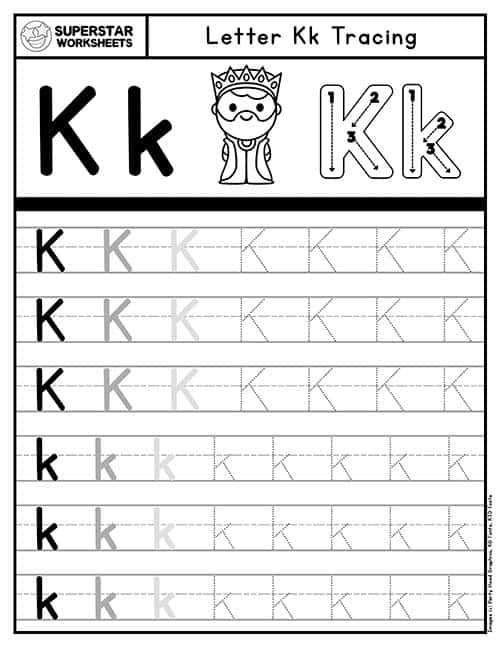
To help children master writing the letter K, use tracing sheets where they can follow the outlines of the shape. Begin with large, easy-to-follow examples and gradually move to smaller sizes as they gain confidence. This method enhances motor skills and reinforces letter recognition.
Include exercises where children can color objects starting with the letter K, such as a “kangaroo,” “kite,” or “key.” These activities help kids associate the shape with real-world objects, making the learning process more meaningful and fun.
Activities for Practicing the Letter K
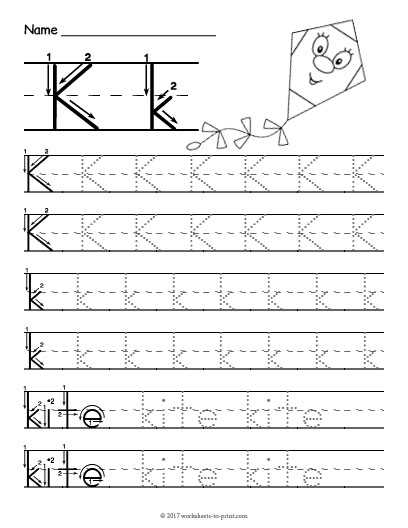
One effective exercise is to have children trace the shape multiple times, both on lines and in free space. This practice builds fluency and muscle memory, which is crucial for handwriting development. Once they’re comfortable with the basic tracing, encourage them to write the shape independently.
To further enhance learning, you can incorporate word matching games. Write down several words that begin with K and have children draw a line to the corresponding pictures. For example, “king,” “koala,” and “kite” can be paired with simple drawings, giving kids a visual cue for each word.
Building Confidence with Repetition
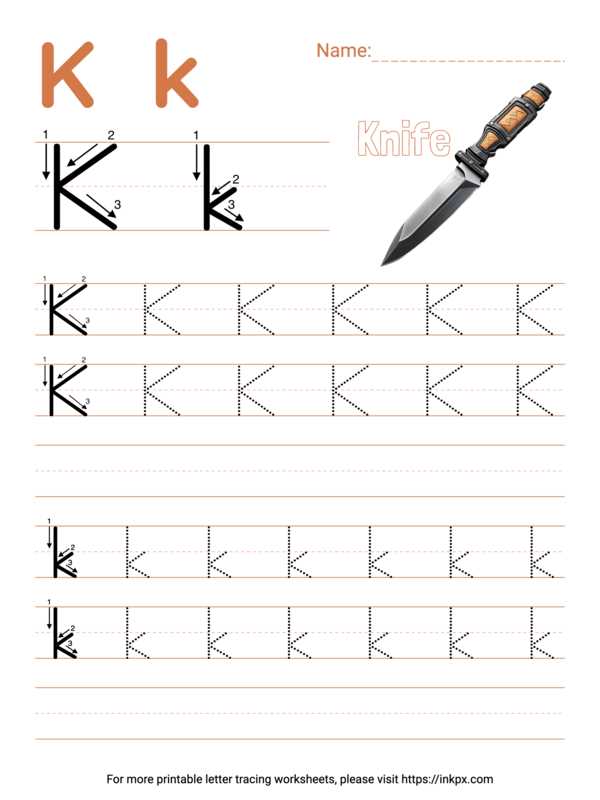
Repetition is key to mastery, so provide multiple sheets with varying levels of difficulty. Have a set where the symbols are more spaced out and easier to trace, and then provide a set where the spacing is tighter, encouraging children to focus on neatness and precision.
For advanced learners, create sentences using words with the letter K. This could include simple phrases like “The king has a kite” or “The koala likes to climb.” Writing full sentences not only solidifies letter recognition but also enhances overall writing skills.
With regular practice and fun activities, children will soon be able to confidently write the letter K and recognize it in various contexts. These interactive and engaging exercises will keep their interest high while helping them build important early literacy skills.
Letter K Tracing and Writing Exercises
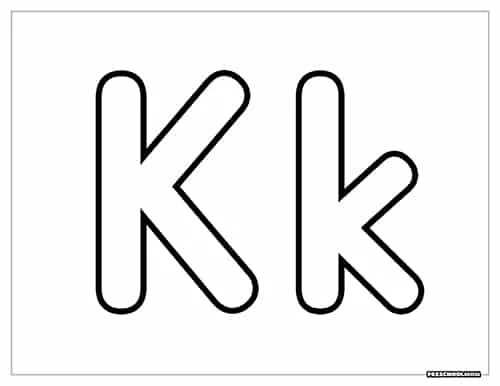
Start with large, clear outlines of the letter K, allowing children to trace over them. This method helps improve motor skills and letter recognition. Ensure the strokes are easy to follow, and provide ample space for tracing, especially for beginners.
After tracing, encourage children to write the shape without any guidance. This reinforces the concept and helps them develop writing fluency. You can gradually reduce the space between the lines as they become more confident in their writing.
Introduce themed activities like coloring objects that start with the letter K. For example, a picture of a kangaroo, kite, or key can make the learning process more fun. Associating the letter with familiar objects makes it easier for children to remember.
Incorporate a few simple words that start with the same shape into the practice, such as “king,” “koala,” or “kitchen.” Have children trace these words after mastering the basic shape. This allows them to see how the letter is used in context and enhances their vocabulary.
Make it more interactive by turning it into a matching game. Write words that begin with the letter K and have the children match them with corresponding pictures. This not only helps with writing but also reinforces letter sounds and word recognition.
Finally, offer various levels of difficulty for repeated practice. For younger learners, you might focus on just tracing and identifying, while for older children, you can add simple sentences to practice. Regular repetition, with a variety of activities, will solidify their understanding and writing skills.