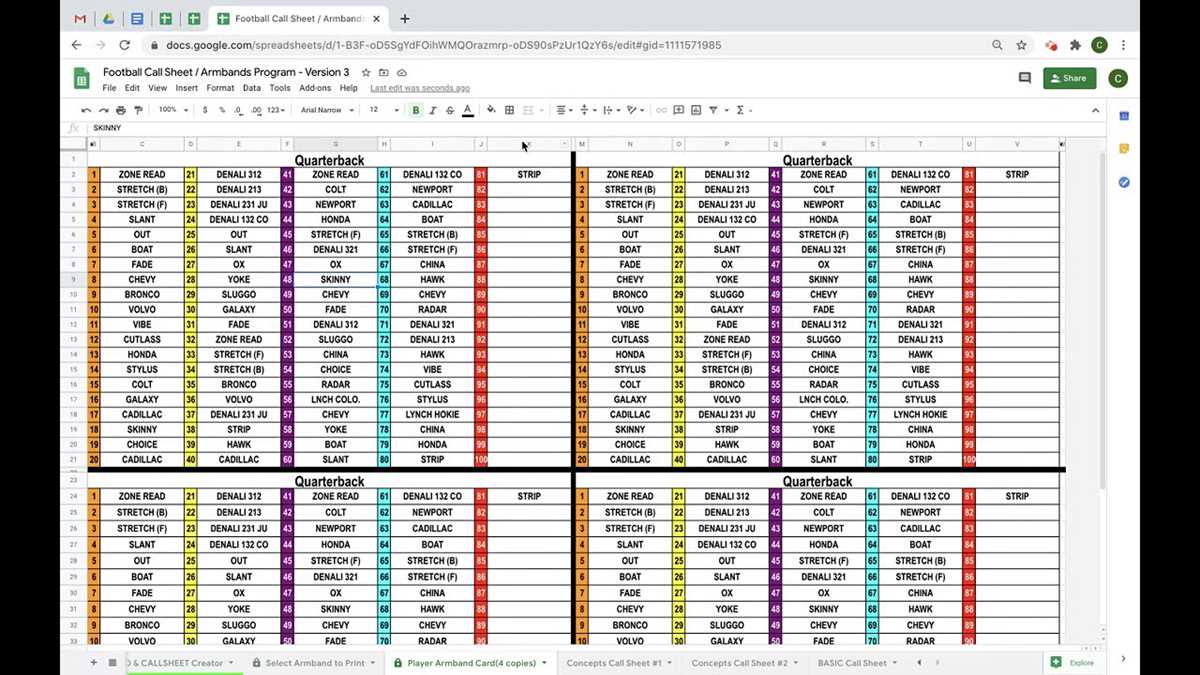
Efficiently managing defensive plays requires a well-structured approach, allowing coaches to easily identify and execute tactics. A methodical approach to organizing these plans can significantly improve in-game decision-making, especially under pressure. Utilize a structured layout to ensure clarity, making it easier for coaches and players to access key details during crucial moments.
One recommended practice is to group your plans by formation or situation, such as 3-4, 4-3, or goal-line scenarios. Each formation should be linked with corresponding adjustments for different offensive setups. In this way, players are ready for any offensive strategy they face. Consistency and clarity in labeling these sections will allow for swift adjustments during the game.
Having a streamlined approach to organizing your play calls ensures every player and coach can quickly make sense of the plan, especially when facing fast-paced situations. By categorizing based on key defensive responsibilities and potential threats, the strategy is more dynamic and flexible. This method also provides an easy reference to fine-tune responses as the game progresses.
Organizing Defensive Strategies on a Game Plan Template
To streamline defensive formations and assignments during a match, utilize a well-structured template. A simple grid format allows for easy tracking of key tactics, aligning formations and specific roles for each player. Position names and corresponding responsibilities should be clearly marked to avoid confusion during high-pressure moments. This method ensures that the entire team understands the exact move for each situation, enhancing communication on the field.
It is recommended to break down each section of the template into critical zones such as front, middle, and back defense. Listing specific techniques and signals for various scenarios–like blitzes or coverages–enables coaches to quickly adapt their strategy without needing to reference a bulky playbook. By maintaining a condensed, organized layout, it becomes easier to adjust on the fly, keeping the defense cohesive and effective throughout the game.
How to Organize Defensive Play Calls for Quick Access
Begin by categorizing your strategies into distinct groups based on the situation, such as pass defense, run defense, and blitz formations. Each category should be easy to identify and navigate, ensuring that in the heat of the moment, players and coaches can quickly find the right tactic for each play. Keeping this structure simple and organized aids in faster decision-making during high-pressure situations.
Next, arrange each strategy within its category in a logical sequence, such as by strength or difficulty. Stronger formations should be prioritized in easily accessible sections, while more complex or situational ones can be placed further down the list. This step is key for efficiency, reducing the time spent searching for less commonly used schemes.
Use shorthand symbols or color-coding to represent different types of plays. For example, a circle could represent a blitz formation, while a square might indicate a zone coverage scheme. These visual cues help to immediately signal the intent of each tactic, allowing the team to act without delay.
Additionally, ensure all key adjustments, such as changes in alignment based on offensive formation or shifts in coverage due to motion, are clearly indicated. This way, any quick alterations can be made seamlessly, without the need to flip through pages or screens.
Lastly, practice rehearsing your call system to ensure it becomes second nature. The more familiar the players and coaches are with the layout and quick access methods, the more effectively the system will perform during live situations. Repetition builds comfort and speed, which are crucial in high-stakes moments.