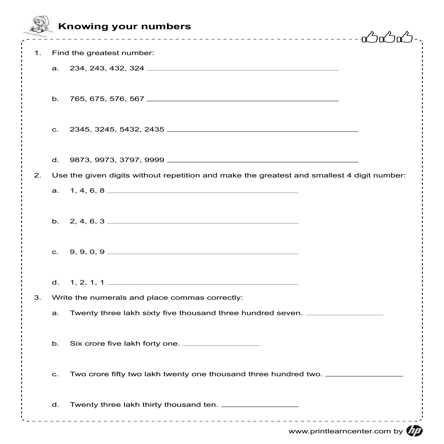
To strengthen your child’s math and language skills, it is important to regularly engage them with various exercises designed for their developmental stage. These tasks can be easily incorporated into their routine for reinforcing what they learn in class and building on their academic foundation.
Enhancing Math Skills with Targeted Exercises
Start with basic operations, focusing on fractions, decimals, and percentages. These concepts are fundamental at this level, so providing ample practice with addition, subtraction, multiplication, and division of fractions will solidify their understanding. Additionally, integrating word problems helps students apply mathematical concepts in real-world contexts.
Incorporate geometry tasks such as identifying shapes, calculating area and perimeter, and understanding angles. As students progress, introduce more advanced topics like ratio and proportion to challenge them further. Interactive exercises, such as matching or fill-in-the-blank activities, can also help reinforce these concepts in a fun and engaging way.
Building Language Proficiency through Writing and Grammar
For language arts, focus on grammar practice. Reinforce sentence structure, punctuation, and parts of speech with various drills. Encouraging regular practice on identifying nouns, verbs, adjectives, and adverbs helps solidify the foundational language knowledge necessary for more complex tasks.
Writing prompts can greatly improve your child’s creative thinking and expression. By providing engaging topics, students can practice composing clear and concise sentences and develop their ability to organize thoughts. Additionally, practicing editing and revising short passages helps develop critical thinking and proofreading skills.
For vocabulary building, daily or weekly word lists that include definitions, synonyms, and usage examples can enhance understanding. Quiz-style exercises are a great way to assess and reinforce vocabulary acquisition.
Math Practice for Reinforcing Key Concepts
To build strong math skills, focus on reinforcing concepts like fractions, decimals, and percentages. Have students practice solving problems that involve converting between fractions and decimals, as well as solving equations that include percentages. Providing real-world scenarios for applying these concepts will help students connect their learning to practical situations. Regular drills on operations with fractions and decimals can also improve their fluency.
Improving Writing and Grammar Skills
For language arts, focus on exercises that develop sentence structure and grammar. Have students identify and label parts of speech such as nouns, verbs, and adjectives in sentences. Assign short writing prompts that encourage students to practice their writing skills while focusing on clarity and coherence. Activities that combine both grammar and writing, like sentence correction exercises, will help reinforce proper structure and syntax.
Enhancing Reading Comprehension and Vocabulary
Incorporate activities that test reading comprehension and vocabulary. Provide short passages followed by questions that challenge students to identify main ideas, details, and make inferences. Introduce new words through context and ask students to use them in sentences. Regularly practicing these skills will help students develop stronger reading strategies and a larger vocabulary, which will aid in their academic success.