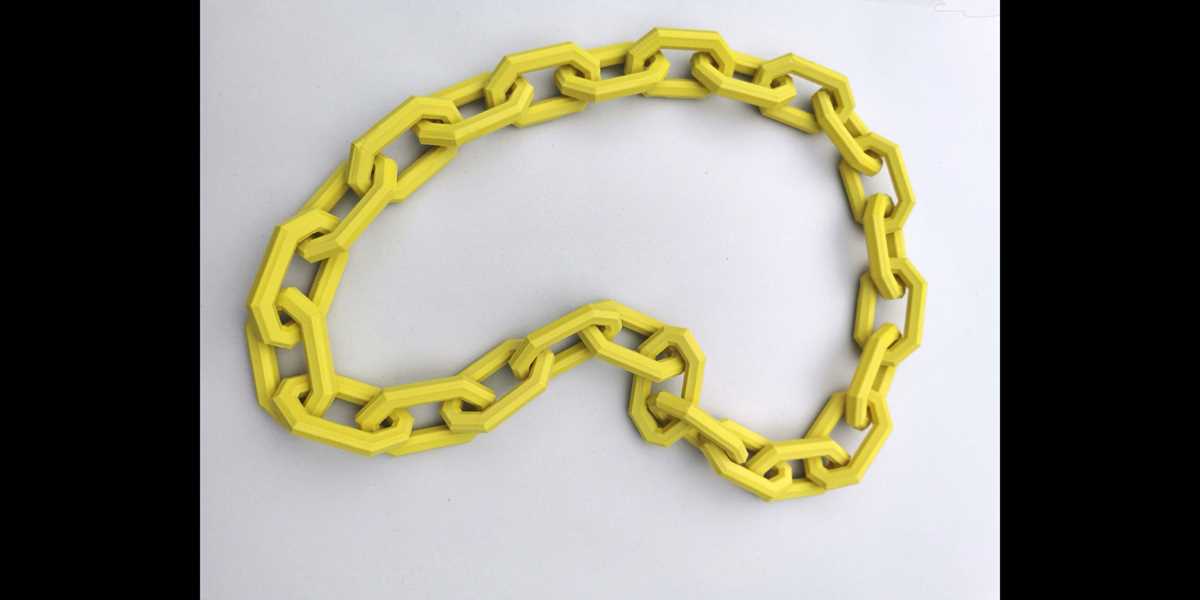
To get started with crafting your own connected links, design a model that fits your specific project needs. Use 3D software like Tinkercad or Fusion 360 to create interlocking shapes. Ensure that each piece is designed to fit snugly with the others for smooth connectivity. Adjust the size and structure to suit the intended use, whether for decorative items, functional structures, or accessories.
Next, select the appropriate material based on the strength and flexibility required for your creation. Filament options like PLA or PETG are commonly used, but if durability is a priority, consider using ABS or nylon. Make sure to adjust your printer settings accordingly to ensure the best quality and optimal fit for your design.
Once your links are printed, you can assemble them into larger structures or designs. These interlocking pieces can be used for anything from jewelry and keychains to industrial models or art installations. Experiment with different sizes, shapes, and colors to achieve the desired look for your project.
How to Design a 3D Printable Link System for Custom Projects
Begin by determining the purpose of your interlocking pieces. Whether it’s for a mechanical structure, a decorative item, or a functional accessory, the design should be tailored to meet specific needs. Choose the shape and size based on the application. For instance, larger components will require sturdier connections, while smaller designs may focus on aesthetic appeal.
Next, focus on the connectivity. Each piece must be designed to fit seamlessly with the next. Pay attention to the joint system–whether you’re using loops, interlocking shapes, or snap-fit designs. If your pieces are meant to connect in a rotating or flexible manner, make sure the connection points have adequate clearance to avoid friction that could cause wear over time.
Use 3D modeling software like Fusion 360 or Tinkercad to create your parts. These programs allow for precise measurements and adjustments to ensure that each link fits perfectly with the others. You can use parametric design tools to adjust dimensions quickly, especially if you need to scale your design or modify it for different applications.
Once you’ve designed the parts, run simulations or test prints to check for any issues in fitting. Adjust the tolerances of the parts, ensuring they fit without being too tight or too loose. The key to a successful interlocking design lies in the precision of these measurements. If you’re unsure, printing a small prototype before committing to a full design can save time and materials.
Finally, experiment with materials that best suit the demands of your project. For items that will experience stress or need to bear weight, consider stronger filaments like ABS or Nylon. For lighter, decorative projects, PLA or PETG may be sufficient. Adjust your printer settings according to the material you choose, ensuring proper extrusion temperature and bed adhesion for optimal results.
Choosing the Right Material for 3D Printed Links
For durable and functional structures, use materials like ABS or Nylon. These filaments provide strength and flexibility, making them ideal for items that will undergo stress or movement. ABS is particularly useful for mechanical parts, as it can withstand higher temperatures and is resistant to impact.
If your project is lightweight and decorative, PLA or PETG are excellent choices. PLA is easy to print and offers good surface finish, making it suitable for intricate designs and objects that don’t require high durability. PETG, while slightly stronger than PLA, offers more flexibility, making it a good middle ground for both aesthetic and functional pieces.
- ABS: Best for durability and high-stress applications.
- PLA: Ideal for decorative items and easy-to-print projects.
- PETG: Great for both decorative and functional uses with more flexibility than PLA.
Practical Applications for 3D Printed Links in Crafts and Engineering
In crafting, linked components can be used to create decorative items like necklaces, bracelets, and keychains. By adjusting the size and shape of each piece, you can produce unique jewelry that fits your design vision. Additionally, these interlocking parts can be customized with various textures or colors to enhance the aesthetic appeal, making them ideal for personal gifts or fashion accessories.
For educational purposes, 3D printed interconnected components can be utilized to teach students about mechanics and engineering. By creating simple gear systems, chains, or assemblies, students can visually understand how moving parts interact with one another. This hands-on approach is beneficial for both young learners and those pursuing more advanced technical studies.
In industrial settings, these interlocking designs can be applied to prototype machines or tools. Custom parts can be quickly fabricated for testing, reducing the lead time for product development. Moreover, the flexibility in design allows engineers to create non-standard components that wouldn’t be easy to obtain from traditional suppliers.
Another practical application in engineering is the creation of modular systems. By designing pieces that interlock securely, you can create custom frames, storage solutions, or even shelving units. These modular systems are customizable to fit specific needs, allowing for easy expansion or rearrangement as requirements change over time.
In the world of DIY projects, such interlocking designs can be used for building small mechanical projects such as pulleys or conveyors. For instance, creating small mechanical models that simulate factory automation can be a great way to visualize real-world processes without the need for expensive equipment or heavy machinery.
For home improvement enthusiasts, 3D printed links can serve as a cost-effective solution for repairing or replacing parts in appliances and machinery. Whether it’s a broken hinge, a piece of a toy, or a gear in a household device, you can design and print the exact replacement part, avoiding the hassle of searching for hard-to-find components.
- Jewelry: Design and create unique, custom pieces such as bracelets, rings, and necklaces.
- Education: Use linked models to demonstrate mechanical concepts like gears and motion.
- Prototyping: Quickly create custom parts for testing in product development.
Additionally, these interlocking structures can be incorporated into art installations or sculptures. Artists can experiment with geometric designs, combining the interlocking parts to create larger, more intricate works. The versatility in material choice and size allows for endless creative possibilities in both small and large-scale art projects.