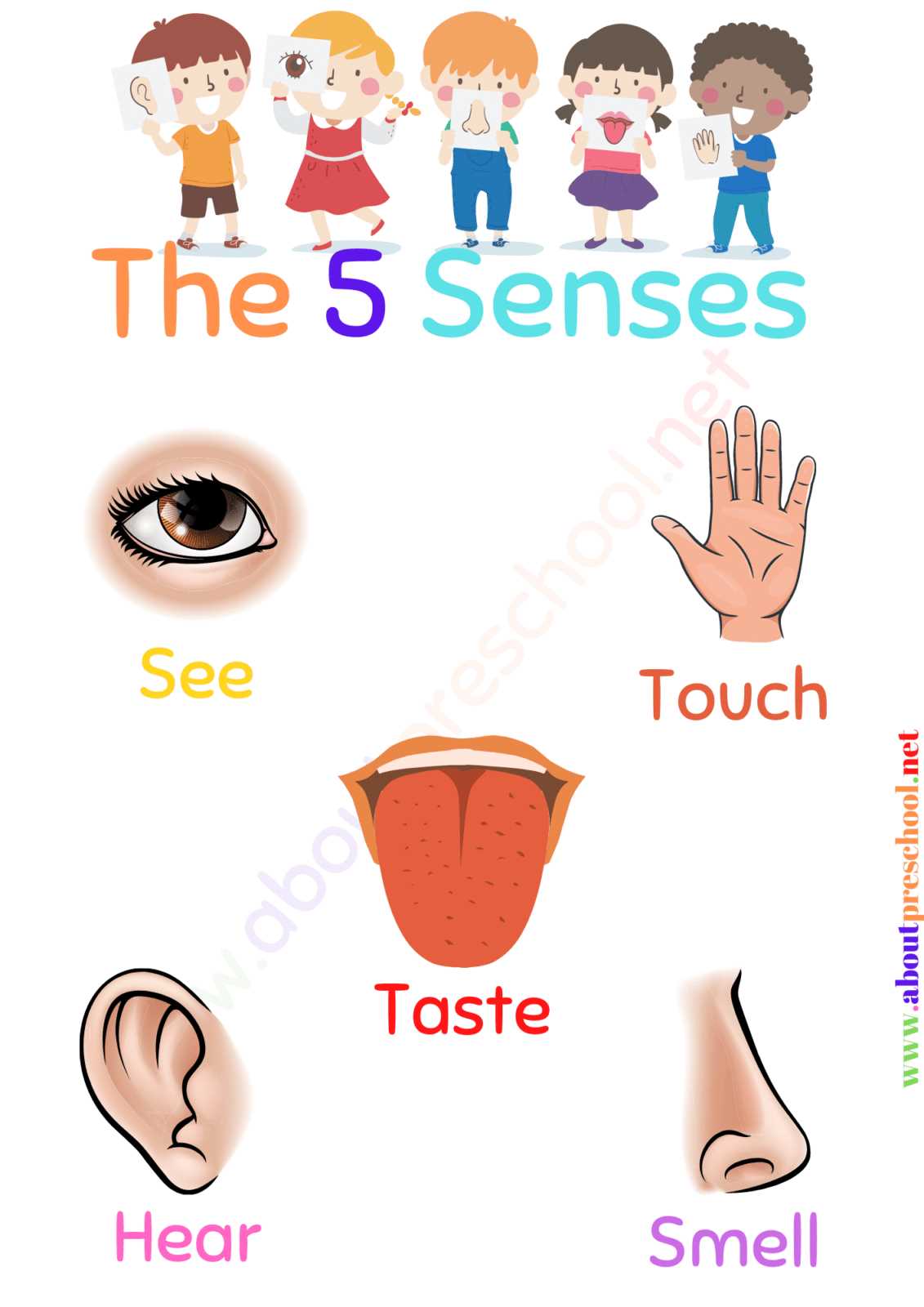
Use worksheets with various activities to help children understand the importance of their body’s five abilities to perceive the world. Start with simple matching tasks where they connect images of different objects with the senses they relate to. For example, a picture of a flower could be matched with “smell” while a picture of a bell is connected to “hearing”. This approach builds a basic understanding of how each sense works.
Hands-on Activities to Reinforce Sensory Learning
Try engaging students in sensory-based activities that go beyond paper exercises. Blindfold them and ask them to identify objects based on touch, sound, or smell. For example, place a soft ball, a cold stone, or a rough piece of cloth in their hands and have them describe what they feel. This helps solidify the concept of tactile perception. Similarly, for hearing, use instruments like tambourines or whistles and ask them to identify the sounds.
Creative Ways to Incorporate Visual, Auditory, and Tactile Exercises
To extend learning, integrate art and craft activities. Have children draw pictures that represent each of the senses. For example, drawing an ear for hearing or a nose for smelling. Another fun idea is to have students create a “sensory box” where they place items related to different senses. This could be a box filled with objects like a scented candle for smell, a small bell for hearing, or a fuzzy fabric for touch. These physical objects help to reinforce the concept of the different perceptions.
Lastly, use stories or songs that involve sensory words, and encourage children to act out the story. This method taps into multiple senses at once and helps to strengthen the connections between language, understanding, and sensory perception.
Engage Kids with Fun Sensory Worksheets
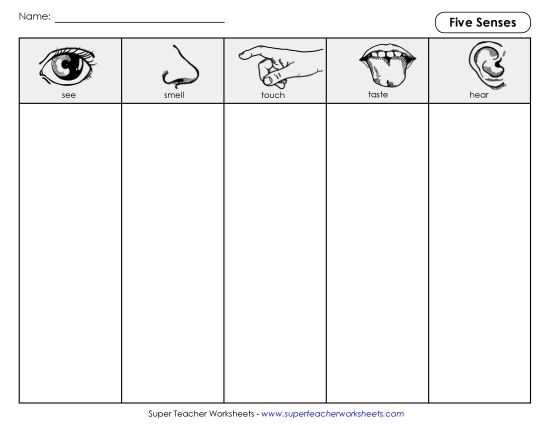
Provide interactive worksheets that encourage children to explore their physical abilities in a hands-on way. One idea is to create simple matching exercises where children associate everyday objects with specific abilities, like matching an object they can taste, touch, or hear. This allows them to directly connect what they experience with the concepts they are learning.
Introduce Sensory Exploration Games
Interactive games are an excellent way to bring learning to life. For example, create a “mystery box” where kids have to guess the contents using only one of their senses, like touch. Items inside the box could include soft fabrics, textured materials, or small objects that produce sounds. You can turn this activity into a fun guessing game where kids have to determine which sense they are using and describe their experience.
Incorporate Tactile Learning Materials
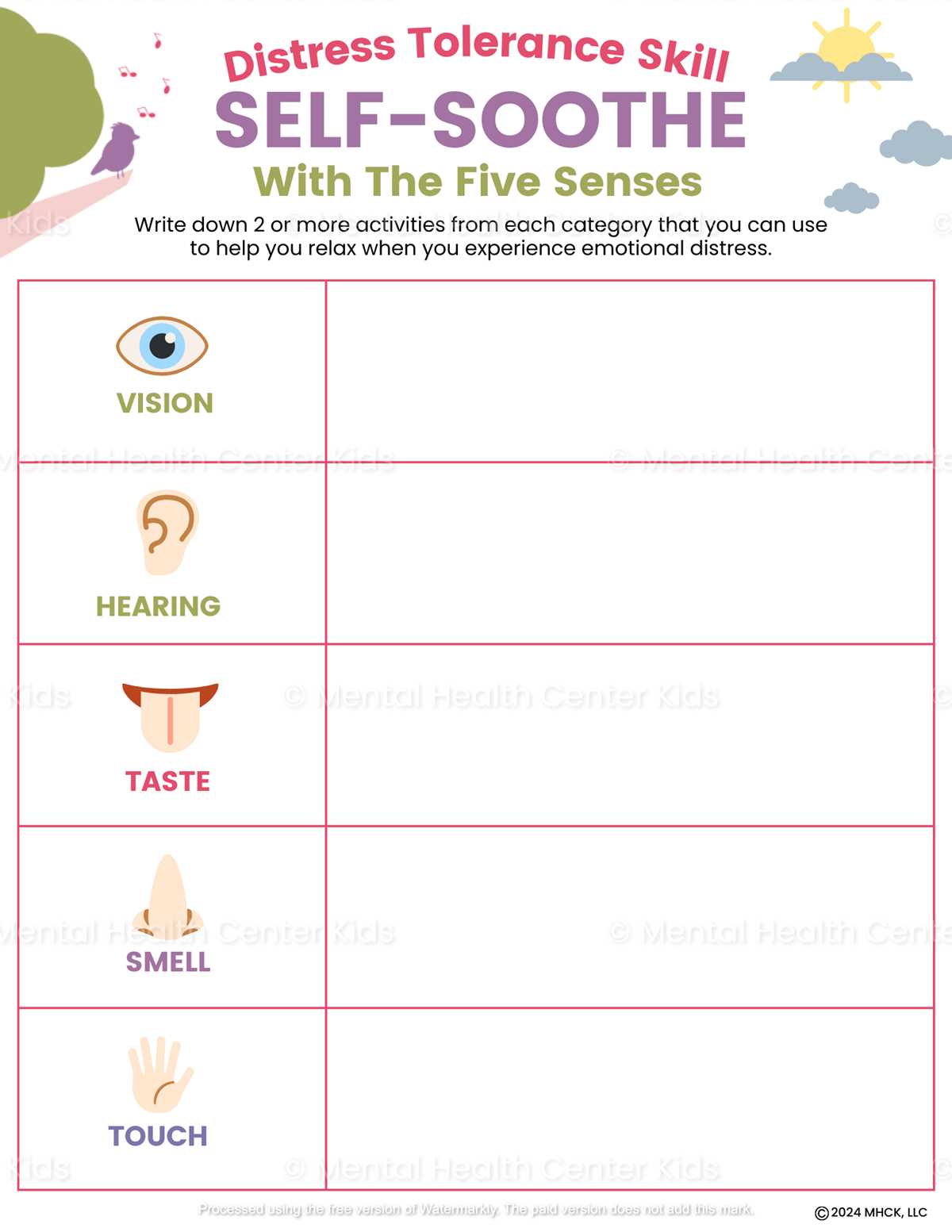
Adding tactile materials into exercises helps solidify concepts. For instance, create worksheets with textures that children can feel. You can glue cotton balls for softness or sandpaper for roughness directly onto paper. This provides a multisensory learning experience that is especially helpful for younger children or those who learn best through touch.
Design Creative Visual Activities
For the visual aspect, use art projects to reinforce concepts. Ask children to draw or color different representations of experiences related to sight, such as drawing what they see in nature, like trees, clouds, or animals. These artistic activities help connect abstract ideas with concrete, creative expressions. Using vibrant colors for these drawings also enhances visual stimulation.
Incorporate Auditory Elements
Engage kids’ hearing abilities by using various sound-related activities. You can play different sounds–like animal noises, nature sounds, or musical instruments–and ask children to identify them. This could be incorporated into worksheets where children match the sound to an image. Additionally, creating a sound map where kids draw the locations of sounds they hear can make auditory exploration more tangible.
Use Simple Language to Explain Sensory Concepts
When creating sensory-based activities, be sure to use simple language that children can easily grasp. Words like “soft,” “loud,” “sweet,” and “rough” are helpful descriptors. Keep sentences short and direct, and ask them to describe how each object makes them feel or what they notice about the object with respect to its texture, sound, or taste.
These activities can be a fun and effective way to encourage sensory development while making learning more interactive. Through a variety of exercises that include art, games, and simple tasks, children will be able to better understand and appreciate the world around them through their senses.