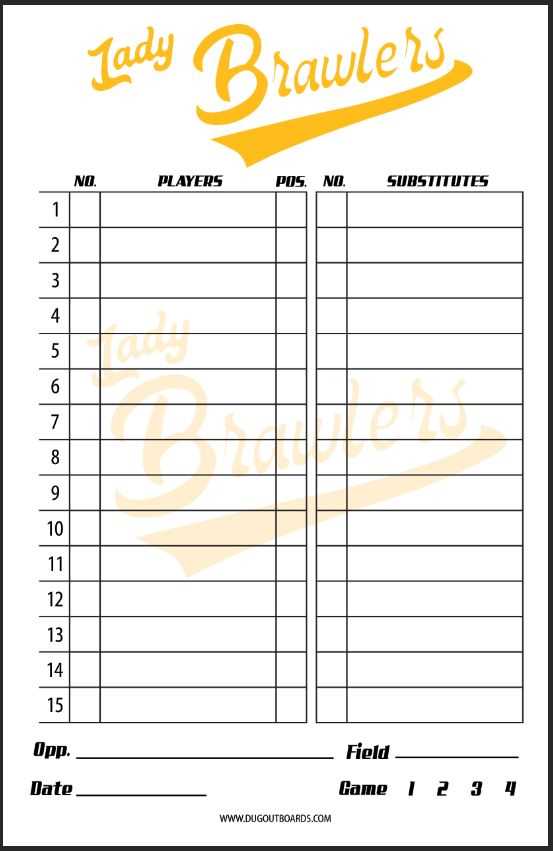
Use a single-page batting order sheet with pre-numbered slots and position columns to avoid dugout confusion and late-game scoring mistakes. A clean template with nine starter rows plus at least three substitute lines gives coaches enough flexibility for most youth and amateur matches. Keep player names in block letters and add jersey numbers beside them to help scorers and umpires verify entries quickly.
Choose a layout that separates batting order from defensive positions. This small detail prevents mid-game edits from becoming messy, especially during double switches or late substitutions. Many teams prefer forms sized at US Letter (8.5×11 inches) with wide margins so they can be clipped to a clipboard without hiding player data. If your league requires copies for officials, select a version with two or three duplicate sections on one page.
Paper choice also affects usability on the field. Standard 20 lb sheets work for indoor scorekeeping, but 24 lb or light cardstock handles outdoor conditions better and resists tearing in windy dugouts. For repeated use with dry-erase markers, laminate the form and keep a fine-tip marker in the equipment bag. This setup reduces reprinting and keeps game preparation consistent across the season.
Baseball Lineup Card Printable for Coaches and Teams
Prepare a prefilled roster sheet before arriving at the field so substitutions and batting order changes can be tracked without delays. Enter player surnames, uniform numbers, and defensive spots in advance, leaving two or three blank rows for late roster additions. Coaches who complete this step early reduce scoring disputes and speed up the plate meeting.
Use a format with clearly separated columns for batting order, field position, and bench notes. A grid with at least 0.4-inch row height improves legibility from the dugout, especially during night games under artificial lights. Avoid condensed fonts; standard sans-serif at 10–12 pt keeps names readable for umpires standing several feet away.
Keep multiple copies clipped together when league rules require one version for the opponent and another for officials. Carbonless duplicate paper or a two-up sheet layout works well for this purpose. Mark each copy with the team name and game date in the header so records remain traceable across tournaments.
For outdoor use, select heavier stock around 24 lb or apply a thin laminate layer. This prevents tearing when the sheet is handled with dusty or damp hands. Many coaching staffs also store a fine-tip permanent marker in the clipboard pouch to keep handwriting consistent and resistant to smudging.
Update defensive switches immediately rather than waiting between innings. Small real-time edits reduce confusion for scorekeepers and help maintain an accurate batting sequence. Draw a single line through replaced players instead of erasing; this preserves a clear audit trail if officials review the form later.
Archive completed sheets after each game in a dated folder or digital scan. Over a season, these records help track player usage patterns, common batting positions, and substitution timing. Teams that maintain organized logs often find it easier to prepare tournament reports and verify eligibility questions.
How to Fill Out a Printable Baseball Lineup Card Step by Step
Write the team name, opponent, date, and field location first at the top of the roster sheet. This identification prevents mix-ups during doubleheaders and tournament play. Use block letters so umpires and scorekeepers can read the header from a short distance.
Next, enter the batting order from spot 1 through 9 (or more for youth leagues that allow continuous hitting). Keep surnames consistent with the official roster to avoid eligibility disputes. Place uniform numbers directly beside each name rather than in a separate notes area.
Fill defensive positions using standard abbreviations:
- P – pitcher
- C – catcher
- 1B, 2B, 3B – infield bases
- SS – shortstop
- LF, CF, RF – outfield spots
- DH – designated hitter (if used)
Review the batting sequence carefully before submitting the sheet at the plate meeting. A single misplaced name can trigger an automatic out in many leagues. Read the order aloud to an assistant coach to catch numbering errors.
Add substitute players in the bench section with full last names and numbers. Leave enough blank rows for late arrivals. If your league tracks re-entry rules, mark starters with a small star so you can quickly identify who may return later in the game.
When a substitution occurs during play, draw one clean line through the replaced player and write the new participant on the next open row. Avoid erasing; officials prefer visible changes that preserve the original batting sequence.
Make two verified copies–one for the opposing staff and one for the umpire crew–before the first pitch. Clip your dugout copy to a firm board so updates can be written quickly between innings without wrinkling the sheet.